Tuesday, November 20, 2012

Yesterday's Child: A Few Afterthoughts

Since my last entry where I shared a few thoughts following an encounter with whom I called yesterday’s child, I find that there are a lot of emotions and feelings that I still need to process. I admit, I’m still unsure from where in my heart did these feelings flow. 
 
On one hand, this child took me back to my own childhood. Perhaps I was nostalgic as I was reminded of a past that I could never recapture. To realise how foolish it was for me,at the time, to become a grown up. To become an adult would mean, I believed, being able to live my life as I pleased. How foolish I was for wanting to grow up so soon and miss out on that precious time that childhood is.
 
I also felt a certain fear that I may never become a father. Or, if I did, I wouldn’t be able to do all the things fathers do with their children. I am not particularly keen on sports either - which would be an issue if I had a boy or girl who liked sports. As yesterday’s child did. I know that there are things which, I hope, I would be able to impart on my children. But, still, there’s still that lingering thought that I would never live to an ideal.
 
On the other hand, in retrospect, these thoughts are just thoughts and don’t have any real basis. Rather, they may help me live better today. For, I may not be able to recapture my childhood but I can commit myself to cherish the present and try to live the now to the full. The present moment remains the only one we can be in and the only time we have a choice. In this sense, my concerns for the future are, in a way, only the cause of unnecessary pain. For, I should accept whatever life offers and do my best. For whether I have a child or not, whether s/he will accept me and so on remain questions that can’t be answered or will never be answered at all.
 
This life of mine, I realise, is the only one I’m sure of. It’s precious because, I know, all lives will end. I can’t live forever. And, as I remember what yesterday’s child taught me, it’s important for us to reach out to those around us and to every other person living in this world. I have failed in this and still fail. But I know that I need to be compassionate to others. Not just for the sake of others but for my own sake.
 
I thank all those who told me that they liked reading my last entry on yesterday’s child. I admit, I was flattered. But, later, I felt a certain feeling of guilt. Had I used the child in my account for my own ends? In a way, I did. I did like many others who help others for the sole reason to receive praise. I might have fallen to an arrogance of those who help others only to be praised and photographed. People, I’ve met myself, who make a living exploiting those who are going through injustice and inequalities to appear as saviours - when they’re in fact, in some way, abusing the dignity of others for personal gain.
 
I hope, at least, that my post didn’t go so far. But, then again, I am aware that - without knowing or wanting - we may be doing the same thing. We may be inflicting needless suffering on those who are victims of injustice and inequality. We may waste food and water capriciously when people in some parts of the world are dying of hunger or thirst. We may take our homes for granted, when there are millions of people homeless or living in poor housing conditions. We may take our loved ones for granted, when there are people out there who have just lost their loved ones because of war or natural disasters.
 
But, of course, we are helpless. We can’t save the whole world. I feel bad because I know that I may never meet yesterday’s child again. Nor do I know if I can help in any way if I did meet this child. Yet, I feel a kind of guilt for not being able to do more. Yet, I have to be realistic and focus on what I can achieve today. To return to the beginning of this entry, it’s important for me to focus on the present. This doesn’t mean that I ignore the future and fail to plan ahead. But, inasmuch as it’s wise to set out plans for the future, the present is the one moment we have that is truly guaranteed. 
 
So, how can I help? How can you help? I feel that even if I may be unable to help yesterday’s child, there are a lot of people I meet on an everyday basis - some I know, others not. It’s there that I can make a difference. For one may aspire to go abroad to help others experiencing poverty and all that which is good. But, on the other hand,one can also do a lot here where you live. You can change things in the way you relate to the others around you. You can practice compassion today. You can take the time to understand others here. You can relate to others as equals now.
 
The only thing I can offer you here are  my words. I know that what I have written might not make any difference in your life or the life of others. I don’t expect it too. But all I hope is that somewhere, someone will stop and reflect on what I wrote. For life passes quickly and we may miss to appreciate the moment we’re given. A moment that, like our childhood, is lost forever.


Thursday, November 15, 2012

Through the Eyes of a Child...

To yesterday's child:

I thank you for not judging me because I appeared different. For recognising my difference and, yet, not holding it against me.

I know that you might have been fascinated by my wheelchair and wanted, as you did, to drive it around. Actually, to drive me around…

I appreciate the little time we spent together. The short time we spent getting to learn something about each other.

Perhaps, then, you filled within me a need of a little brother or sister, whom, you know, will seek you when they’re afraid of the dark and trust you will reassure them and take away their fears.

You might have also stirred deep in my heart, a paternal instinct that desires to care and protect all whom may feel unsure about life. Frightened of a a life which sometimes appears so new and unknown. Especially when facing moments of sadness and doubt following a disappointment or an ugly event you still can't express or have the words to describe..

I am not sure whether I gave you anything in return. I know that I was tired and maybe I could have shared more of myself to you.

I am neither sure what impression I left on you. Or whether I could have seemed distant. If so, I am sorry.

For sure, you have renewed my commitment to look beyond the illusion of the self.

A self so preoccupied in defending its hollow existence that it finds no place for others.

A self so absorbed in the lies it tells itself that it is ignorant of its unreality.

And the reality of life?

A life made up of joys and sorrows, life and death, love and hate.

A life where we share a common experience of humanity.

Born into a world and a life we don't choose - to live on through all the good and bad, and, ultimately, to die without knowing what there is beyond with any degree of certainty.

This life. Precious and unique. And, yet, a life we take so for granted.

We experience dissatisfaction as we seek refuge in a material life that is, in itself, impermanence and empty.

There's no happiness...

Until we are ready to recognise our vulnerability not as a sign of weakness or servile submission but as a matter of fact. That we were never meant to be divided amongst ourselves and accept we all need the help and support of those around us - whoever we are..

A humility that forces us to look at at each other on the same level because we are the same human beings. Similarly prone to the ravages of time and decay of matter. .

Birth, ill health, old age and death. No one can escape them. But we can make our life and the life of others worthwhile if we're ready to be more compassionate and less judgmental. Less accusatory. Less ready to fit people into boxes when we come to relate to them on a personal, human, level.


And, yes! It had to be you, a young child who reminded me of the need to open my heart to the other. To open who I am also to my own awareness.

Only with a motivation to learn from our experiences.

Dear yesterday's child,

Since we never had the time to say good bye, I would like to tell you that I will cherish our short encounter for as long as my memory will serve me..

I wish you all the peace and happiness for the future and for the present - which remains the more important as all futures depend on it..

I assure you that you have given me more than I can ever give back.

Thanks.

Monday, November 12, 2012

The Poppies of Flanders Fields

The Poppy - Used as a Symbol to Remember the Horrors of War


"In Flanders Fields" 
By John McCra


In Flanders fields the poppies blow

Between the crosses row on row,

That mark our place; and in the sky

The larks, still bravely singing, fly

Scarce heard amid the guns below.

We are the dead. Short days ago

We lived, felt dawn, saw sunset glow,

Loved, and were loved, and now we lie

In Flanders fields.

Take up our quarrel with the foe:

To you from failing hands, we throw

The torch; be yours to hold it high.

If ye break faith with us who die

We shall not sleep, though poppies grow

In Flanders fields


A few reflections... 

Yesterday, 11th November at 11 in the morning, Commonwealth countries celebrated Remembrance Day. However, you may know this day from many of its titles, such as Poppy Day and Armistice Day.

This day was originally intended to remind us of the thousands of men, mostly young men, who died in the trenches of World War I and World War II. The poppy, used as a symbol of this event, was inspired by the poem above entitled “In Flander’s Field” by John McCrae who served in the First World War himself.

It appears to be a simple poem but it prompted me to reflect on the futility of war. Indeed, all the horrible killing that took place on the fields of Flanders, Belgium, were overtaken by nature. The human acts of murder and destruction were replaced by rows and rows of red poppies. In a way, one can see this of nature’s way of expressing mourning for such a great loss of life.

One can argue that the wars taking place in the beginning of the 20th century were necessary to protect our civilisation. Yet, I don’t know whether this was our only option. It appears to me that amongst the chief causes of war is our tendency to separate ourselves from others. A misguided belief that we are somehow better and far superior than other people. And that those who don’t conform are keeping us back or, else, taking from us what we think is our by right.

However, the poppy fields appear to teach us that even from the worst acts of humanity, not all is lost. A hope, perhaps innocent, that death isn’t the final answer. That, terrible as things may be, there’s still hope for growth and renewal. A hope, perhaps, that we recognise the futility of war and violence. To take care not to repeat the patterns of violence and genocide.

Alas, wars are still with us today. And, the poppy day has been sometimes been misappropriated to promote the idea of patriotic duty and, perhaps, lure young men and women into war. A war that remains ugly as it goes against our basic need for each other to make it in this world.

This is more relevant today as we have greater power to destroy the world thanks to our nuclear technology. With these means of apocalyptic potential comes great responsibility. A responsibility that is unprecedented in human history.

For, while we may think the ‘end’ will never come, we should be careful about making the right choices in how we live and what decisions we have to take. We may not be able to stop it if we are faced by war. But we must make sure we have tried. The people living in pre-war Europe never imagined the terrible wars they would have to suffer. Yet, there were signs but people forgot or just remained silent. Until, of course, the human tragedy of war happened.

It may be time for all of us to reflect on the past which, for many of us, happened decades before we were born. Reflect on what remained of all the bloodshed. Memories, perhaps, but even those are slowly fading. Have we progressed? In some ways but there’s still war and fighting around the world on similar issues. Can we afford to be unconcerned? I can’t answer this for you.

The only thing I can say is that everything must come to an end. Even our human species in the course of time. It’s in our interests to protect our world and to invest in each other instead of destroying each other.

If we kill ourselves off tomorrow, the Earth will go on living.

Maybe poppies will die too.

But life will probably prevail.

Thursday, November 8, 2012

Meditations on 31 Years of Life

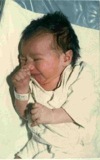
My First Photo as a Newborn Baby…
I’m writing this post before the anniversary of my birthday. I hope it will appear on the day I was actually born on that afternoon of the 8th November 1981. By the time you’re reading this, I’ll be 31 which is almost one third of a century.

I don’t know where I’ll be when this gets published on my blog. I might be eating, working or checking my messages. That’s what I expect to be doing on a Thursday afternoon at least. Indeed, as I’m involved in my work and other commitments I find that I’m always on the go. The tendency, of course, is to go through life without really engaging with the unfolding reality. Without being aware of that passing moment. Without realising that you have lost that point in life forever.

I return back to my birthday. It’s very easy to be distracted from focusing on what I should be writing about at times. Thoughts from the past, concerns about the future and my present situation appear to take over my life even now. I was born 31 years ago.

I am expected to remember this occasion.

Yet, how many of us wonder about what was there before you were born? Can we contemplate a time when we were not?

Of course, we have learned that there was a time before we were born. The time of our parents and all the generations that came before them. Each person, no matter how we might judge them today, had a role to play in our being here alive.

In my case, I must also be grateful for scientists who have permitted me to live until this age.

If these people hadn’t survived for one reason or another, I would NOT be here.

The birthday I celebrate and the celebrations of the birthday many others celebrate throughout the year is a testament to an infinite chain of events that arose out of a cycle of co-dependence.

I might dare look even further back in history and trace my origins back to the genesis of our galaxy and even to the point where the universe was created in the first place.

But, as I contemplate the mystery of my being, I am also mystified by the very creation of our universe. For, my experience of time is so short and finite and my knowledge so restricted and limited, that I can only refer to the beginning of time itself but, as I am a being in time, I cannot conceive of a timeless state.

I may be writing this for my own self, I admit. But, the point is simple. As I reflect on my 31st birthday, I am humbled by the fact that I am born of a mother, a father. I am humbled because if it hadn’t been for the many people who came and went before...

If it hadn’t been for the way history has turned out..

If it hadn’t been for the birth of the Earth, the Sun and the solar system...

If it hadn’t been for the fact there was a universe to be in...

If it hadn’t been for life itself.

I WOULD NOT be here…

There’s no more to say.

Tuesday, November 6, 2012

An Old Self That Clings On

It’s the end of another day and as I take a good look at myself, I realise how much I have changed on one level and, yet, how difficult it is to manifest these changes. Indeed, during the times I’m alone and have to face my inner being, if you may, I do notice a conflict between who I am discovering to be authentic about who I am and how I come across to the outside world.

It’s not that I’m living a double life or expressing two completely different identities. Both this new sense of being and the old self seem to co-exist but, at the same time, each self has a story and a history and world view. These may be not necessarily opposite and they certainly don’t represent any split personality. They are more like an inner light that is hidden away by clouds. While the light is there and sometimes feel strong and clearly visible, circumstances only serve to obscure the beauty of this light with its preoccupation with what should be and a dissatisfaction (dukkha) that diminishes our appreciation of the present moment.

I do realise that there is a struggle between part of my being which opens my heart to a basic humanity. A being, so often misrepresented by popular media, of a compassion beyond conditionality or status. A compassion that recognises a universal dependence our essential impermanence.

Yet, it’s not easy to start to be the change you want to see in the world (to take line from Gandhi). It is painful because the safety of habit and the life we get used to provide us with a sense of comfort and relief. Considering another way appears too painful - not just for us but, yes, also for others in our life. A change of mind and engagement with our harts and the hearts of others requires more of us than simply uttering a few words of allegiance or a prayer. It may require to accept our nothingness in the light of a vast universe. It may mean recognising that our life is an ordinary life when compared to the life of the people inhabiting this world. It may be extraordinary in many other ways, but we all have to go through the same stages of life.

The habits we inherit from our previous past remain part of who we are today. This isn’t necessarily a bad thing and I believe I must accept that I have lived a life in the past I may need to change some aspects of this past. I feel that without accepting the reality of the past, there can be no growth and a great risk of getting too attached to truths that present themselves as absolute and never changing. Reality - a reality, which in itself, is ever changing and always being renewed.

In this sense, a radical rejection of the past would mean uprooting our roots without finding fertile soil to grow our sense of being. At least, at this point, I do find it difficult to really express what I feel inside. And I can’t expect that I will change overnight. But change must happen progressively like any process of growth one finds in nature. For, yes, we remain creatures of nature. Unique and impermanent.

Friday, November 2, 2012

The Myths of independence and the Self-Made Person

As I try to figure out what is the matter with my laptop, I realise how much I have become dependent on technology in my daily life. Indeed, one may say that I might be more dependent than other people on technology, especially information technology due to my physical and visual impairments. I realise that if I had just been born just 40 years ago, much of what I have today would have been unthinkable. 

It’s sad but true, but I would probably be staring at the wall waiting for the time to pass, forgotten perhaps, in some institution with no hope of release. And, yes, today I would be 71 today. OK, given that medical treatment to treat my condition were only just being experimented, I would probably be dead. Six feet under. Caput! Finis. Indeed, if it hadn’t been for technological progress (here I’m including medical discoveries) and reform in the socio-political landscape, my current life wouldn’t just be impossible but inconceivable.

I used to believe once in the fairy tale of the self-made individual. A person who goes from being a pauper to a prince, from rags to riches… You get the picture. But even the great “geniuses” of history that we, including self, have thought to have achieved what they have out of sheer will or determination had lots and lots of help and opportunities that allowed them to reach their peak.

However, we tend to mythologise the lives of these so-called “geniuses” and, perhaps conveniently, forget that they had access to opportunities that improved their chances of success.

Don’t get me wrong, I am not denying that such individuals did nothing. In fact, they have developed extraordinary skills and abilities. But to assume that they were born with special abilities would be stuff of fantasy and Hollywood movies. Yes, people may be born with a predisposition to excel in music, science or the arts, for example, if they are not exposed to the right stimuli or in an environment that cultivates their minds, they would not manifest anything.

What if Mozart had been born in a poor family where children had to work the hard way and there was simply no place for music as this wouldn’t contribute to thee livelihood of the family? What if Einstein was born in a part of India where the poverty was so pervasive that the only maths and physics necessary were to calculate how much money you can spend and whether you can balance your food or water to reach home - if you have one that is.


My point is simply that it would be false to believe that individuals can make it on their own. There were many factors, often omitted from biographies, that contributed if not made it possible for people to maximise their potential. This myth of independence and independent actualisation is particularly dangerous when applied to disabled people. I don’t know how many times I was praised for my resolve and determination to go on with life. While my choices had a certain influence on my current position, I would be pretentious and ‘full of it’ if I declared I did it all on my own. Indeed, people with impairments, like myself, may need more help and support to maximise their potential. Will and determination have only a little part to play in all this. If you have a choice but do not know you have one in the first place, it is unlikely that you will take it.


That’s why I believe that we should recognise that the idea of complete independence is but a myth. No one can make it on his or her own in modern society. I also think that we must refrain from mythifying the lives of others just because we think they “have beaten all odds”. Instead, we should be asking why haven’t more people experiencing the same conditions and situations failed to improve on their lives. Is the myth of independent autonomy, as we may call it, a way to rationalise the injustices of poverty and inequality? Are these our way to deny responsibility for the welfare of the whole of society not just those we deem ‘deserving’.

And, I believe, we shouldn’t start pointing at our leaders, our politicians, or those in authority, but first ask ourselves what we are doing ourselves. And, many times, this means distancing ourselves from our own affiliations, biases, prejudices and assumptions and start to treat each other with equal respect and dignity as any other human being.


Yes, I should start with my own life.

The Remains of a Hurricane

It’s unfortunate to hear about the deaths and destruction left behind by the hurricane Sandy. Indeed, as parts of my family live in parts of the US which were the hardest hit by Sandy, I couldn’t help feeling concerned. Fortunately, everyone appears to be ok. Of course, the aftermath following these natural disasters will involve months of repair and things will regain a semblance of ‘normality’ over a long period.

Ironically, Sandy made its appearance during a heated presidential campaign - as if it was trying to present its political agenda. Perhaps it wanted to have a say in the discussion which often focused exclusively on the economy, employment and foreign policy. However, although it blew strongly and inflicted billions of costs on an already struggling American economy, it didn’t appear to have made such an impact on the current contestants for the US elections. Indeed, apart from welcome messages of solidarity, Sandy appears just to be another chapter for the history books.

However, if nothing, what Sandy should teach us is that we avoid dealing with the ecological crisis at our own peril. A crisis that extends from an ongoing extinction of known and unknown species to climate change. Issues that seem to have become subjects suited for children or for light discussion. Unfortunately, the extent we preserve the ecology and the environment will affect every aspect of human life as we know it.

This is fundamental because the ecology is the basis of all living beings. It’s essential for human survival. If we continue prostituting planet Earth for our own political and economic ends, we must be prepared to face more devastation and hardship. While I cannot claim that Sandy and other recent natural catastrophes were caused by the human impact on the environment, these events should be a wake up call for us to realise that without the sustenance of nature and without the environment, all our human achievements - ranging from the most advanced, such as art, science, religion to the most basic, such as food and water will not exist any longer.

In this sense, politicians around the world should take the ecological crisis more seriously than other crisis. For if left unchecked, an ecological crisis will leave our economies worthless.

That would mean the end of the human world.

Shall we stop it?