Showing posts with label being human. Show all posts

Wednesday, September 11, 2013

Where were you on September 11?

Today, the world remembers the terrible events that took place in New York. More exactly, we are invited to spare a minute for the many innocent lives lost to the terrorist acts of a terrorist organisation we now know is called Al Qaeda. I have shared my thoughts and reflections on this tragic event every year on this blog since I launched it. Undoubtedly, the events which took place on September 11 changed the course of our futures for ever. Yet, now I am a bit reluctant to write because enough has been said and written that any word I add appears superfluous and, indeed, a way to draw praise.

On the other hand, in spite of risking to go with the flow, I feel that I can’t just let the day pass by without reflecting on the implications September 11 had on the world and how we relate to each other. In addition, I was lucky enough to have gone on top of the World Trade Centre (WTC) when I was visiting my relatives who live in the US. In fact, when I heard the news, my thoughts turned to my relatives abroad and, for a minute, it seemed I relived the times I had been one day there as a tourist.

Moreover, since the WTC, one of the buildings hit by the planes hijacked by the suicide bombers was also place where people from around the world could work together, it can be argued that the attacks against that particular building was an attack on the whole world. Obviously, it’s natural that after people learned of the people behind the attack, many hearts were hardened and the minds were poisoned by hate and resentment of the other, the “enemy”.

The fact that we would learn that Islamic extremists were behind all this would also fuel the growth of anti-Islamic sentiments still evident across the world. What should be a religion of peace which shared with its monotheist sisters - Judaism and Christianity - continued to transform itself, in people’s minds - to a religion of hate and violence. Thus, enforcing the divisions that already existed between peoples. A division that would erode any hope of peaceful dialogue and peaceful communication as the majority of the West chose to employ the very means of war and violence it had so heavily deplored.

Yet, the truth is that those who were and who are responsible for acts of violence and atrocities aren’t Muslims but, rather, using Islam to achieve their political ambitions and to eradicate all those they perceive to b a threat to their position and power. Yet, military action, as we have seen in the past, rarely achieves its aims. The more our response is that of violence and the more we cling to our feelings of hatred and resentment, the more we fortify the image of the “other” as the “enemy”. Thus, we may fail to understand that, even behind the most atrocious human acts, there’s a reason. Irrational, yes, but it is there.

For everyone justly spoke up against the attacks of September 11 but, I suspect, only a few of us really tried to understand why all this happened. While those leading the immoral cause of Islamism or to force the whole world to convert to Islam according to Al Qaeda, may be motivated by power and control, the people supporting and helping them may really believe that they have suffered too much misery when under Western rule that the only solution is to bear arms and fight.

We can’t forget our responsibility as our Western powers can’t be said to have been totally innocent and didn’t or aren’t still exploiting the natural resources of nations of the majority world* to build their own technology and infrastructure. Have we forgotten the many innocent casualties of random attacks/? In no way, does this justify violent and terrorist acts. However, we must be aware that we are also responsible for certain realities present in other nations simply because we value the land instead of the people who inhabit it. We’re ready to poison water supplies, cut down trees and keeping in power those we think we can trust not to oppose our authority.

Of course, there is also a lot of good we do, as Western nations, in the world to alleviate suffering. And wile it’s debatable whether September 11 could have been prevented, it’s true that it was a result, in part, of a collective arrogance and indifference in the ways we often act in countries where we think of people living there as somewhat beneath us.

What the world has gone through on September 11 should be a reminder of the urgent importance of keeping our channels of communication open. To listen and engage in peaceful dialogue and negotiations when we can’t agree. To open our heart and mind and truly listen to what the “other” is saying. To remember the victims on September 11 burt to be prepared to let go of all our feelings of enmity and distrust. To be prepared to work together as we remain human beings who share a lot in common. Humans who share in our hopes and dreams, who have our fears and nightmares, and who want, ultimately to live a happy life.

Yes, I remember September 11. Yet, my thoughts also go out to Syria and to others who are dying right now because of famine and conflict. t. Thankfully, it was decided that, at present, no military intervention will be carried out against Syria but the path of dialogue and negotiation will be now pursued. Have prayers been answered? Or, more likely, the voices of peace have been heard and taken note of. Favouring one side over the other - who both claim they’re protecting the people - would have meant certain disaster and more bloodshed and acts of violence from both sides.

I conclude by asking the question which is also the title of this entry:

“Where were you before September 11?”

This isn’t a question to know where you were then. It’s rather a question that is intended to provoke you to think about how you viewed the world before September 11.

Have you thought about such a horrible thing happening?

Did you support peace and justice or did you go on life without caring?

Did you choose not to care about people who you thought were far away and, thus, insignificant?

Don’t worry if you answered yes to all these questions.

The truth is that, if anything, September 11 made us aware of the fact that we are connected with each other more than we thought. Even if it did harden some hearts, it should have awakened us to the fact that we depend on each other. We can’t afford to be indifferent to the injustices against others. We can’t ignore the environmental impact we’re having on our planet as all of us depend on it.

To truly honour those who died or would die as a consequence of the attacks on September 11, we must do our part in ensuring that our world remains a peaceful place that fosters an environment of mutual respect and cooperation.

One good place to start is within our own social circle and community.

But first we must cultivate the seeds of peace and compassion in our own hearts and minds!

I prefer to use the term "majority world" as opposed to "developing world" or "less developed" countries as the latter terms are making a value judgement about other nations and people assuming they are somewhat inferior. "Majority world" also reflects that the majority of the human population lives there. The opposite is true if I use the term "minority world".

Monday, September 2, 2013

Opening to The Intimacy of the Soul*

I come to write again after taking time to consider where my life is leading to. I admit, I am still confused about the direction I want to follow in life. I regret that the things that appeared to be of absolute importance to my happiness have become perhaps less important to me at this point in my life. This doesn’t mean that my disability activism, for example, is no longer important to me or that I don’t value the principles of inclusion I believed in before. Principles I dedicated lots of time and energy to promote. Rather, I feel that my calling is elsewhere.

I can understand if only a few readers might relate to my situation. It’s as if, more than ever, I feel a sense of emptiness. Of insignificance. It’s not because there’s emptiness within me. It’s because I realise that, as a human being, I am insignificant when compared to the extend of the cosmos. A cosmos that we can only barely understand with our scientific advances. A cosmos, that we may never be able to really understand.

In this state of silent contemplation, I only find myself confused and lost in an ocean that engulfs my whole being. An ocean which I want to escape from and be rescued from.

Yet, an ocean which I must cross to discover the place I need to be if I want to find more lasting peace and happiness. The refuge of the soul*. The cosmos that appears to mock my pretentious humanity is really drawing me to an authentic understanding of my real nothingness. Like the ocean, I am faced by my sense of nakedness and shame of having to declare my vulnerability and essential nothingness.

I was a child who wanted to know more. Indeed, I was thirsty for answers of why I was here. I admit that the death of my brother David a few months after my birth appears to have profoundly affected me. I realise this fact the more I develop my practice of meditation. It’s as if my need to make sense of my life - or why I am here - has become more important to me. More than anything else, I feel that I must face the challenge posed by an infinite ocean and the nakedness that the eternal cosmos reveals. For, in contrast to all this immensity, I am an impermanent nothing.


I once aspired to become a famous writer in my life. Indeed, this, I admit, was one of the motivations I had to write as a child. To perhaps join in the ranks of those many authors I found on the library shelves (I could reach). Yet, I wrote not just out of vanity but because, the more I wrote, the greater I felt free. There were moments when I wrote continuously, others when I stopped writing for days on end. It was both painful and cathartic to write. It was hard to have to put into words what I felt inside as what I wrote may have sounded brilliant but it never captured the complexity of my thoughts. And, even as I write

today, I am sure that what I finish will always be incomplete and dissatisfying. Hopefully, it is closer to the truth of my being but words and language are only mirrors of a far richer reality we may call the “soul”*. I am aware that while we may place a lot of weight on the words we use or the symbols we communicate, these don’t exist in their own right. A sentence, a book, or any form of expression, will mean another thing in another time or socio-cultural context. Yet, even if we may chose silence, it has also its meaning. However, at least, silence provides us with an opportunity to listen and contemplate on the significance of our human existence.

It may help us to free ourselves from the shackles of ignorance and open that little the intimacy within. 


I know that my life may be misinterpreted as a tragedy. Yes, it appears I lost a lot in the course of these 31 years I’ve been here on the planet. I lost my brother, David, before I could know him. I gradually lost my ability to walk independently, I lost a significant amount of vision and I am just slowly regaining my health and strength. Yet, my life isn’t exceptionally tragic to any degree. Defining me in those terms failsto acknowledge my humanity. I have only experienced more in life than usual, yes, but this doesn’t guarantee that my experience automatically brought with it any wisdom or exceptional insight.
 

A belief that is often implied whenever I talk to a few “religious” strangers. Indeed, I, myself, may have ben deluded by that demon of pride. A pride that seeks out to make one feel that one has the understanding and has the right outlook on life. A pride that refuses to listen and thus be unresponsive or hostile to other views. Views, which may be indeed wrong, but which must be taken notice of for hearts and minds to perhaps change and be more open.

These words would have been outrightly dismissed by my past self. But, these words are the ones I needed to hear.


I am a human being. I am disabled by a society that still considers people, like me, who have impairments, lives apart. We are not heroes, saints, villains, pitiful beings, abnormal, differently-abled or even “special”. Yet, I realise that while I recall all I believe in, I know there’s a deeper longing within that compels me to go beyond my work as a disability activist. For, while this cause is worthwhile and to be commended, I feel a strong need to go beyond impairment and focus more on the wider context of being human.

The fact is that since I grew in my understanding of Buddhism, thanks to the works of HH Dalai Lama and other scholars, I realise how important it is, for me, to reach beyond my self to others. Not because the experiences I have gone through life have made me any wiser. Not that I am special in any way. But because I feel that I must seek the source of my emptiness. To find refuge in knowing that all I have is impermanent and all will end, including my being. To approach this realisation, not with despair or despondency, but with mindful compassion and appreciation of every breath we take.

In doing so, we can wake up and release ourselves from the spell of pride.A point of awareness where we can see the afflictions borne out of hate, greed and desire melt into nothingness. A point where, even if we’re not totally free from our delusions, we are ready to open our heart to others and to all that is around us.
>


I feel that unless I fully open my mind and heart to this greater need and purpose, there will always be that sadness in my heart. A dissatisfaction that, whatever I did in my future, all will be overshadowed by the knowing that I didn’t pursue my deepest yearning. That I put aside my call to compassion and to contemplate the purpose of my existence because I wanted to live a relatively comfortable life.


In doing that, I would have violated the intimacy of my soul*! 


* In the context of this article, the meaning of the word “soul” is not to be understood in terms of any religious interpretation. In this sense, the soul may be taken to simply mean conscious awareness in the present - in light of the fact that the “soul” or “self” is, in itself, not a static property of the mind and may indeed cannot be said to have a distinct location in the body but rather arises out of the interplay of the brain and the nervous system.

Sunday, July 21, 2013

A Meditation on Forgetting


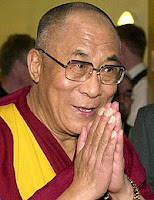
HH Dalai Lama celebrated his 78th birthday  last Saturday, 6th July… and I forgot!


A Confession

I must confess that I have forgotten  to write an entry on the occasion of HH Dalai Lama which I started doing when I started this site. I have already written extensively about how indebted I am to HH 14th Dalai Lama for opening my mind to a fresh understanding of life and reality. I find that I feel a bit angry and rather ashamed of having forgotten the man who helped e to embark on the journey where I can better understand who I am and my place in this world.


In a way, this journey of self-discovery which I have been writing about since 2011 began as a child. But then, my curiosity to know about HH Dalai Lama and to understand Buddhism didn’t take me far. Even my brief exploration of world religions that I carried out as I was writing my book Cosmos also didn’t help me that much as I only read sources which tended to hold that Buddhism was a nihilistic tradition.
I find that the past remains an important part of who we are. It’s true that it’s not good to dwell on the past but it would be wrong that we completely forget it. For the past, whether we like it or not, has affected and affects who we are today.


Yes, I forgot that on the 6th JUly of 1935, a young boy called Tenzin Gyatso would be declared to be the re-incarnation of his predecessor Thubten Gyatso. Much has been written, of course, on the Dalai Lama’s early days but I feel That I have been affected but the way he speaks and expresses his thoughts with a rare sincerity and with a genuine interest in the welfare of all humankind and all sentient beings. Yet, as he admits himself, he is just a man like any other and he doesn’t want people to regard him as a god-figure. In particular, there are three things that have struck me as he talks about Buddhism. Precepts that, you might have noticed, I constantly refer to when writing here and which I use as guides in other writing that is not related to Buddhism as such.


My Guiding Principles

These principles, simply put are:

Dependent arising. The teaching that who we are is the product of countless causes and conditions that have made our life possible.


co-dependence e. The reality that who we are and what we have depends on other factors that are beyond our control. These range from the physical world - material objects, nature, living things and weather conditions; to the relations we have with other people.


Impermanence. The fact that nothing lasts forever. Everything in the universe is changing, including the universe itself. And, all all of this will one time end.

The Impermanence of Forgetting


In this sense, we can see forgetting as the manifestation of the impermanence of memory. Yet, we may forget other things in life that are as important as memory is to remember who we are. I feel that, due to strong emotions, that arose from a dark place within. As a result, I started forgetting what was important in my life. I was forgetting the values I believed in. Perhaps I was under the illusion that I was better than others or that I had a rightful claim to be arrogant because I felt that I was in the right and that all I said can't and shouldn't be contradicted because it was absolute - when, in fact, right as it may have been, it was relative. Yes, I may have been in the right at times but my approach was also wrong.

It is often the case that because we feel we have found our truth, we forget that we remain always subjective in our judgments and fail to consider how our words and actions might affect other people.

I am not saying that we do wrong if we make our point or feel that we must take action. Yet, even if we are right and correct, the way we assert our convictions can easily undermine their importance. It’s a choice whether to pursue the path of violence or the path of non-violence. The former may appear to be stronger and the more effective. Yet, while the path of violence may get more immediate results, it only reacts to the effect of the real cause of our affliction and may also obscure the real causes of the affliction.


Healing the Past: To Forgive, Not Forget…

I am sorry that I forgot to remember that on July 6, 1935, Tenzin Gyatso was born. But, I feel greater sorrow that while my writing has been largely unaffected by past afflictions, I cano’t say the same about some words and actions that I have carried out in an attempt to reclaim what I felt was unfairly taken away from me.


But, in doing so, I became a slave to this past and never really freed myself.

The only way we have to heal the past is to forgive all the injustice perpetrated against us as we can’t change the past. Yet, while we should not forget our past as it has shaped who we are, we should strive to forgiveness ensures that we don’t remain slaves to our past and be willing to be more open to trusting others guided by the wisdom of our past injustices.


We should strive to cultivate our compassion as it is the only guarantee of our own happiness and that of others.
In HH the 14th Dalai Lama’s own words:


“If you want to be happy… practice compassion…


If you want others to be happy… practice compassion…”


I wish belated wishes to HH Dalai Lama.


Thank you very very much!


Older Entries

2011: Celebrating HH the 14th Dalai Lama's 76th Birthday
2012: Tomorrow ... It's the 6th July? So, It's HH 14th Dalai Lama's 77th birthday!!!

Thursday, July 18, 2013

ZoneMind: A Day of Shame - Identity, Indifference & Humanity (Full Series)

Part 1: Hollow Identities?

ORIGINAL SOURCE


This July was a time I felt that I had to re-evaluate who I was and to reflect on my position on this Earth and wonder once again on where I belonged. I decided to leave FaceBookas I was growing concerned that, in spite of all the good things it offered me, I found myself too dependent on it and sometimes felt I had to project an identity that pleased the public which I felt more and more to be somewhat oppressive, encouraging a culture of impulsive reactions which didn’t promote finding time for reflection or cultivate personal growth. I felt that sometimes I had to hold back too much parts of who I was and perhaps the reason I finally left was to be found in my past.


Yes, there was another reason I decided to leave. Perhaps I realised that being on FaceBook was my way of validating who I was because I still felt like an outsider. I still felt without acknowledging it, that I wanted to be accepted and taken for who I was or what I believed in. But, then, I always ran the risk of posting something for the sake of it. I might have felt that the media had once robbed me of my right to claim an identity as an individual when I was still a child. And, yes, while I thought I got over it, the scars in my mind were still there and still bleeding.

Indeed, I found that the painful memories I had when I was still a disabled boy were still there hidden in my mind. I realised that these ‘demons’ of the past which I thought I conquered were still acting in the background. I cannot say that this was a positive experience. It was not. I made that clear in my entry and recording found on a recent post entitled “Is Virtue Its Own Reward”. For, even if it was a difficult time in my childhood, I admit that it also taught me about myself and about how society viewed me.

Many times, we often judge things in terms of good or bad.

However, life is more of an experience that is in-between.

And there are many experiences in my life which may be judged as bad or terrible. The fact is that while our experiences may be a source of pain and anger, sometimes they are inevitable and necessary to learn and grow up. When I could still walk, I remember that there were many times I fell from my bicycle when I was first learning how to ride a bike. But, eventually, I had mastered the skill of riding a bike. Yes, I know that today I won’t be able to write a regular bike at least but I did benefit from learning that skill the time I could do it.

In the same way, the pain I felt as a disabled child when I realised that to the world I was just a one-dimensional boy ‘afflicted’ by impairment and a ‘burden’ and ‘sacrifice’ to society and to my best friend was when I lost my balance on the ‘bicycle’ of life and face the fact that no matter who I was or what I did, I will also risk being judge by my impairments.

From that day on, I felt I could relate to the countless times I found myself ill-at-ease when I listened to so-called grown ups making fun of people who were different than them, whether they were of a different faith, whether they were black, whether they were women or whether they were gay.

Unfortunately, I do confess that at times I did join in to make some witty remark but, I found that I preferred to remain silent when the words I heard felt wrong and unkind. But my silence was not that better. I didn’t know I had a choice. However, the experiences I had when I realised that for society I was to be an outsider with people arrogantly thinking that they can tell my story and distort my life to the extent it sounded more like melodrama.

I just wasn’t that boy they had constructed out of their assumptions and misconceptions.


It was from then on that I must have started realising I was an outsider. Society wasn’t interested in who I really was, it preferred to create n image for the sake of increasing sales and popularity. I was like a Joseph Merrick whose physical differences were the main reason he drew the interest of the people of his time.


Part 2: an Indifferent Ignorance

 ORIGINAL SOURCE  


I felt that I could relate to my earlier discomfort when I heard people saying things about individuals they never met or didn’t intend to mix with. As I read about the struggle of black Americans in the US for civil rights, I felt that Martin Luther King Junior was also talking about an experience not dissimilar to my own.

As I read about Gandhi’s protests against the British colonisers, I felt that, in some way, I was colonised by a non-disabled ideology that placed people like me who had an impairment amongst the lowest classes of society, sustaining the belief that impairment was an inevitable reality and that I must accept my burden and not expect to be an equal. Of course, it would be much later in my 20s that I would be introduced to the idea of the social model of disability that appeared to given me a voice and the words to articulate my experiences.

For, like racism, sexism, homophobia or any other forms of intolerance that existed about people who may be different than us, The fact I had an impairment wasn’t the problem in itself. 

Indeed, one major problem was the attitude people had about impairment which was often seen to define my whole identity - even erasing any other aspects of my humanity.

However, unlike other forms of discrimination, society has also proved to reject my body whenever I was denied access to places or to resources simply because my body didn’t conform to the imaginary ‘norm’. Despite this fact, attitude played an important role on my feeling of being an outsider.

Like the black men and women in 50s America, I didn’t have equal rights in so many areas. Like the colonised Indian, what I owned and my history was always inferior to that of the unreal norm. Like the

African, to the West, I had no history and my impairment remained a curse or the effect of nature gone wrong.  Thus, my mind

and body appeared to be a defiance to the Graeco-Roman ideals of perfection. The only means that we all have to relate with the world suddenly seemed to have been imbued with features and characteristics that were never there but were only created by our limiting minds. 


This is why I felt I was an outsider as a boy. This is why I feel like an outsider sometimes even  today. 

I felt the need to speak about the injustices that I witnessed this week in an episode entitled Lives Should Never Be Used As Meanswhich I posted on my podcast channel . The inhumanity in the government’s attempt to deport a group of Somali migrants back to Libya. While Malta has limited resources to provide shelter to more migrants, I felt that this attempt at sending a message to the EU that Malta needed more support was morally deplorable on so many levels. For, given that Libya remains unstable and that the detention centres at Libya offer very poor human conditions while guards there don’t seem to have any respect for human rights,, 

if our government hadn’t been stopped, these immigrants would have certainly suffered torture, rape and death. And I don’t like to call them ‘immigrants’ but language is often constraining. They are, first and foremost, people - men, women and children. They are my brothers and sisters. They all have their own identities, likes and dislikes. They feel the same feelings and emotions that I feel. Like them, I can get sick and I will die. We share the world with each other.

Part 3: Humanity Denied!

ORIGINAL  SOURCE


Before starting this last entry, I wish to share a few verses inspired from  the words that are attributed toMartin Niemöller as I can see the danger in arguments and action that seem to imply that our human rights can be negotiated or, worse, put to the majority vote. I am painfully aware that, as a disabled person, many (if not all) of the rights I and other disabled people, would have prevailed and it's only because of some pioneers that made sure our rights should be legally recognised that we can say that we have more opportunities today - even if there's more to be done to gain real equality for disabled people. But I digress, so here are the adapted version of  Martin Niemöller's speech foe our local reality as I am currently perceiving it:: 

Now, they were coming for the migrants,


And we said nothing...


Then they came for those who were Muslims...

And we said nothing.


Then they robbed once who identified themselves as LGBT of their rights...

And we said nothing...


Then they attacked the environmentalists...

And as nature was dying...


Our mouths were still shut...


They would also make ones protecting human rights of minorities and other discriminated social groups appear to be unpatriotic...


And we still said nothing.


Then, when they came after us...


Well, no one was  there to defend us!


I don’t want to sound too pessimistic but unless we don't speak together against injustice perpetrated on others, we have lost our claim to our own rights. Unless we come together and really together on issues concerning human rights, then all expressions of solidarity and talks social inclusion remain simply empty rhetoric. When people in my own country forget their humanity, these people seeking refuge become a group of people robbed of an identity. At the same time, we choose to impose our own prejudice and assumptions on them turning them to monsters and even savages. When we look at them, there is a danger that we project our own fears onto them.Perhaps we fear of losing our own identity. Rejecting them would mean that we cling to the delusion that we’re far better than them or more ‘civilised’ than them. We might have believed that they were poor people suffering from famine and starvation. We might still have an image of those children with swollen stomachs. We might have pitied them. We might have thought of Africans as savages without a history or tradition. Like the Africans of that distorted Africa found in, for example, Conrad’s Heart of Darkness.


In many ways, I feel that I must speak up against any attempt to reduce the rights of these people we call immigrants. I feel that I am also an outsider. In spite of any nice things said about disabled people, there are still many who harbour deep inside a certain resentment and fear of becoming like us - which is likely to happen as they age. I am, like the immigrant, an outsider - the other. And being the ‘other’ makes me a threat to the social order. For, in fully accepting me and people who are different, society would have to face the reality that we are more like each other than we are different. And while our differences matter, they are not fundamental to who we are. The day when we even considered sending people back to most certain torture, humiliation and death can’t be ever justified.

It was a day of shame for us and for Malta when we were close to to remain indifferent to our fellow human beings for the sake of making a political point.


While we may come to be forgiven for these actions, I believe we must make sure that we don’t forget. Even if the public has a short memory and the media is always looking for the next controversy, we can’t afford to forget. For forgetting would mean that next time we may actually have blood on our hands.

To end this long entry, I wish to express my last thoughts in the Japanese haiku form:

Yes, we must forgive...


But I refuse to forget...


This moment of shame.

End of series!


ABOUT THIS ENTRY

 This series originally appeared as a three-part series of entries published on my blogZoneMind between July 12 and July 14., 2013. This version has been slightly edited. If you enjoyed this entry, you can follow some of my activity on Twitter@gordonGT

> Feel free to share this post but kindly attribute this source;.

Sunday, July 14, 2013

A Day of Shame: Identity, Indifference and Humanity - Part 3

PART 1 - PART 2 - PART 3


Part 3: Humanity Denied!


Before starting this last entry, I wish to share a few verses inspired from the words that are attributed to Martin Niemöller as I can see the danger in arguments and action that seem to imply that our human rights can be negotiated or, worse, put to the majority vote. I am painfully aware that, as a disabled person, many (if not all) of the rights I and other disabled people, would have prevailed and it's only because of some pioneers that made sure our rights should be legally recognised that we can say that we have more opportunities today - even if there's more to be done to gain real equality for disabled people. But I digress, so here are the adapted version of Martin Niemöller's speech foe our local reality as I am currently perceiving it::


Now, they were coming for the migrants,

And we said nothing...


Then they came for those who were Muslims...
And we said nothing.

Then they robbed once who identified themselves as LGBT of their rights...
And we said nothing...

Then they attacked the environmentalists...
And as nature was dying...
Our mouths were still shut...
They would also make ones protecting human rights of minorities and other discriminated groups appear to be unpatriotic...
And we still said nothing.
Then, when they came after us...
No one was  there to defend us!


I don’t want to sound too pessimistic but unless we don't speak together against injustice perpetrated on others, we have lost our claim to our own rights. Unless we come together and really together on issues concerning human rights, then all expressions of solidarity and talks social inclusion remain simply empty rhetoric.

When people in my own country forget their humanity, these people seeking refuge become a group of people robbed of an identity. At the same time, we choose to impose our own prejudice and assumptions on them turning them to monsters and even savages. When we look at them, there is a danger that we project our own fears onto them.

Perhaps we fear of losing our own identity. Rejecting them would mean that we cling to the delusion that we’re far better than them or more ‘civilised’ than them. We might have believed that they were poor people suffering from famine and starvation. We might still have an image of those children with swollen stomachs. We might have pitied them. We might have thought of Africans as savages without a history or tradition. Like the Africans of that distorted Africa found in Conrad’s Heart of Darkness.

In many ways, I feel that I must speak up against any attempt to reduce the rights of these people we call immigrants. I feel that I am also an outsider. In spite of any nice things said about disabled people, there are still many who harbour deep inside a certain resentment and fear of becoming like us - which is likely to happen as they age. I am, like the immigrant, an outsider - the other. And being the ‘other’ makes me a threat to the social order. For, in fully accepting me and people who are different, society would have to face the reality that we are more like each other than we are different. And while our differences matter, they are not fundamental to who we are. The day when we even considered sending people back to most certain torture, humiliation and death can’t be ever justified.

It was a day of shame for us and for Malta when we were close to to remain indifferent to our fellow human beings for the sake of making a political point.

While we may come to be forgiven for these actions, I believe we must make sure that we don’t forget. Even if the public has a short memory and the media is always looking for the next controversy, we can’t afford to forget. For forgetting would mean that next time we may actually have blood on our hands.

My last thoughts in haiku:


Yes, we must forgive...
But I refuse to forget...
This moment of shame.


End of series!


READ THE WHOLE SERIES:
PART 1 - PART 2 - PART 3

Saturday, July 13, 2013

A Day of Shame: Identity, Indifference and Humanity - Part 2

PART 1 - PART 2 - PART 3 1 - PART 2 - PART 

Part 2: an Indifferent Ignorance 

I felt that I could relate to my earlier discomfort when I heard people saying things about individuals they never met or didn’t intend to mix with. As I read about the struggle of black Americans in the US for civil rights, I felt that Martin Luther King Junior was also talking about an experience not dissimilar to my own.


As I read about Gandhi’s protests against the British colonisers, I felt that, in some way, I was colonised by a non-disabled ideology that placed people like me who had an impairment amongst the lowest classes of society, sustaining the belief that impairment was an inevitable reality and that I must accept my burden and not expect to be an equal. Of course, it would be much later in my 20s that I would be introduced to the idea of the social model of disability that appeared to given me a voice and the words to articulate my experiences.

For, like racism, sexism, homophobia or any other forms of intolerance that existed about people who may be different than us, The fact I had an impairment wasn’t the problem in itself. Indeed, one major problem was the attitude people had about impairment which was often seen to define my whole identity - even erasing any other aspects of my humanity. However, unlike other forms of discrimination, society has also proved to reject my body whenever I was denied access to places or to resources simply because my body didn’t conform to the imaginary ‘norm’. Despite this fact, attitude played an important role on my feeling of being an outsider. Like the black men and women in 50s America, I didn’t have equal rights in so many areas. Like the colonised Indian, what I owned and my history was always inferior to that of the unreal norm. I was and still feel an outsider.

This is why I felt the need to speak about the injustices that I witnessed this week in an episode entitled Lives Should Never Be Used As Means which I posted on my podcast channel . The inhumanity in the government’s attempt to deport a group of Somali migrants back to Libya. While Malta has limited resources to provide shelter to more migrants, I felt that this attempt at sending a message to the EU that Malta needed more support was morally deplorable on so many levels. For, given that Libya remains unstable and that the detention centres at Libya offer very poor human conditions while guards there don’t seem to have any respect for human rights,, if our government hadn’t been stopped, these immigrants would have certainly suffered torture, rape and death. And I don’t like to call them ‘immigrants’ but language is often constraining. They are, first and foremost, people - men, women and children. They are my brothers and sisters. They all have their own identities, likes and dislikes. They feel the same feelings and emotions that I feel. Like them, I can get sick and I will die. We share the world with each other.

CONTINUED…

PART 1 - PART 2 - PART 3

Friday, July 12, 2013

A Day of Shame: Identity, Indifference and Humanity - Part 1

Part 1: Hollow Identities?

This July was a time I felt that I had to re-evaluate who I was and to reflect on my position on this Earth and wonder once again on where I belonged. I decided to leave FaceBook as I was growing concerned that, in spite of all the good things it offered me, I found myself too dependent on it and sometimes felt I had to project an identity that pleased the public which I felt more and more to be somewhat oppressive, encouraging a culture of impulsive reactions which didn’t promote finding time for reflection or cultivate personal growth. I felt that sometimes I had to hold back too much parts of who I was and perhaps the reason I finally left was to be found in my past.

Yes, there was another reason I decided to leave. Perhaps I realised that being on FaceBook was my way of validating who I was because I still felt like an outsider. I still felt without acknowledging it, that I wanted to be accepted and taken for who I was or what I believed in. But, then, I always ran the risk of posting something for the sake of it. I might have felt that the media had once robbed me of my right to claim an identity as an individual when I was still a child. And, yes, while I thought I got over it, the scars in my mind were still there and still bleeding.


Indeed, I found that the painful memories I had when I was still a disabled boy were still there hidden in my mind. I realised that these ‘demons’ of the past which I thought I conquered were still acting in the background. I cannot say that this was a positive experience. It was not. I made that clear in my entry and recording found on a recent post entitled “Is Virtue Its Own Reward”. For, even if it was a difficult time in my childhood, I admit that it also taught me about myself and about how society viewed me.

Many times, we often judge things in terms of good or bad.

However, life is more of an experience that is in-between. And there are many experiences in my life which may be judged as bad or terrible. The fact is that while our experiences may be a source of pain and anger, sometimes they are inevitable and necessary to learn and grow up. When I could still walk, I remember that there were many times I fell from my bicycle when I was first learning how to ride a bike. But, eventually, I had mastered the skill of riding a bike. Yes, I know that today I won’t be able to write a regular bike at least but I did benefit from learning that skill the time I could do it.

In the same way, the pain I felt as a disabled child when I realised that to the world I was just a one-dimensional boy ‘afflicted’ by impairment and a ‘burden’ and ‘sacrifice’ to society and to my best friend was when I lost my balance on the ‘bicycle’ of life and face the fact that no matter who I was or what I did, I will also risk being judge by my impairments.

From that day on, I felt I could relate to the countless times I found myself ill-at-ease when I listened to so-called grown ups making fun of people who were different than them, whether they were of a different faith, whether they were black, whether they were women or whether they were gay.

Unfortunately, I do confess that at times I did join in to make some witty remark but, at times, I remained silent. But my silence was not that better. I didn’t know I had a choice. However, the experiences I had when I realised that for society I was to be an outsider with people arrogantly thinking that they can tell my story and distort my life to the extent it sounded more like melodrama.

I just wasn’t that boy they had constructed out of their assumptions and misconceptions.

It was from then on that I must have started realising I was an outsider. Society wasn’t interested in who I really was, it preferred to create an image for the sake of increasing sales and popularity. I was like a Joseph Merrick whose physical differences were the only reason he drew the interest of the people of his time.

CONTINUED…

PART 1 - PART 2 - PART 3

Sunday, June 9, 2013

Burying the Self

I am.

Can I proceed and add more to that sentence without risking becoming someone that is really not who I am. Apart from that, aren’t the words “I am” already presenting a lot as these two words attempt to capture an idea that can only be poorly represented using language.

I have been engaging in deep meditation for some time. However, I have realised that, even when we think we can better relate to the world, the truth is that we must come to a point when we become aware of the empty nature of things. The statement “I am” attempts to describe what cannot adequately expressed using the conventional means of communication. There’s no single aspect of who we are that can define who we are.

While the person we call ‘self’ is real in a sense, in many ways this ‘self’ is just a product of the interactions that are happening in our minds and bodies.
Sadly, we are often too attached to the way we have come to see our selves than to reflect on who we actually are. We are separate and unique selves but, at the same time, who we are is intrinsically linked to the world around us. We are part of nature but we remain distinct, in some way, from nature. We can be with others as one but still retain our own identities.

Naturally, we tend to associate ourselves with a group of friends, be part of a community where we can share our beliefs. Find that we like a particular form of music or read books that seem to talk to us. Inasmuch as all this and more can help us in getting to know the world and who we are, they can never define who we are. Not even religion or science or even art can define who we are. It may define our ‘self’ in the world but they don’t tell us anything about who we are.

The unfortunate thing is that we tend to define who we are in these terms. We talk about who we are referring to our work, our religion, our position in the family and so on. But, if everything else was taken away from us. Or, else, we come to the point when we have to face our own death, how would we define who we are then? If we think of the story we built to define who we are, would we have a rope to keep us from drowning into desperation?

Of course, the self remains an important aspect of who we are as it helps us function in the world. Yet, there is more to us than this self. For, positive as it might be, this self is constantly changing. It is changing right now as I type this entry. Your self is changing as you read this entry. It is in this space where we pause from the writing of our life story that we can find who we are. In it’s in that split second when we have to decide what to do and what to think that we may hope to find ourselves.

It is difficult in today’s world to retreat to a place where we can be really silent and aware of what we are thinking. As I grow in my practice of meditation, I realise just how much ‘noise’ is going on in my mind during the day. But, now, I have come to realise that who I am goes beyond what I thought I was.

However, it remains hard to completely detach myself from the story I Have constructed to define who I am. Yet, while that doesn’t mean I want to annihilate the self that helps me function in society, it does mean that I am more aware of the fact that my life will change and my life will end. I cannot hope that someday I will be happy or, worse still, seek to bring back an ideal past.

Here, I must be ready to bury my old self and live again.

Friday, May 17, 2013

An Elusive Silence

I find it difficult to find moments of complete silence in today's wold. I remember that as a child, I could find a place at home or when I'm outside when there's almost complete silence, interrupted by the pleasant song of birds and possibly the sounds of crickets in the summer months.

I don't want to sound too nostalgic here. But, the fact that as I grow in my Buddhist practice of meditation, the more I've come to appreciate the value of stillness and silence. Unfortunately, if the silence I am seeking depended on the environment or the people around me, then returning to a past where there were times when the world seems to rest and simply become silent for just a few hours.

Today,, we are literally bombarded by a cacophony of noises, music that is sometimes too loud to bear, the sounds emanating from our mobile phones and email programmes informing us that we received a request of some kind, or a reply and so on. Requests that distract our attention from the world around us. Tools that are meant to enhance our communication but which, at times, isolate us from those who are around us.

I wonder if my own need to keep in touch with the virtual world is but an escape from facing the immediate world. Or, if this as sometimes an attempt to escape from a silence that might draw my attention to parts of who I am that I rather not explore. Parts of me that I would rather be unaware of. Painful or disturbing memories of a past that I wanted to forget. But, then what does this say about me?

If we are seeking more a life where we need to be connected with the world from the moment we wake up to the moment we are getting to sleep, what does this say about us?

The reality is that, unless we can travel to a remote part of the world where technology hasn't caught up, the reality of those who are living today in most parts of the minority world and small parts of the majority world, remains one where silence is a rarity or an impossibility. However, amidst this noisy world we have created, I still find time when I can find a silence.

It's not a silence where's there's no sound such as that found in the vacuum of space. It's the silence I find as I become aware of my breathing. As I stop moving and just rest my body and let my thoughts pass by. It's a silence where I know that I have a time when I only need to listen to the world around me and not necessarily react or respond. It's simply stopping and noticing the sounds around me, the vision I still have and be aware of the sensations of my body.

This is the silence that I may aspire to. For, even if we use our mind and body on a daily basis, we often take all this for granted. That is, of course, until we become ill or are in pain.

It is recognising the uniqueness of our present experience that we can actually enjoy life and discover that silence that provides us with the space to be who we truly are!

Sunday, May 12, 2013

Meditations on Mother's Day

First, let me share a haiku I composed to mark this year's Mother's Day:


To All Mothers*

1
Mothers of all time,
Now, you made us who we are.
You've given us life.

2
Mothers without child.
You've given birth to new hope.
You've given us life.

3
Mothers, you're human.
You may fall and rise, but then,
You've given us life.

4
If it hadn't been you,
We would not be here. No one.
For that, we love you...

5
Divided we are.
We forget that we all had…
We all had mothers!

And, now, some  meditations...

On May 12, we celebrate Mother's day in our country. However,as I realised as I grew older, other countries may celebrate Mother's day on a different day. In spite of this, every nation and culture appears to hold a special place for mothers.

The fact is that, whatever our differences, we all have or had a mother in our life. If it weren't so, we wouldn't be here. Unfortunately, we often take our mothers for granted and fail to appreciate the precious gift our mother has given us. The unique opportunity to live. On the other hand, it's dangerous to idealise mothers and motherhood for the simple reason that mothers remain human.

I am thankful that my mother is still alive. But, I cannot forget those sons and daughters who have been rejected by their mothers or given away without understanding why. Children whose mothers died during childbirth. Children who lost their mothers during their infancy or childhood. And those mothers who, due to personal issues, had to give up their child for adoption. The

mothers who became mothers because they didn't receive the proper education. Mothers who have become mothers out of violent relationships or through rape, where the child becomes a constant reminder of the rapist and violator of her body. Then there are mothers who reject their unborn child for their own reasons. There are many mothers who don't have children but care for other people and children as if they were a mother. In a way, aren't these mothers to?

There's no one relationship that exists between mother and child. We might prefer the idea of a good mother as one who nurtures her children and construct a 'perfection of motherhood'. However, in the real world, such motherly perfection doesn't exist and is impossible to achieve. Yet, what all mothers have in common is that they are the only ones who can have children. They are the life givers and, in their hands, they hold the future of all of humanity.

True, as men, we have a part to play in bringing other human beings, but women are the only ones capable to bring forth new life into the world. Indeed, we call our Earth, mother Earth and not Father Earth.. Indeed, many species of the Earth are born of women, who become mothers. In a way, the fact that women are the only ones who have the potential to become mothers,, makes you wonder why, where there's mention of God, God always referred to inn terms of 'he' not 'she'.

This may be due much more to the way civilisation has evolved from one worships the Goddess to one that venerates God but I won't go into that today. However, the reality remains that every single aspect of human civilisation would have been impossible if there weren't mothers. Indeed, without mothers, there would have been no humanity to begin with.

Of course, various religions and cultures have their particular takes on motherhood. However, all great leaders, scientists, artists, musicians, writers and religious figures and, indeed, all of us, had or have a mother. Indeed, in spite of any differences we might have as human beings, we all share a common experience of being born because we had a mother.

Even if we are invited to think of our mothers if we're lucky to have had one we can remember, it is important that we appreciate the gift that is life we have been given.

And even if our mothers have somewhat failed us or even harmed us in the past, they gave us this life which no one else could give us and which no one can give us in our life.

* For more haikus like this, kindly visit my haiku blog at: Haiku Flow. Hope you enjoy!

Thursday, May 9, 2013

The Call of the Phoenix

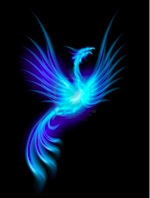
The Mythical Phoenix or fire bird reborn from its ashes
> Download the Phoenix Haiku  trio as a song from Sound Cloud
> Read the original Phoenix Haiku Trio on HaikuFlow

* Please note that links open in a new window!


THE PHOENIX: A COMMENTARY

A few days after Easter this year, I was inspired to write another haiku trio I called “The Phoenix”. There were many reasons why I chose to write this haiku trio. The trio itself deals with the inevitability of death and seeks to capture our longing for safety, order and stability in face of doubt and death. During that period, I was also facing personal health issues that forced me to reflect on what meaning I could find in my state of physical weakness and  to deal with a  growing sense of isolation. 

While the mythological fire bird, the phoenix, is at the centre of the haiku trio, his manifestation is only symbolic as he serves me to embody my hope in a better future when I will return stronger than I was before to the world. It’s not about overcoming the pain and darkness that we may have to deal with in our lives. It’s about accepting it for what it is and attempting to understand its origin and real causes. Like the fire that burns the phoenix, pain and suffering can help us build us inside and make us aware of of what is really important in life. Indeed, while we often despise pain and suffering and, more often, have demonised these experiences in modern life, there’s certain pain and suffering that is both essential and necessary to ensure that we grow and learn about the world and ourselves.

BEING AWARE OF WHO WE ARE...  

Indeed, the first verses of the trio define the phoenix as being inseparable from his burden of having to burn and turn into ashes. Fire itself opens up an opportunity for another life - possibly better than the life he had before. In this sense, if we regard fire to be a metaphor for physical and spiritual pain, then the triumph of the phoenix is not in fighting the fire but enduring it until it consumes itself. For fire cannot survive without being fed but may need to be left to burn out until it is extinguished. Pain and human dissatisfaction represented by the fire can only be defeated if they are accepted for what they are. Experiences and characteristics of human existence that won’t last forever. Yet, while we may dismiss or reject them as they cause discomfort, they can also help improve us and change us for the better. Indeed, the may provide us with a chance to “live again”::   

I am the phoenix…

I will rise from my ashes…

I will live again!

BEING INTO BECOMING

In other words, in order to be happy we must be aware that we should not be so attached to the things we have or the life we have. For while we do good to enjoy what we have been given, we must also be careful not too become too tied and attached to what we have. For, despite any beliefs we might have in an absolute or in our own immortality, the fact is that, ironically, change is our only constant. Indeed, like all material reality, our body and brain are constantly changing. 

This is the process of renewal. However, although renewal can be understood to be a positive idea, renewal itself only describes that change has taken place and doesn’t draw judgment on the nature of that change. Indeed, as all matter in the universe is in the process of losing energy in an ongoing process of entropy, so does our life inevitably lead to our own entropy, we call death. Thus, the last line of the verse emphasises the fact that the phoenix too knows that his existence is finite. 

This  line apparently contrasts but  complements the last line of the first haikus. Death and life must co-exist for the cycle of existence. Death provides the chance for new life to be born. A life without dying  is impossible for, at the end of the day, no matter can escape the process of entropy and decay:

Ever constant change…

This cycle of renewal…

I will die again

Hoping against hope

While I won’t go into the issue of whether there is life for those who die, it’s a fact that the living will continue to live for some time after a person dies. Thus, we choose to remember and honour the loved ones who have died before us. Even if honouring our dead is a proper way to express our love and respect for those who died, it’s a ritual that we do for ourselves. Its a way how we can get to terms with the reality of dying and with the fact that another human being is no longer living with us. Life will continue but such an occasion should also remind us of our own impermanence and mortality. It may even be an opportunity to look at our life and realise that we cannot grow too attached to this world, as one day we will have to die too.

The hope, of course, found in many religious traditions, is that the human spirit will continue to live in another plain or in another dimension. However, we don’t have any proof of an after-life and having proof of such an existence beyond life misses the point. For, in many ways, it’s not where we go after leaving this Earth that matters as human beings. Rather, it is how we lived our present lives that really  matters. For if we lived in constant greed and  competition, if we are  held by insatiable  envy, desire  and hate In our present life, we are already living in a hell of our own creation. 

The ritual of death…

To be buried in this earth…

Hoping to return…

The final lines of the trio promise that, in some way, our material  essence, at least, will remain on this Earth and will contribute In the making of new life. In this sense, I wished to evoke a sense of continuation and as in the second haiku of the trio, to provide an example of renewal. From our deaths, there will arise new life and when this life dies, new life will once again emerge. Thus, the cycle of renewal continues but will continue indefinitely. Of course, the last lines encapsulates our human longing to see our departed loved ones to return. 

Indeed, we unconsciously seek to return to our previous life or to a better life in an after-life. We fear losing our sense of selves because we have unknowingly identified our very being with the world. We fear that death will mean that our unspoken fear that we are indeed nothing without others and without the things that make up this world. We are afraid of recognising our impermanence as this would undermine our idea of a constant and absolute self. In this life, we fear to lose our memory and sense of identity. In death, we fear losing all that we thought would be forever here. In spite of the apparent despair one may get from reading this haiku trio, the facts of life and death that I have dealt with in the trio are not matters of opinion or belief. We live and die, our bodies decay and decompose, matter in the universe is in the process of entropy. Nothing can be created or destroyed. Matter only changes in form but remains present.

A CONSOLATION?

In the spirit of our renewing existence, I find some consolation. For even if I will simply become nothing, I know that a part of what I was on this Earth will remain and possibly yield new life. There may be an after-life, but I feel that I cannot live a happy life if I rest my hope in an after-life that may or may not be there. I am living in the present. And it is in the present that I can find happiness. A happiness that doesn’t depend on objects of desire but that is based on an understanding that as a human being, all I am and all I have is a gift of a life that I must treasure. A life that is ultimately dependent on the world and the people who form part of it.

This, I believe, is the hope in a return that I tried to  express through  the call of the phoenix! 

Friday, April 5, 2013

Is this the begining of the end of human civilisation?

This morning, I heard that North Korea appears to be arming itself for battle. At the point of writing, I don't think we should panic. However, I believe the international community should be more concerned than it has appeared to be so far. The threat of North Korea to use nuclear weapons on other countries is too horrifying to contemplate.


I'm worried because any degree of nuclear force, especially in populated areas, would mean the death of millions in a matter of hours and the impact of the nuclear attack would continue to have an impact not just the populations directly affected but to the whole world. Indeed, it would be like hell on Earth. Just do a search on the horrors of Hiroshima and Nagasaki. We can't afford a nuclear disaster as it would certainly bring about an apocalyptic end to humanity.

I hope the leaders of the world join together to find ways to bring about a peaceful solution to the conflict. Nuclear conflict will potentially bring about the fall of humanity. It's ironic that all human civilisation may be brought down by the energy of a quantum particle. It's equally ironic that a discovery which had the potential to change the world for the better could b used to destroy it. It seems that nuclear energy will remain a threat in the foreseeable future. If there is a future at all.

Yes, there is part of me that is a bit scared of the prospect of a full blown nuclear war. I fear to die and fear to live if I did survive the disaster. I fear to lose the world I know. Yet, I am also aware that our death is always a possibility that is waiting to happen. Unless we don't choose to end our lives, the day and hour of our death remains a mystery to us. I know that this is out of my control but I can only hope and pray that world leaders take the right decision. One that is peaceful and open to dialogue.

Of course, North Korea might remain closed and obstinate in its deadly plans. I'm sorry for the people of North Korea because they have been cut off from the world to the extent that they might not even realise that these actions by its totalitarian ruler could bring about their end and all that we have build together as human beings. This is the time to talk and communicate. It's time to listen and receive. But, then, we may still find ourselves having to face the end of human civilisation.

No, this isn't going to be the end of the Earth. Humanity might leave considerable damage to life on this planet. But, as history tells us, life will prevail and continue to multiply. In this sense, the world doesn't need us to save it. Rather, we have to admit that we may need to be saved from our own selves.

We seem to have continued our old ways in spite of the fact that we knew the environmental damage we were doing everyday. We have gone through our lives building walls between each other based on superficial differences.

Perhaps this is the right time to start building bridges and reconcile together. A time when we can appreciate te the fact we have a common humanity and to celebrate our human diversity.

Even if we may be too late to save ourselves, we still hope in the future. Nobody knows the future. But, we all must die at one point or another. A time may come, hopefully in the distant future, when we will realise how stupid it was of us to think that our lives will remain the same forever. However, when that time comes and we fail to appreciate our Earth and all the people and beings that surround us, we will have to admit that we never enjoyed what we had but now was too late to do anything.

Tuesday, March 19, 2013

Failing in Spite of Trying!

I tried for a second time to get out of bed with the little strength I’ve got left following the long time I’ve been spending in bed. Of course, it could be much worse. I haven’t totally been cut off from society. With all its criticisms, technology has enabled me to keep in touch with the world. I’m even started doing my work from home for a number of days now.
But, it pains me that, in spite of trying to get out of bed on my own, I must accept the fact that, right now, even transferring to my wheelchair is something I cannot do on my own.
I was sad when I realise that I have come to this point. But I have been trying to do my best. Or perhaps I am not doing enough. I remain grateful for the fact that I have retained enough strength to get better. If I keep trying.
It’s tempting for us to believe that others will solve our problems or blame others for our problems. I know that those who believe God is in control of their destiny tend to expect that God will solve their problems. I looked at life that way when I was younger and less mature.
Yet, the fact is that, if we want to move forward, we need to take personal responsibility for our own actions. We shouldn’t expect miracles to happen. The very fact that I’m still breathing after all these years is a miracle in itself.
Not that my life is ‘extraordinary’ as some have told me. Yes, I’ve been through a lot already but I chose to go on. I may have chosen to end it all. But I didn’t. Not because I am brave or courageous but, rather, it was because I fear death. Or, actually, that I feared death.
Yet, inasmuch as death is such a scary prospect for many, I have come to accept it as part of my future. For the promise of death isn’t a reason to die. Indeed, it is a reason to live. And while my life’s failures appear to be moments when I come to cry and to regret, without them I would never succeed.
For unpleasant as it might be, a failure means that you have tried. For if you always succeed in whatever you do on your first attempt, where would your satisfaction be?If life was so easy, so free from challenges and difficulties, would their be a point in living? This is difficult to answer. And, we can’t answer it because we are human beings.
We idealise a life where no one dies, when we become perfect incarnations of humanity. When we don’t have to suffer in any way.
Yet, I wonder whether in our state of immortal perfection, we will still be able to feel compassion to others or, else, become no different than the mythical gods of ancient Greece where others became mere objects of play and manipulation.
Our life may be not that much when you think about it. We live to die. We change from healthy young children with a will to love and be loved, only to find ourselves old and, sometimes, tired of living. But amidst the sadness, the despair and the disenchantment we might experience, there is so much more to celebrate. There’s still much we can do. So much we can do. Life is impermanent, yes, but that is all the more reason to try to live it to the full and make the best of it. Its an opportunity to change for the better the life of those who are still chained by injustice, violence and by inequality.There will always be failure.
There will always be lost lives. There will always be tragedies and deaths. Pride would lead us to forfeit our responsibility and blame others or even a god but never ourselves. Humility, on the other hand, bids us to accept our failure as an invitation to learn.
Pride will tell us that we don’t depend on anyone. Humility teaches us that we are co-dependent.
Pride deludes us into believing that we will live forever. Humility reminds us that we are living on borrowed time.
At this point, I feel I have failed in spite of trying. Pride tells me that I have failed as a person for having to ask for help (yet again). Humility reassures me that this a chance to try my best again and accept the fact that needing one another is part of being human. There’s no shame in failing if one has genuinely tried to do better.

Sunday, January 13, 2013

Pain - Teach Me Life

I'm in pain once again. It's my back and legs now as well. It's hard and I struggle to type this entry in my present condition. So, I'll limit myself to a few reflections.

Of course, it's difficult for me to cope at times. I get to ask the question - why me? After all, I have been through so much over these years that I don't need this. Yet, when I realise how others may be going through much more serious suffering, I am compelled to ask why not me. What makes me so 'special' as to be spared to share in this human experience? Wouldn't be arrogant of me to expect to be spared just because I have through enough pain?

Doesn't this experience offer me the opportunity to Learn about who I am and my relation to others and the world?

Should I consume myself in anger and personal concerns while failing to grow in compassion? Aren't we, humans, all in the same situation? No one can escape this.

I also lay my hope that like everything else, this will end. Even if, at present, it seems hard to believe. I could deny myself the possibility of hope and indulge in self-pity and close my heart to the world. But that wouldn't help me or anyone for that matter.

This is my current reality. Uncomfortable - sure. Unnecessary - perhaps. But, useless it is not.

I witness the present moment. There's pain that comes and goes. But every one of these moments is unique and I must trust and live in the realities that surround me.

There'll be times of hope and others of despair. Successes and failures in how I dealpain. Yet, I refuse to define myself with this temporal pain. My humanity goes beyond that.

I may choose to drown in despair or affirm life by accepting this experience, learn from it and letting go.

Nobody can decide this but me.

I will try to choose to follow the path of hope.

This is a choice that no one can make on my behalf.

But it's a choice that I must make.

Wednesday, January 2, 2013

The True Meaning of Charity (Part 3)

GO TO PART 1 - PART 2 - PART 3


As a disabled child, I was angered by people who thought they had the authority to judge who I was. Others who took it upon themselves to define me. To rob me of any claims to individual identity. I know it was wrong of me. However, given the oppressive ideas of who I should be coming from society, I rejected my body and attached myself to a false idea that I was “normal” whatever that word meant. This might be the only way I could escape from sinking into dependence or of submitting to a poor idea of what I could achieve or who I should be. Unfortunately, as we try to deny part of who we are - in my case, the body - we  are also denying to recognise our human reality - choosing instead the safety to an attachment to a fiction that, inevitably, creates dukkha or dissatisfaction.


However, before we can take the step and recognise that what we have taken to be “charity” so far has been largely a monetary exchange to calm our conscience. Our practice of “charity” has often been a way to escape from the reality of life and of human injustice. It may have been a way to avoid facing the person we deem to be “In need”. When, in truth, we are simply distancing ourselves because we think we are better persons and, in some perverse way, may even believe that the people going through hard times somehow deserve it. This isn’t real charity however. It shouldn’t be the intention of performing an act of charity for sure.


What charity means, according to my current understanding, is the act of being there with the other person. Not believing you are in any way better or more fortunate. It’s an act where you give yourself to the other, placing secondary importance to any differences that are imposed by society. It means accepting the person as a unique individual and at the same time you acknowledge the differences where appropriate, charity requires us to look at the other as a human being. Like us, vulnerable to the process of growth and decay, but also singular in his/her expression of humanity. Genuine charity cannot be separated from compassion. For, in a sense, charity and compassion are, in their true sense, manifestations of the human need to love and belong.


While false charity singles out the person in need as someone external to the ideal of humanity, true charity and compassion recognise that the ideal is flawed as it doesn’t exist in the real world. People are not healthy all the time. People get old. people die. And, as for impairment, many people acquire an impairment as they grow older. Thus, it’s the idea of a perfect, healthy and “normal” body which is, in effect, the abnormality here. No such persons who defy the process of nature exist in the physical world we inhabit. And, it’s time that we change our idea of charity from a means to appease our egos and forfeit our human responsibilities to our brothers and sisters, and really practice a compassion that recognises the singularity and uniqueness of the other and, yet, embraces the other as part of his or her own human family.


The meaning of charity is about being fully human and opening our heart and mind to others. Not for the sake of feeling or looking good. It’s about reaching out to the other without the shackles of prejudice and pride and vanity. It means being there sharing in the experience of life without imposing yourself on the other but listening to the heart of the other as a person first.


As HH the 14th Dalai Lama reminds us:


If you want to be happy, 

practice compassion.

If you want others to be happy,

Practice compassion... 


Only genuine charity and true compassion can guarantee long lasting happiness for us and to the world that surrounds us.


THE END

The True Meaning of Charity (Part 2)

GO TO PART 1 - PART 2 - PART 3


I felt that this background information about my past is important in order for one to better understand the other side. That is, the side of the one “supposedly needing charity”. For, unfortunately, while, rightly or wrongly, many praise the efforts of those who help a particular cause, it’s often the case that those who are “in need of help” remain hidden or even distorted to pull at the heartstrings of potential alms giver. And while the media may attempt to reach out to the people that are facing difficult life circumstances, the lives of such people is often misconstrued to fit into the idea that these situations arise only out of misfortune and society appears to have had no part of the play in maintaining a state of inequality or poverty.


As a disabled person, I can speak of my experiences as a disabled person. At the same time, while I share my experience of disability with many other disabled people, my experience is also unique and individual. Not every disabled person may have had the same experience of a boyhood which included a conflict between the ideal of a mind persistently contradicted by for what was, for many, an abnormal body. These are the thoughts and feelings that resurface every time I am witness to manifestations of so-called “charity”. But, on reflecting on my life experiences, I realise that our modern conceptions of “Charity” have seldom to do with the idea of charity as it was originally intended. 


In fact, what “”charity” has come to mean today is a market exchange where people can calm their consciences by exchanging money instead of bothering to look at others (deemed less fortunate) as equals. In this, modern “charity” is diametrically opposed to the original meaning of a charity that doesn’t seek for its own self. Don’t get me wrong, money is an important element that can help people get out of difficult situations and live a better quality of life they deserve. However, what I have an  issue with is the intention behind the modern constructions of charity. Indeed, those society judges in need of charity are, in many cases, put across as undesirables, broken or wretched and “lives not worth living”..


CONTINUED TO PART 3