Showing posts with label peace. Show all posts

Wednesday, September 11, 2013

Where were you on September 11?

Today, the world remembers the terrible events that took place in New York. More exactly, we are invited to spare a minute for the many innocent lives lost to the terrorist acts of a terrorist organisation we now know is called Al Qaeda. I have shared my thoughts and reflections on this tragic event every year on this blog since I launched it. Undoubtedly, the events which took place on September 11 changed the course of our futures for ever. Yet, now I am a bit reluctant to write because enough has been said and written that any word I add appears superfluous and, indeed, a way to draw praise.

On the other hand, in spite of risking to go with the flow, I feel that I can’t just let the day pass by without reflecting on the implications September 11 had on the world and how we relate to each other. In addition, I was lucky enough to have gone on top of the World Trade Centre (WTC) when I was visiting my relatives who live in the US. In fact, when I heard the news, my thoughts turned to my relatives abroad and, for a minute, it seemed I relived the times I had been one day there as a tourist.

Moreover, since the WTC, one of the buildings hit by the planes hijacked by the suicide bombers was also place where people from around the world could work together, it can be argued that the attacks against that particular building was an attack on the whole world. Obviously, it’s natural that after people learned of the people behind the attack, many hearts were hardened and the minds were poisoned by hate and resentment of the other, the “enemy”.

The fact that we would learn that Islamic extremists were behind all this would also fuel the growth of anti-Islamic sentiments still evident across the world. What should be a religion of peace which shared with its monotheist sisters - Judaism and Christianity - continued to transform itself, in people’s minds - to a religion of hate and violence. Thus, enforcing the divisions that already existed between peoples. A division that would erode any hope of peaceful dialogue and peaceful communication as the majority of the West chose to employ the very means of war and violence it had so heavily deplored.

Yet, the truth is that those who were and who are responsible for acts of violence and atrocities aren’t Muslims but, rather, using Islam to achieve their political ambitions and to eradicate all those they perceive to b a threat to their position and power. Yet, military action, as we have seen in the past, rarely achieves its aims. The more our response is that of violence and the more we cling to our feelings of hatred and resentment, the more we fortify the image of the “other” as the “enemy”. Thus, we may fail to understand that, even behind the most atrocious human acts, there’s a reason. Irrational, yes, but it is there.

For everyone justly spoke up against the attacks of September 11 but, I suspect, only a few of us really tried to understand why all this happened. While those leading the immoral cause of Islamism or to force the whole world to convert to Islam according to Al Qaeda, may be motivated by power and control, the people supporting and helping them may really believe that they have suffered too much misery when under Western rule that the only solution is to bear arms and fight.

We can’t forget our responsibility as our Western powers can’t be said to have been totally innocent and didn’t or aren’t still exploiting the natural resources of nations of the majority world* to build their own technology and infrastructure. Have we forgotten the many innocent casualties of random attacks/? In no way, does this justify violent and terrorist acts. However, we must be aware that we are also responsible for certain realities present in other nations simply because we value the land instead of the people who inhabit it. We’re ready to poison water supplies, cut down trees and keeping in power those we think we can trust not to oppose our authority.

Of course, there is also a lot of good we do, as Western nations, in the world to alleviate suffering. And wile it’s debatable whether September 11 could have been prevented, it’s true that it was a result, in part, of a collective arrogance and indifference in the ways we often act in countries where we think of people living there as somewhat beneath us.

What the world has gone through on September 11 should be a reminder of the urgent importance of keeping our channels of communication open. To listen and engage in peaceful dialogue and negotiations when we can’t agree. To open our heart and mind and truly listen to what the “other” is saying. To remember the victims on September 11 burt to be prepared to let go of all our feelings of enmity and distrust. To be prepared to work together as we remain human beings who share a lot in common. Humans who share in our hopes and dreams, who have our fears and nightmares, and who want, ultimately to live a happy life.

Yes, I remember September 11. Yet, my thoughts also go out to Syria and to others who are dying right now because of famine and conflict. t. Thankfully, it was decided that, at present, no military intervention will be carried out against Syria but the path of dialogue and negotiation will be now pursued. Have prayers been answered? Or, more likely, the voices of peace have been heard and taken note of. Favouring one side over the other - who both claim they’re protecting the people - would have meant certain disaster and more bloodshed and acts of violence from both sides.

I conclude by asking the question which is also the title of this entry:

“Where were you before September 11?”

This isn’t a question to know where you were then. It’s rather a question that is intended to provoke you to think about how you viewed the world before September 11.

Have you thought about such a horrible thing happening?

Did you support peace and justice or did you go on life without caring?

Did you choose not to care about people who you thought were far away and, thus, insignificant?

Don’t worry if you answered yes to all these questions.

The truth is that, if anything, September 11 made us aware of the fact that we are connected with each other more than we thought. Even if it did harden some hearts, it should have awakened us to the fact that we depend on each other. We can’t afford to be indifferent to the injustices against others. We can’t ignore the environmental impact we’re having on our planet as all of us depend on it.

To truly honour those who died or would die as a consequence of the attacks on September 11, we must do our part in ensuring that our world remains a peaceful place that fosters an environment of mutual respect and cooperation.

One good place to start is within our own social circle and community.

But first we must cultivate the seeds of peace and compassion in our own hearts and minds!

I prefer to use the term "majority world" as opposed to "developing world" or "less developed" countries as the latter terms are making a value judgement about other nations and people assuming they are somewhat inferior. "Majority world" also reflects that the majority of the human population lives there. The opposite is true if I use the term "minority world".

Sunday, September 8, 2013

A Day of Victory: Whose Victory Is It Anyway?

I've pondered on war and the consequences of violent conflict since we started hearing of the escalating violence in Syria. Yet, I considered writing about war and violence in earnest since in Malta, we celebrate Victory Day today, the 8th September.

Of course, September 8 also marks an important feast on the Catholic calendar as it's the commemoration of the birth of the Virgin Mary which is still a significant figure for a large number of Maltese citizens who tend to identify themselves as Catholic - even if they may not practice the faith. However, it's also a national holiday since two important events crucial to the history of Malta happened on that fateful 8th September.

The first event occurred in 1565 when Malta, then under the rule of the Holy Order of the Knights of Saint John, who with the help of the inhabitants managed to force a retreat of the forces coming from what was then an expanding Ottoman Empire. Apart from preserving the Christian religious identity many Maltese had adopted back then, historians have argued that if the Ottoman Empire had captured Malta as it had Rhodes, the whole of Christian Europe of the time would have been under threat.

The second victory happened in 1943 when Malta was saved from sure famine as convoys with essential food and supplies got to Malta thanks to the surrender of Italy. At the time, Malta was, once again, under foreign rule. This time, our country was a British colony.

If one thinks about it, none of these conflicts were initiated by the Maltese inhabitants themselves. One was taken up by the Knights of Saint John and, the other, by the British Empire. Granted, our descendants had it in their interest to protect their land and the limited resources they had from imposing powers and the intervention of our colonisers has, undoubtedly, saved us from certain invasion.

It’s also worth noting that our former “enemies" don’t exist as such any more. Italy is no longer fascist. The Ottoman Empire has disappeared. The same can be said about our past colonisers. Britain is no longer a great empire, even if it preserves some of its former aspirations, in a way, through the Commonwealth. As for the Knights of Saint John, it has no land of its own and only functions today more like a philanthropic organisation.

It can be argued that these victories ensured that Malta became the country it is today. Yet, these victories may be said to be victories for Malta but not necessarily belonging to the “Maltese” inhabitants. At the same time, those we had so vilified in the past are no longer our “enemies”. In fact, descendants of the old colonisers now join us in Europe and are our partners as well.

Unfortunately, some may celebrate Victory Day for the wrong reasons. Indeed, some appear to rejoice in Malta having slaughtered the invading soldiers of the Ottoman Empire or, else, celebrate the many deaths sustained by the fascist Italian forces and their humiliating defeat..

True, we may find the values that our “enemies” held , inconsistent to our own principles and ideals or even find them morally deplorable. However, we must not lose sight that beyond the "monstrosities" we project upon our "enemy", there are still human beings just like us. Besides, each side in the conflictt lost lives.

And many times, it is the younger generations who suffer the most in bloody conflicts since they are the strongest and usually the healthier people of a population and end up fighting the battles of others. Here, it's important to ask ourselves why? Why all this loss of life? One sure thing is that all this happens again and again. It is happening again right now in Syria and wherever there is violent conflicts taking place.

Granted, there may be various reasons for war. However, all may be rooted in a failure of communication. A failure to see other human beings as being our brothers and sisters. Clinging to power and control because we desire more. We become unresponsive to the pain of other humans because, in our mind, they cease to be human but become symbols of beliefs we despise. Violence and war becomes our only response to people we feel we lost control over.

In this sense, I find it a bit confusing to speak of victory on “Victory Day”. Yes, it’s a day when we remember all those who have died and whom made it possible for Malta and the Maltese to be what they are today. Yet, it shouldn’t be a manifestation in which we express our pride for having killed off invaders. Rather, it should be an occasion to remember all those who perished because they believed that they were fighting for a good cause - even if they might have been blindly following their leaders and superiors. Even if they might have been unaware of the ulterior or perverse motives of those who should be leading them.

On both occasions, Malta’s inhabitants where only trying to defend their land. Indeed, being an island, it was the only piece of rock they had. On the other hand, it must be said that both the Knights of Saint John during the Great Siege and the British during the war, protected Malta mainly due its location in the Mediterranean between Southern Europe and North Africa since it offers both powers with an ideal strategic position to conduct military operations against their enemies at that time. Strictly speaking, their effort to protect Malta wasn't an act performed out of any altruism or motivated by a genuine concern for the inhabitants. In fact, to the British of the time, Maltese people remained natives and naturally inferior to the English.

In truth, the divisions both us and the colonisers might have set remain creations of our minds and of the societies of our time. In fact,as history changed, we realise how meaningless many of the national values we believed in back then. And, except for a number of extremist and xenophobes, we don't don't explicitly believe that there are inferior and superior peoples.

But what does all this have to do with Syria?

We have a civil war escalating in Syria. Again, we witness a struggle of powers whom have defined one another in one of two main camps. Those who support the regime and those who want it destroyed. Some minorities find themselves excluded from both and threatened by an uncertain future. Battling parties are all competing for power and control. Some because they are being unjustly persecuted, others because they want to cling to power. Others even support one side over the other simply because they are seeking their own interests or justly fear that change might destroy them and deprive them of their freedom.

This is human nature. Everyone seeks to survive or gain advantage because they fail to acknowledge a common humanity. Even if war and violent action may be justified when parties persist in destroying the innocent and put lives at risk, it should be only the last resort and it should be moderate. I suspect that the path of war and violence appears to be favoured by Western powers depending on their affiliations with Syria in this case. So, it’s disheartening to hear that the US is close to undertake military action against the Syrian regime. However, I fear that this might cause greater waste of life and enforce divisions between the Syrian people - who will be the ones losing out in each case. Yet non-action would be equally devastating and unacceptable. That’s clear.

Yet, has the world took time to explore whether there are possibilities of peace and dialogue. Have we thought of ways of bringing justice to Syria by holding the perpetrators of violence accountable to their actions and intervening with a motivation to foster peace and not violence.

In this I join in the appeals of both HH Pope Francis and of his HH the 14th Dalai Lama in their call for the world to seek peace rather than war.

In war, there are no victors but what remains are broken families who lost loved ones. What remains is a taste of resentment that outlives any war.

What remains is suffering. Suffering that we create ourselves.

Violent action rarely achieves its objectives. It might bring about more immediate results, but it doesn't address the real root of the problem but only treats its symptoms.

I recall the saying that history is written by the victors as I conclude reflecting on victory day and on the events taking place in Syria. We may rejoice at the fact that Malta hasn't fallen to our past "enemies". Indeed, some attribute our survival during the Great Siege and World War II to the direct intervention of the Virgin Mary since, as I explained earlier, the 8th September is the feast of her nativity. However, while it may be pointless to speculate whether Malta would have been worse off if we had fallen to our past "enemies". But, I am sure that if history had turned out differently and Malta became Malta Arabia or Malta Fascista, I'm sure that there would be celebrations going on of a different kind. And I wouldn't be who I am today if I would have been ever been born in such a parallel Earth. Yet, I am here today and, thus, I have to carry my own responsibilities and do the little I can to make the world a better one than when I found it.

Granted, we have little or no power to change the world on our own.

Yet, we cannot afford not to care while thousands of people around the world, human beings like us, are suffering unnecessary suffering because they fail to appreciate the fact that they depend on one another and no one can claim to be better than the other.

I hope in peace - even if I know war is looming.

I still believe there’s a place for dialogue - even if the world seems to have drawn its own conclusions.

I believe that the only victory is a victory over the enemy within that seeks to fill us with vain pride that forces us to crush our fellow brothers and sisters.

Remembering the fallen is good, yes, but clinging to what we think we are is but a harmful attachment.

May there be peace in Syria and around the world.

May no more people die in vain.

May today be a better day. For our tomorrow depends on it!

Tuesday, July 23, 2013

What Can We Do? A Meditation on Action

Life changes. That's a fact we all know but people seldom think about. Every day is unique but in our fast moving world, we have created the illusion that there's such a thing as a "normal" week that includes a period of rest we call the "weekend".


The more I grow in my practice of various forms of meditation, the more I realise how easy it is to go through life following habit and routine without stopping and reflect on the point of it all. For, while life may seem to be going great, we night fail to appreciate the moments in which we find our peace and comfort. It's only when we realise we lost something that we start to appreciate its value.


We also risk believing that we have more control over our world than we really do. As life goes through its natural cycle of birth, death  and renewal, we change as well. I have gone through particularly hard times in my life recently and I can't say that I found my peace.


Indeed, while we may have an idea that mindfulness and meditation provides us with peaceful bliss, its proper practice also exposes us to the scars which were deeply hidden in our mind. Yet, unpleasant as they are, acknowledging their presence can help us to slowly detach ourselves from them.


Even if I am trying to give up my attachment to the world, I confess it's harder than I thought. I still remain attached to my pride and sometimes still crave to acquire a particular thing or position. But then again, I know how . foolish my thinking is. Yet, I can still be a fool. Acknowledging that is the first step - even if my pride gets angry.


The fact is that there's very little we can change in the world. There are so many factors that are permitting that we have the right conditions to keep alive that it would be impossible to list them and some I don't even know about. We also depend on the living world, including the people we live with on this rotating piece of rock. 


So what can we do? While we may not be able to change the world or even "save" it, there's only one thing I learned that you may find of value. You can only change yourself. Yet, until you take the time to get to know who you are, each day will remain as insignificant as the one before. 


Don't expect to change overnight and don't even expect it to be painless. You may even find you're failing, like I feel lately, but you should keep in mind that the real peace, freedomm and happiness we all seek is not to be found in the world but in you and in how far you're ready to recognise your littleness in the  context of the whole.

Friday, May 17, 2013

An Elusive Silence

I find it difficult to find moments of complete silence in today's wold. I remember that as a child, I could find a place at home or when I'm outside when there's almost complete silence, interrupted by the pleasant song of birds and possibly the sounds of crickets in the summer months.

I don't want to sound too nostalgic here. But, the fact that as I grow in my Buddhist practice of meditation, the more I've come to appreciate the value of stillness and silence. Unfortunately, if the silence I am seeking depended on the environment or the people around me, then returning to a past where there were times when the world seems to rest and simply become silent for just a few hours.

Today,, we are literally bombarded by a cacophony of noises, music that is sometimes too loud to bear, the sounds emanating from our mobile phones and email programmes informing us that we received a request of some kind, or a reply and so on. Requests that distract our attention from the world around us. Tools that are meant to enhance our communication but which, at times, isolate us from those who are around us.

I wonder if my own need to keep in touch with the virtual world is but an escape from facing the immediate world. Or, if this as sometimes an attempt to escape from a silence that might draw my attention to parts of who I am that I rather not explore. Parts of me that I would rather be unaware of. Painful or disturbing memories of a past that I wanted to forget. But, then what does this say about me?

If we are seeking more a life where we need to be connected with the world from the moment we wake up to the moment we are getting to sleep, what does this say about us?

The reality is that, unless we can travel to a remote part of the world where technology hasn't caught up, the reality of those who are living today in most parts of the minority world and small parts of the majority world, remains one where silence is a rarity or an impossibility. However, amidst this noisy world we have created, I still find time when I can find a silence.

It's not a silence where's there's no sound such as that found in the vacuum of space. It's the silence I find as I become aware of my breathing. As I stop moving and just rest my body and let my thoughts pass by. It's a silence where I know that I have a time when I only need to listen to the world around me and not necessarily react or respond. It's simply stopping and noticing the sounds around me, the vision I still have and be aware of the sensations of my body.

This is the silence that I may aspire to. For, even if we use our mind and body on a daily basis, we often take all this for granted. That is, of course, until we become ill or are in pain.

It is recognising the uniqueness of our present experience that we can actually enjoy life and discover that silence that provides us with the space to be who we truly are!

Friday, April 5, 2013

Is this the begining of the end of human civilisation?

This morning, I heard that North Korea appears to be arming itself for battle. At the point of writing, I don't think we should panic. However, I believe the international community should be more concerned than it has appeared to be so far. The threat of North Korea to use nuclear weapons on other countries is too horrifying to contemplate.


I'm worried because any degree of nuclear force, especially in populated areas, would mean the death of millions in a matter of hours and the impact of the nuclear attack would continue to have an impact not just the populations directly affected but to the whole world. Indeed, it would be like hell on Earth. Just do a search on the horrors of Hiroshima and Nagasaki. We can't afford a nuclear disaster as it would certainly bring about an apocalyptic end to humanity.

I hope the leaders of the world join together to find ways to bring about a peaceful solution to the conflict. Nuclear conflict will potentially bring about the fall of humanity. It's ironic that all human civilisation may be brought down by the energy of a quantum particle. It's equally ironic that a discovery which had the potential to change the world for the better could b used to destroy it. It seems that nuclear energy will remain a threat in the foreseeable future. If there is a future at all.

Yes, there is part of me that is a bit scared of the prospect of a full blown nuclear war. I fear to die and fear to live if I did survive the disaster. I fear to lose the world I know. Yet, I am also aware that our death is always a possibility that is waiting to happen. Unless we don't choose to end our lives, the day and hour of our death remains a mystery to us. I know that this is out of my control but I can only hope and pray that world leaders take the right decision. One that is peaceful and open to dialogue.

Of course, North Korea might remain closed and obstinate in its deadly plans. I'm sorry for the people of North Korea because they have been cut off from the world to the extent that they might not even realise that these actions by its totalitarian ruler could bring about their end and all that we have build together as human beings. This is the time to talk and communicate. It's time to listen and receive. But, then, we may still find ourselves having to face the end of human civilisation.

No, this isn't going to be the end of the Earth. Humanity might leave considerable damage to life on this planet. But, as history tells us, life will prevail and continue to multiply. In this sense, the world doesn't need us to save it. Rather, we have to admit that we may need to be saved from our own selves.

We seem to have continued our old ways in spite of the fact that we knew the environmental damage we were doing everyday. We have gone through our lives building walls between each other based on superficial differences.

Perhaps this is the right time to start building bridges and reconcile together. A time when we can appreciate te the fact we have a common humanity and to celebrate our human diversity.

Even if we may be too late to save ourselves, we still hope in the future. Nobody knows the future. But, we all must die at one point or another. A time may come, hopefully in the distant future, when we will realise how stupid it was of us to think that our lives will remain the same forever. However, when that time comes and we fail to appreciate our Earth and all the people and beings that surround us, we will have to admit that we never enjoyed what we had but now was too late to do anything.

Tuesday, December 4, 2012

Home, A Place of Happiness


I can’t hide the fact that when I wrote the last entry Longing for a Place to Call Home, I was gripped by fear. Fear of change as I was embarking into the unknown. Today, I realise that I was too attached to an ideal state of happiness. As if there’s a particular location which guarantees one’s happiness. I was also afraid of change and a transition that appeared to threaten the very core of who I am.


Even if I still feel a strong need to be in silence and for contemplation, the fact is that it was a mistake to think that a particular place can guarantee my peace and happiness. I realise that I can be in that place of peace in the present, wherever I am. Happiness, I am reminded, isn’t something that can be bought or attained by external objects. While objects we desire might give us momentary happiness, the feeling quickly fades away. And we find ourselves longing, wanting and craving for another object which appears to hold the promise of happiness.


Now that eight days have passed since I moved in to my new house, I am hopeful that it’ll become my home as well. I have learned a lot from my own self and in relating to the others who are sharing in this experience. I know that I may still be scared of change. I learned that when it feels I’m isolated, instead of reaching out to people, I tend to distance myself more. And, most importantly, I have realised that the more we hide from what seems to be an oppressive reality, the more problems and challenges appear insurmountable - until the only reaction is for us to escape or deny ourselves the chance to explore other possibilities or solutions.


This post appears to be a happy ending to a tale that appeared to end on a tragic note. However, these last hours have opened my mind to the possibility that, maybe, if I wasn’t so resistant to change, I could make things work. I can always find a place of peace and refuge in my heart. I recognise that there can be no lasting happiness in a material world that remains impermanent, prone to a cycle of entropy. I can’t even be sure of a reality beyond this life. However, what I am sure of is that as long as I remain aware of the present moment and appreciate its preciousness and uniqueness, I can be truly happy.


Life may be hard or draw us in moments of sadness and melancholy. We may be robbed of all our possessions and denied our friends. And, still, we can be happy. Yes, this is a tall order and I’m still far off from achieving such kind of happiness. For one can be rich or have all the things one desires and still be unhappy. Indeed, happiness isn’t simply an emotion or a feeling. 


Happiness is a state of being...


Sunday, December 2, 2012

Longing for a Place to Call Home

It’s now almost a week now since I’ve been living in my new house. Yes, it’s still a ‘house’ to me for now. There have been different emotions that have emerged as if from a deep part of who I am. Even if I’m in a community setting, there’s still a sense of isolation and alienation. I am discovering that settling in isn’t an easy thing. I have doubts at times on whether I was prepared for this radical change. I find myself in a reality that I have to accept. A reality that I wish to deny but is one that I face every waking moment.

I find value in this opportunity as it made me realize that I need my personal space, silence and time to reflect and meditate. I like to socialize, mind you, but I am aware that I like to be on my own. Perhaps this reflects badly on me but I prefer to lead a quiet life and I certainly need some time alone. This, I feel, what still lacks in my new life. I may not be cut out for a community setting. This isn’t anyone’s failure, I know, and I will try to stay here and be open to this experience. I know that many have worked hard and still working to make this transition I success. I owe it to them to, at least, do my best.

However, today, I feel like a refugee, a man without a home. A restless soul seeking peace. The peace of a place to call home. I may need to adapt to my new life but there’s always that lingering sadness and a deep sense of abandonment. I trust that this feeling will one day cease as it is, like anything else in the cosmos, impermanent. I may have to be more willing to reach out to the others who are sharing this experience together with me. But, I admit, that I long for the moments when I have the time to meditate - just listening, just witness life that is unfolding in my presence.

I can’t expect anyone to relate to my need for a time to contemplate. I Know that in my active life, I am expected to be on the go and to react (rather than act). I need a time to reflect about my life - how I am here and where I wish to be. I can forget the past but also   acknowledge the present that I’m living. For every day I am living, I am shaping the future. I must accept that it’s up to me whether to go on living this new life. Inasmuch as there are many things that I can’t control or choose in my life, ultimately, I remain responsible for my own future. A future, I hope, will lead me to further growth and happiness.,  

Having said that, I still struggle with the feeling that I don’t belong here. A feeling that there’s an emptiness that rules my days. An uncertain future, hopes and dreams that have been crushed. A profound longing for a home that I never had and which, it seems,, I will never have. Like the ancient Hebrews during their exile in Babylon, I find myself thinking of the ‘promised land’.


1  By the rivers of Babylon,
         there we sat down, yea, we wept,
when we remembered Zion.

2  We hanged our harps upon the willows in the midst thereof.
3  For there they that carried us away captive required of us a song;
         and they that wasted us required of us mirth, saying,
Sing us one of the songs of Zion.

4  How shall we sing the LORD's song in a strange land?

Yet, in my case, this promised land of Zion is where I can truly express who I am. A place where I can find a silent place to manifest my full being. I still feel that I am in a strange  land. I feel I don’t yet belong here. This may be a failing on my part. And, I will try to do my best to make it work. The only thing I can truly say is that time will tell. Experience will guide me in how to proceed.

Monday, November 12, 2012

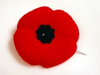
The Poppies of Flanders Fields

The Poppy - Used as a Symbol to Remember the Horrors of War


"In Flanders Fields" 
By John McCra


In Flanders fields the poppies blow

Between the crosses row on row,

That mark our place; and in the sky

The larks, still bravely singing, fly

Scarce heard amid the guns below.

We are the dead. Short days ago

We lived, felt dawn, saw sunset glow,

Loved, and were loved, and now we lie

In Flanders fields.

Take up our quarrel with the foe:

To you from failing hands, we throw

The torch; be yours to hold it high.

If ye break faith with us who die

We shall not sleep, though poppies grow

In Flanders fields


A few reflections... 

Yesterday, 11th November at 11 in the morning, Commonwealth countries celebrated Remembrance Day. However, you may know this day from many of its titles, such as Poppy Day and Armistice Day.

This day was originally intended to remind us of the thousands of men, mostly young men, who died in the trenches of World War I and World War II. The poppy, used as a symbol of this event, was inspired by the poem above entitled “In Flander’s Field” by John McCrae who served in the First World War himself.

It appears to be a simple poem but it prompted me to reflect on the futility of war. Indeed, all the horrible killing that took place on the fields of Flanders, Belgium, were overtaken by nature. The human acts of murder and destruction were replaced by rows and rows of red poppies. In a way, one can see this of nature’s way of expressing mourning for such a great loss of life.

One can argue that the wars taking place in the beginning of the 20th century were necessary to protect our civilisation. Yet, I don’t know whether this was our only option. It appears to me that amongst the chief causes of war is our tendency to separate ourselves from others. A misguided belief that we are somehow better and far superior than other people. And that those who don’t conform are keeping us back or, else, taking from us what we think is our by right.

However, the poppy fields appear to teach us that even from the worst acts of humanity, not all is lost. A hope, perhaps innocent, that death isn’t the final answer. That, terrible as things may be, there’s still hope for growth and renewal. A hope, perhaps, that we recognise the futility of war and violence. To take care not to repeat the patterns of violence and genocide.

Alas, wars are still with us today. And, the poppy day has been sometimes been misappropriated to promote the idea of patriotic duty and, perhaps, lure young men and women into war. A war that remains ugly as it goes against our basic need for each other to make it in this world.

This is more relevant today as we have greater power to destroy the world thanks to our nuclear technology. With these means of apocalyptic potential comes great responsibility. A responsibility that is unprecedented in human history.

For, while we may think the ‘end’ will never come, we should be careful about making the right choices in how we live and what decisions we have to take. We may not be able to stop it if we are faced by war. But we must make sure we have tried. The people living in pre-war Europe never imagined the terrible wars they would have to suffer. Yet, there were signs but people forgot or just remained silent. Until, of course, the human tragedy of war happened.

It may be time for all of us to reflect on the past which, for many of us, happened decades before we were born. Reflect on what remained of all the bloodshed. Memories, perhaps, but even those are slowly fading. Have we progressed? In some ways but there’s still war and fighting around the world on similar issues. Can we afford to be unconcerned? I can’t answer this for you.

The only thing I can say is that everything must come to an end. Even our human species in the course of time. It’s in our interests to protect our world and to invest in each other instead of destroying each other.

If we kill ourselves off tomorrow, the Earth will go on living.

Maybe poppies will die too.

But life will probably prevail.

Monday, September 10, 2012

September 11: An Open Wound?

I have already talked about the terrible events which took place in the United States on September 11, 2001 last year in the  post entitled 10 Years of Fear. Eleven  years have passed and we do well to remember the memories of those who died on that day and those who died as a consequence of 9/11. But it would be wrong to stop there and not be ready to move on, and, yes, let go.

For, horrible as 9/11 was, this event isn’t actually the cause of all the distrust and intolerance that we still witness to this day. Hate and revenge have always been a dark part of human nature. If you look closely and reflect on what might have caused 9/11, you may be surprised that there’s a very rational explanation to why we have reached such levels of hate and violence.

The fact is that even before 9/11, there was fear. But accounting for 9/11 in terms of fear may appear too simplistic and unsatisfying. Thus it’s important to qualify how fear operates at different levels. Thus, we can speak of the:


Fear of Change


As long as some do not accept that the world has changed, they will try to externalise their frustration through hate speech and violence. Thus, we have ideologies that misappropriate religion for their own political interests. Recent examples include the American Christian Right and Ismism. All promise to return to a world where they feel safe and control because they cling to a false belief that only one view of the world is valid.


Fear of Loss


Some of us  feel threatened by the ‘other’. There is a tendency for us to believe that our view of the world is correct. A false belief that we are independent selves and that we’re better or more superior than other people. We feel threatened by difference because it challenges our map of reality. We are ready to cling to beliefs that are irrational or incorrect. We justify violence because we see it as a way to protect who we are - or who we think we are. Thus, we have sexism, racism, disablism and so on and so forth. In a sense, we become slaves to the labels we give ourselves.


Fear of Losing Self


Finally, perhaps the subtler of fears. The fear of losing our self. In a way, this can be compared to the fear of death. But, the only difference perhaps is that this fear is more present and a real possibility. We fear to face who we are may be because we are not really sure of who we are. We keep holding on to our convictions not out of genuine effort but because we know that, if challenged, we are defenceless. We want to retain control and fear change because we were never on a solid foundation to start with.


There are no easy solutions to fear. However, what is sure, is that closing our minds and hearts to others who we perceive as different, foreign or as a threat, won’t heal the wound. Indeed, this may worsen the cycle of violence and hate that exists today. There remains a mistrust in our world which is somehow justified.

For, the modern war (if you may use that word) is increasingly becoming an individual matter. Everyone can be an enemy. It may even be a friend, a relation or someone you know. The recent shootings in Aurora, for example, exemplify how easy it has become to commit  individual acts of violence. There, are of course, suicide bombers still killing others they want to destroy and killing themselves in the process.

Thus, it’s now not only a matter of nations or world leaders whether there’s world peace. Then, it follows that it becomes more important that we are the ones who work for peace. Yes, there is the fears I discussed above.

We fear change. But, in truth, change is part of life. Ironically, we cannot change the fact that things change. It’s not a good or bad thing because change leads to growth and can lead to progress. Rejecting change means that we remain in a world that, however safe, is not real.

We fear difference. Perhaps because it challenges our view of ourselves. Accepting difference might mean to abandon our idea that wee are better than other people. Even labelling others as ‘less fortunate’ is a false belief that we don’t have any control over our lives or that injustice and inequality is natural and inevitable. Yet, while we are different on some levels, we are all human beings who share in the joy and suffering of life. Whoever we are, we were born of a mother, we all get sick, we all get old and we will all die. In this respect, our identity will not change this - even if it may change how we deal with these processes.
 We fear to lose who we are. But, how much of who we are has been given to us by others. Our names to start with. The fact is that there is no constant self. We aren’t who we were ten years ago. We’re not the same selves we were when we were children. This will change. Thus, our fear will not help and denying the fact that there are people who may be different than us leads nowhere but self delusion.

What does all this have to do with 9/11? The tragic events that happened on that day didn’t happen just like that. They happened because of many factors, one being fear. The fear of reaching out to others, a fear to accept things as they are and fear of losing our identity. A fear that has continued feeding into a cycle of violence. A cycle emerging out of a failure to communicate and reach out to others. A failure to correct injustice and poverty because of national interest.

It’s a failure to look at people who appear different than us as being part of us. Part of one human family facing the same challenges and all having the potential to improve the world.
We can’t afford to remain insulated in our own worlds of beliefs. We need to challenge and change who we are. Silence may help but if that means we stop talking to each other, it can be destructive.

Today, humans have the potential to build a better world but, at the same time, they have acquired weapons that can reap havoc and even destroy the whole planet in a matter of hours. Peace is the only rational choice. For, whether we like it or not, we are all in this world together. And while it may sound rather naïve to use such language, the truth is that we may need to start outgrowing the idea that we are distinct human beings but rather consider to be people with differences rather than different people altogether.

For history has shown that violence only breeds more violence. By continuing this violence by pretending to defend ourselves from another 9/11, we would be doing the same thing the hijackers did on that day. We would be killing our ‘enemy’ but, at the same time, we would be killing ourselves.

I believe that renewing a dialogue based on peace and mutual respect and cooperation is the only way to honour those who died (and are dying) as a result of the 9/11 attacks.

It may be the only way to prevent more 9/11s…

Tuesday, April 10, 2012

In Search of Perfect Peace

First, a haiku...

I sought perfection.

To find nothingness and death

Barren, perfect peace.

Now, a few reflections…

There is a sense of peace as I write this entry on the last day of my Easter break. Indeed, I feel well enough to  return to work tomorrow. I did  a lot of writing and soul-searching in the past weeks and, to be honest, I feel rather worn out. Of ideas, at least.

There was so much to process over the last weeks that I can’t believe that it all happened just like that. The time I spent at hospital is now but a memory. As I slowly return to my usual routine, all that happened before seems so irrelevant and, yes, unreal. The only thing that remains is the insight I have gained from that experience. I feel that I’ve given so much of myself over the last weeks or two. Now, I’m ready to receive and bear witness to life.

But is this real peace?

When we talk of peace, we usually think of a state where there exists no conflict and we have no more to worry about. We dream of achieving an ultimate state of perfection. When all things go as we have planned. When reality matches our dreams and aspirations. But, this isn’t how life works. That perfect peace is but an illusion that causes so much unnecessary suffering. It deprives us of an opportunity to change. It turns living into mediocrity.

I don’t know what motivated me to write on peace and perfection. Perhaps it’s an attempt to understand why there comes a point when I really have nothing to say. A point When we have  to admit that we must be receptive to the world around us. A moment in time when our minds have to let go of their preconceptions and tendency to judge. Yes, I have sought perfection and peace as I saw them -   but achieving both could bring about a kind of death. Not necessarily a physical one but more of a spiritual one.

For the real  peace I seek should be one that celebrates  life and embraces change. For life is, in truth, change. A person who doesn’t grow or renew is but a corpse - devoid of life and lacking the spirit of humanity. I, myself, have struggled with the idea of perfection. I felt that I could never be at peace if my body wasn’t close to the ideal body that society so glorified and commended. I was, indeed, physically impaired and, later, acquired a visual impairment. These didn’t fit well with the bodily ideal of perfection that I was exposed to. We dream of a time when we will end all this material suffering. Yet, I dare ask whether if we really become “perfect”, would this world truly be a better place? If we became “immortal” and retain our youthful energy, would that make us better humans?

Again, I don’t have the answers. What I know is that over the years I always depended on others in some way or another. I have felt moments when I did hate my body for being limiting and restrictive. Yet, today, I have come to realise that society had a role to play in making me feel unwanted, unwelcome or even  a burden. And yet, I’m not totally  dependent on others. On the contrary, I’m sure that others depend on me. But even if I didn’t, would that reduce my value as a person? Is our worth as humans dictated by what we do?

I’m afraid that in the West where the economy has gained considerable influence and power over our lives, we are being valued more for what we do rather than on who we are. The simple fact is that we are commodifying life. We are treating other human beings like us as property. Suddenly, people are defined in terms of economics. Make no mistake, this is modern slavery. And we accept it because we have become too attached to the material fruit of this state of affairs. There’s nothing wrong with that. Indeed, I really enjoy the good things that the modern world has made possible. Indeed, if I think about it, it would be unimaginable for me to reach the world through writing if it weren’t advances in technology, in political and social organisation and, yes, in our economy.

However, the danger is when we become slaves to this material wealth. It is then when we lose sight of the important things in life. It’s than that money takes the place of human life. It’s then when we have regress. It’s when we persist in perceiving ourselves as separate and independent individuals that the tragedy happens. When countries fail to intervene  while there’s still hope that lives can be saved that we fail. We can never be separate. We can never claim to be independent.

I end this rather unstructured post with hope. Hope that the world will one day be at peace. This isn’t saying that I hope that  all disease will be eradicated (not that isn’t commendable). Nor that people will not age or die any more. I can’t hold on to  unrealistic hopes. Painful as they might be, These realities, I learned, are an intrinsic part of the process of life. Without them, change wouldn’t happen and new life would be impossible.

What I hope is that we, me included, recognise our essential humanity - our essential common experiences. For whatever your creed or belief, you must face the same stages  of life as anyone else, including death. This is the  reality. We may choose to waste our lives pursuing a perfection that isn’t there and a peace that doesn’t really satisfy us. When instead, we should appreciate what we have and, yes, improve on it. But not at the cost of losing our compassion and ability to relate to other human beings as persons and not as objects.

When Buddha was teaching the four noble truths, the first truth he taught was that “life is dukkha”. The word “dukkha” is a Pali word which has been  inaccurately translated as “suffering”. However, a more accurate  translation of the word “dukkha” is “dissatisfaction”.  A dissatisfaction that cannot be resolved until we stop hanging on to our attachments - whether they are material or abstract in nature.

Paradoxically, we may find peace in our lives and discover perfection in our lives when we recognise that peace and perfection aren’t in the future. That in reality they can be found in our  ordinary everyday lives. If we are prepared to  receive.  and

Is this the authentic peace we are seeking? Is this a perfection that transcends all things?

You decide...

Saturday, March 31, 2012

A Return Home - Part 2

Continued from Part 1

Today, I may say that I’ve returned home - even if I’ll soon be moving on - it’s still currently my home. But, in truth, this is only my temporary home. It may not be even be my real home. For when I leave this life, I have to give up all I have come to know as a human being.

Then, after my body dies, will I return to my authentic home?

Will I find my refuge?

Perhaps I have already found it...

One thing appears clear. My outlook on life has changed again. I'm sure it will change again in the future. I have grown to appreciate more what I learned from this ongoing journey of self-discovery and comprehend better what the Buddha and other great spiritual figures such as Jesus were saying.

That living a good life or finding happiness meant that we have to die for ourselves. That, no matter what society says or thinks, we can only gain if we lose our attachment to the self and objects that don't last but open our heart and mind to the other and to a world far greater than we are.

To lose ourselves to a universe so immense and mysterious that removes from us any pretensions that we are, in any way, the greatest gift to humanity.

This doesn't mean that we despair and indulge in self-loathing or give up on life. On the contrary, it's an invitation to be happy and discover a peace that is beyond our imagination and expectation.

We'll return to our real home.

A home where we are free.

A home that no one or nothing can destroy.

A place of refuge.

A Return Home? - Part 1

Yesterday, I was discharged from hospital - thus ending my stay in hospital. When I got out for the first time, I felt that the world around me looked different. The sun would soon be setting in a few hours but I could just make out the buildings and streets we had to pass through as I made my way back home.

I was struck by the fact that even if I have travelled this way before so many times, I wasn’t really noticing what was around me before. It was like awakening from a bad dream. Life became so vibrant... So real! I was a witness to what I was sensing without judging or conceptualising what I was perceiving.

I felt rested and appreciated being in silence. Admittedly, the last week at hospital where I had to share a room were particularly hard on me and I didn’t get a lot of sleep at night. I was surprised by how much commotion and noise there could be at times and then, silence. Indeed, hospital is a place of extremes.

I witnessed the best and the worse of human nature. Nursing staff who treated patients with dignity and respect. Others who could be cruel and insensitive to the pain of the other. There were words of kindness and words uttered aimed only to shame and humiliate. Words aimed to dominate and belittle another.

Believe me, I tried to rationalise the ugly things that happened but I couldn’t really excuse such acts of inhumanity.

Of course, these actions were few and far between but that doesn’t reduce their ugliness. I know that there is a lot of stress and frustration involved with working in an environment where you’re constantly seeing disease, death and social problems. Yet, there are those who rise up to the challenge and manage to comfort and genuinely help those In need. Perhaps, it is in people like this that I retain my hope in the basic goodness of human beings.

For, after all, I am also a human being seeking that happiness and freedom from suffering we all are seeking. Unfortunately, we do sometimes end up hurting or harming others because we forget that we are part of the same human family. We forget that we are also the sons and daughters of the Earth and depend on it for our survival. We forget that we are also the offspring of the universe which has given us our mind and bodies.

Continues...

Thursday, November 24, 2011

Trivial Pursuit

We all seek to be happy and to find peace. Yet, many of us struggle to sustain a state of peace and happiness for much long. We are often taken up by factors present in the world around us. We often trust that our peace and happiness will come from the money we make, our social standing, the things we possess and our reputation (((to name just a few). We attempt to search for peace and happiness in external things which like a toy that, following our initial excitement and joy, joins the rest of the pile of old toys because we have outgrown it or have set our minds on something else.

The fact is that we cannot find any long lasting peace and happiness in external things. You must have heard this before but the way we live appears to suggest we don’t believe it. Instead, we believe that having more, achieving fame and fortune, acquiring goods and possessions, etc will bring about a life of peace and happiness. Sadly, I am not immune from this delusion myself. Many were the things I thought would improve my life and make me happy. Many were the things I believed would be solutions. But, when I think about it, these external objects were not the solutions to my problems. They only served to quench my desire for a short time, leaving behind them broken hopes and aspirations.

I believe that the main reason we fill our lives with what is external to us is because we feel empty inside. As a result, we fuel our desire for peace and happiness by wrongly attaching ourselves to objects we think we have power over or which we think we can control. But ironically, it is these objects through our attachment to them that end up conditioning our lives. They don’t control our lives but it is we who choose to let them rule over our lives. In this way, we give them an existence that they do not have in their own right. In believing that they can give us happiness or peace, we provide them with qualities they do not possess. Once we truly appreciate the implication of this realisation of the emptiness of things, the more we can understand how searching for happiness outside of ourselves is but a pointless and trivial pursuit.

Sunday, September 4, 2011

A Prayer for Happiness


I want to drift away to a place of peace,
Where love dwells and wisdom grows.

I want to get rid of the chains of the self -,
To be free from its hollow  illusions.
Always crying for attention,
Never full but always wanting.

I want to learn not to take life for granted.
For none is permanent and absolute.
All is subject to the laws of life.
And no matter what, we all must die

I want to be more humble.
For all I am and all I have
Is not my own but is a gift of life
In all its shapes and forms.

I only want to bro 
In love and compassion,
The refuge of my soul.

Free from ignorance.
Free from craving.
Free from hate.

One and many.

In authentic happiness.

Sunday, June 19, 2011

Homecoming

I spent the last days since I posted my last entry reflecting on how I can convey the significance of this moment in my life. Indeed, it's difficult for me to put into words what I'm going through. I have chained in a way so personal and yet within the reach of every human being if given a chance.

As I was commuting from work back home after another day at the office, I was again reflecting on how to articulate this new outlook on life. I wanted to be authentic and even perfect in my account. During the journey, I perceived that that I had to ask myself why I wanted this post to be impeccable.

In the meantime, I was witnessing through the window: buildings, pavements, shop names, various models of cars and more roads ahead. I had travelled this route so many times that I didn't really notice it. Speeding on, my van driver was hurrying to take me back home.

I realised that, like the van, I had been rushing through life without living the present. I sought home where I thought there was peace and happiness without remembering that I was already home. We strive to lay claim to our individuality that we forget that whoever we are we share a common humanity that defines us.

The homecoming I speak of, thus, is the return to a state of peace and happiness. A moment in life when you find that something makes sense to you. When you need to stop searching and start living. I am aware that the path you may find to achieve homecoming may vary.

Yet, after familiarising myself with its central principles, I felt I've returned home when I got too engage with Tibetan Buddhism. I must be clear that doesn't imply that I have converted to Buddhism as a religion, but rather that I want to embrace and cultivate a Buddhist way of thinking. To gain, as the Dalai Lama put it, a 'new awaren'.

I hope you follow me In my journey exploring the Buddhist way of life.

Saturday, June 11, 2011

In Search of An Oasis

We have almost reached the end of this voyage of introspection. I started off, a few posts ago, with providing you with an account of the influences that prompted me to write this blog. True, this is a sort of ending. I hope to have covered the themes I wanted to cover. I reflected on the realities of death, change and difference - which define me to this day. But, in so many ways, this trip into introspection is not really the final word. Indeed, it's just the beginning.

I have long searched for the answer to the ultimate question: What is the meaning of life? I have sought the answers from religion, science and philosophy. I confess that I was raised a Roman Catholic but since I was young, that didn't stop me ask difficult questions and explore what other religions and traditions had to teach me. This wasn't that easy when you consider that, at the time, different religions were the subject of jokes and ridiculed.

I admit that I may have sometimes been an accomplice in such acts of mockery. But then I did wonder... There was always an implicit condition set forth in Christianity. That you had to believe without question and that, at the end of the day, you had to be "like us". And I also knew that some believers closed their heart and mind to other people having a tradition or faith that was different than their own. I thought about how a religion professing unconditional love could become one which clings to dogma and rigid conditionality.

I also noticed a hypocrisy that I couldn't understand. People who proclaimed their love for a God they never saw with blind devotion and, then, treating those around them badly - judging and condemning them. I sometimes felt an outsider as I participated in mass every Sunday. People thought I was many things - a less fortunate boy, an inspirational Christ-like figure bearing the 'cross' of my impairment. Some may have believed I was somehow a product of sin, or else I needed a miracle.

What about being thought of as a boy having a particular character and way of engaging with the world?

Don't get me wrong. I searched for the answers in science and philosophy too and the answers to who I was weren't so uplifting either. For medical science, I was 'abnormal', 'defective' and even 'sub-human'. For psychology, I may be seen as 'compensating' for my impairment or, as implied, my 'inferiority'. As for philosophy, the only valid reality was one created by men who could walk, see and hear and who, it appeared, were all intellectually advanced.

I confess that I often adopted one or two of these images produced by religion,, science and philosophy. In some respects, I also find refuge in thinking of myself as somehow superior to other disabled people, if ever defining myself in those terms. But I knew that these constructs of being rarely spoke of my reality. I felt robbed of my right to be human. To be thought of as having being that was good as it was. I wanted to find a peace and a sense of who I was that wasn't based on a pre-conception, a pre-judgment or an imposed order.

I cannot deny that I respect the teachings I learned from the major world religions. I still love to read about science and progress across the various fields, especially psychology, sociology and technology. I do love to immerse myself into philosophical inquiry and debate. I dare say that I am also interested in politics and activism as well. But, until now, I still found a problem with how the world around me. It was created in the image of a God that was alien to me. He wasn't the God I found as I read the Bible, or when I read about Judaism and Islam. It wasn't the same as the rational God of philosophy or the prime mover of science when it still believed.

It appeared that some people only said they believed in God or else denied God. But, in either case, there was the absence of God. Perhaps they have lost themselves in this world. Lured by the world's material pleasures without realizing that this world was not forever. And a few months ago, I would have agreed that I needed this or that. That success, fame, money and all this were fundamental to my happiness and peace. But I feel changed.

A poem perhaps can best describe this...

As I travel through this desert,
In search of peace and happiness.
I find no meaning and only dirt.
Death and destruction, no less.

Until beyond, I see a pool of water.
Some palm trees and life again.
Is it a mirage? Or a cruel dream?
I get closer and behold my reflection.

I dare put my hands in the cool liquid.
Will I scorch my insides? I wait. I feel alive.
This is real. This is true. It is as it is!
Is my search over? Have I found my oasis?