Showing posts with label change. Show all posts

Sunday, July 21, 2013

A Meditation on Forgetting


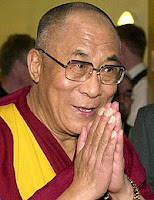
HH Dalai Lama celebrated his 78th birthday  last Saturday, 6th July… and I forgot!


A Confession

I must confess that I have forgotten  to write an entry on the occasion of HH Dalai Lama which I started doing when I started this site. I have already written extensively about how indebted I am to HH 14th Dalai Lama for opening my mind to a fresh understanding of life and reality. I find that I feel a bit angry and rather ashamed of having forgotten the man who helped e to embark on the journey where I can better understand who I am and my place in this world.


In a way, this journey of self-discovery which I have been writing about since 2011 began as a child. But then, my curiosity to know about HH Dalai Lama and to understand Buddhism didn’t take me far. Even my brief exploration of world religions that I carried out as I was writing my book Cosmos also didn’t help me that much as I only read sources which tended to hold that Buddhism was a nihilistic tradition.
I find that the past remains an important part of who we are. It’s true that it’s not good to dwell on the past but it would be wrong that we completely forget it. For the past, whether we like it or not, has affected and affects who we are today.


Yes, I forgot that on the 6th JUly of 1935, a young boy called Tenzin Gyatso would be declared to be the re-incarnation of his predecessor Thubten Gyatso. Much has been written, of course, on the Dalai Lama’s early days but I feel That I have been affected but the way he speaks and expresses his thoughts with a rare sincerity and with a genuine interest in the welfare of all humankind and all sentient beings. Yet, as he admits himself, he is just a man like any other and he doesn’t want people to regard him as a god-figure. In particular, there are three things that have struck me as he talks about Buddhism. Precepts that, you might have noticed, I constantly refer to when writing here and which I use as guides in other writing that is not related to Buddhism as such.


My Guiding Principles

These principles, simply put are:

Dependent arising. The teaching that who we are is the product of countless causes and conditions that have made our life possible.


co-dependence e. The reality that who we are and what we have depends on other factors that are beyond our control. These range from the physical world - material objects, nature, living things and weather conditions; to the relations we have with other people.


Impermanence. The fact that nothing lasts forever. Everything in the universe is changing, including the universe itself. And, all all of this will one time end.

The Impermanence of Forgetting


In this sense, we can see forgetting as the manifestation of the impermanence of memory. Yet, we may forget other things in life that are as important as memory is to remember who we are. I feel that, due to strong emotions, that arose from a dark place within. As a result, I started forgetting what was important in my life. I was forgetting the values I believed in. Perhaps I was under the illusion that I was better than others or that I had a rightful claim to be arrogant because I felt that I was in the right and that all I said can't and shouldn't be contradicted because it was absolute - when, in fact, right as it may have been, it was relative. Yes, I may have been in the right at times but my approach was also wrong.

It is often the case that because we feel we have found our truth, we forget that we remain always subjective in our judgments and fail to consider how our words and actions might affect other people.

I am not saying that we do wrong if we make our point or feel that we must take action. Yet, even if we are right and correct, the way we assert our convictions can easily undermine their importance. It’s a choice whether to pursue the path of violence or the path of non-violence. The former may appear to be stronger and the more effective. Yet, while the path of violence may get more immediate results, it only reacts to the effect of the real cause of our affliction and may also obscure the real causes of the affliction.


Healing the Past: To Forgive, Not Forget…

I am sorry that I forgot to remember that on July 6, 1935, Tenzin Gyatso was born. But, I feel greater sorrow that while my writing has been largely unaffected by past afflictions, I cano’t say the same about some words and actions that I have carried out in an attempt to reclaim what I felt was unfairly taken away from me.


But, in doing so, I became a slave to this past and never really freed myself.

The only way we have to heal the past is to forgive all the injustice perpetrated against us as we can’t change the past. Yet, while we should not forget our past as it has shaped who we are, we should strive to forgiveness ensures that we don’t remain slaves to our past and be willing to be more open to trusting others guided by the wisdom of our past injustices.


We should strive to cultivate our compassion as it is the only guarantee of our own happiness and that of others.
In HH the 14th Dalai Lama’s own words:


“If you want to be happy… practice compassion…


If you want others to be happy… practice compassion…”


I wish belated wishes to HH Dalai Lama.


Thank you very very much!


Older Entries

2011: Celebrating HH the 14th Dalai Lama's 76th Birthday
2012: Tomorrow ... It's the 6th July? So, It's HH 14th Dalai Lama's 77th birthday!!!

Thursday, May 9, 2013

The Call of the Phoenix

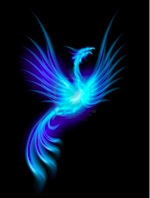
The Mythical Phoenix or fire bird reborn from its ashes
> Download the Phoenix Haiku  trio as a song from Sound Cloud
> Read the original Phoenix Haiku Trio on HaikuFlow

* Please note that links open in a new window!


THE PHOENIX: A COMMENTARY

A few days after Easter this year, I was inspired to write another haiku trio I called “The Phoenix”. There were many reasons why I chose to write this haiku trio. The trio itself deals with the inevitability of death and seeks to capture our longing for safety, order and stability in face of doubt and death. During that period, I was also facing personal health issues that forced me to reflect on what meaning I could find in my state of physical weakness and  to deal with a  growing sense of isolation. 

While the mythological fire bird, the phoenix, is at the centre of the haiku trio, his manifestation is only symbolic as he serves me to embody my hope in a better future when I will return stronger than I was before to the world. It’s not about overcoming the pain and darkness that we may have to deal with in our lives. It’s about accepting it for what it is and attempting to understand its origin and real causes. Like the fire that burns the phoenix, pain and suffering can help us build us inside and make us aware of of what is really important in life. Indeed, while we often despise pain and suffering and, more often, have demonised these experiences in modern life, there’s certain pain and suffering that is both essential and necessary to ensure that we grow and learn about the world and ourselves.

BEING AWARE OF WHO WE ARE...  

Indeed, the first verses of the trio define the phoenix as being inseparable from his burden of having to burn and turn into ashes. Fire itself opens up an opportunity for another life - possibly better than the life he had before. In this sense, if we regard fire to be a metaphor for physical and spiritual pain, then the triumph of the phoenix is not in fighting the fire but enduring it until it consumes itself. For fire cannot survive without being fed but may need to be left to burn out until it is extinguished. Pain and human dissatisfaction represented by the fire can only be defeated if they are accepted for what they are. Experiences and characteristics of human existence that won’t last forever. Yet, while we may dismiss or reject them as they cause discomfort, they can also help improve us and change us for the better. Indeed, the may provide us with a chance to “live again”::   

I am the phoenix…

I will rise from my ashes…

I will live again!

BEING INTO BECOMING

In other words, in order to be happy we must be aware that we should not be so attached to the things we have or the life we have. For while we do good to enjoy what we have been given, we must also be careful not too become too tied and attached to what we have. For, despite any beliefs we might have in an absolute or in our own immortality, the fact is that, ironically, change is our only constant. Indeed, like all material reality, our body and brain are constantly changing. 

This is the process of renewal. However, although renewal can be understood to be a positive idea, renewal itself only describes that change has taken place and doesn’t draw judgment on the nature of that change. Indeed, as all matter in the universe is in the process of losing energy in an ongoing process of entropy, so does our life inevitably lead to our own entropy, we call death. Thus, the last line of the verse emphasises the fact that the phoenix too knows that his existence is finite. 

This  line apparently contrasts but  complements the last line of the first haikus. Death and life must co-exist for the cycle of existence. Death provides the chance for new life to be born. A life without dying  is impossible for, at the end of the day, no matter can escape the process of entropy and decay:

Ever constant change…

This cycle of renewal…

I will die again

Hoping against hope

While I won’t go into the issue of whether there is life for those who die, it’s a fact that the living will continue to live for some time after a person dies. Thus, we choose to remember and honour the loved ones who have died before us. Even if honouring our dead is a proper way to express our love and respect for those who died, it’s a ritual that we do for ourselves. Its a way how we can get to terms with the reality of dying and with the fact that another human being is no longer living with us. Life will continue but such an occasion should also remind us of our own impermanence and mortality. It may even be an opportunity to look at our life and realise that we cannot grow too attached to this world, as one day we will have to die too.

The hope, of course, found in many religious traditions, is that the human spirit will continue to live in another plain or in another dimension. However, we don’t have any proof of an after-life and having proof of such an existence beyond life misses the point. For, in many ways, it’s not where we go after leaving this Earth that matters as human beings. Rather, it is how we lived our present lives that really  matters. For if we lived in constant greed and  competition, if we are  held by insatiable  envy, desire  and hate In our present life, we are already living in a hell of our own creation. 

The ritual of death…

To be buried in this earth…

Hoping to return…

The final lines of the trio promise that, in some way, our material  essence, at least, will remain on this Earth and will contribute In the making of new life. In this sense, I wished to evoke a sense of continuation and as in the second haiku of the trio, to provide an example of renewal. From our deaths, there will arise new life and when this life dies, new life will once again emerge. Thus, the cycle of renewal continues but will continue indefinitely. Of course, the last lines encapsulates our human longing to see our departed loved ones to return. 

Indeed, we unconsciously seek to return to our previous life or to a better life in an after-life. We fear losing our sense of selves because we have unknowingly identified our very being with the world. We fear that death will mean that our unspoken fear that we are indeed nothing without others and without the things that make up this world. We are afraid of recognising our impermanence as this would undermine our idea of a constant and absolute self. In this life, we fear to lose our memory and sense of identity. In death, we fear losing all that we thought would be forever here. In spite of the apparent despair one may get from reading this haiku trio, the facts of life and death that I have dealt with in the trio are not matters of opinion or belief. We live and die, our bodies decay and decompose, matter in the universe is in the process of entropy. Nothing can be created or destroyed. Matter only changes in form but remains present.

A CONSOLATION?

In the spirit of our renewing existence, I find some consolation. For even if I will simply become nothing, I know that a part of what I was on this Earth will remain and possibly yield new life. There may be an after-life, but I feel that I cannot live a happy life if I rest my hope in an after-life that may or may not be there. I am living in the present. And it is in the present that I can find happiness. A happiness that doesn’t depend on objects of desire but that is based on an understanding that as a human being, all I am and all I have is a gift of a life that I must treasure. A life that is ultimately dependent on the world and the people who form part of it.

This, I believe, is the hope in a return that I tried to  express through  the call of the phoenix! 

Sunday, February 3, 2013

The Refuge of Silence

As the days pass by, little seems to have changed since I was discharged from hospital. Thankfully, my pain has gradually decreased and while I still need more days of bed rest, if things go well, I should be on ny way to a good recovery. However, these days I was forced to reflect on the experiences that I've gone through and what I'm feeling right now.

First, I wonder where this sense of emptiness that visits me at times is coming from.

Second, there's a sense of longing. Longing for better health. Longing to restore what I had before. Thoughts, that if not recognised, risk sucking you into the traps of self-pity and stasis - where there is no growth or possibility.

By now, I accept the fact that my body needs to take its time to recover. Of course, I must do my part to help in the process. I have had the time to finish reading a few books which were on ny reading list as well. So, it's not that bad if I can make the best of it and learn new ideas in the process.

Having said that, in this particular situation which I'm in where my life is on pause node, there are moments when I meditate about all this in silence. For I might escape in a world that bombards us with information and constant stimulation, but how can I expect to be happy if I don't bitter to get to know who I an. How can I hope to know what truly fulfils me and satisfies me in life?

Thus, I return to silence. Not the silence of indifference or aversion vbut the silence that choosers to receive and consolidates without impositions or conditions. A silence that accepts and adapts to what truly is without the urge to dominate.

The silence between these words we write, speech we utter - the blank spaces and breaks. The silence that give music rhythm and melody that would be just annoying noise devoid of life.

This silence is important to me.

Until next time.

Sunday, January 27, 2013

A Sunset of Promise

I continue struggling with the physical pain that has forced me into hospital two weeks ago. Thankfully, my pain wasn't that severe today but it's still early days and there can be good or bad days - depending on whether I wake up early enough to take my medication.

I admit there were hard days when I felt I wished to close myself to the world or even die. However, I knew that this pain, like any other thing, is simpermanent and one day will cease to be. In many ways, it's also an illusion if you think about it. All the pain is an result of the nervous system with no material basis.

This isn't implying that it lacs existence but that it arises out of the senses. In other words, if we had problems with our pain senses, we could be prone to doing ourselves harm or even die. Granted, nobody wishes to experience pain but it's good to know if the cup of tea you're about to drink is boiling before you Stuqrt gulping down its contents. Ouch! Stomach ulcer...

In the same way as pain is a warning mechanism that draws our attention to possible damage, I realise that this might have been how the body wanted to let me know that I needed to take a step back and collect my thoughts once-again and reexamine my life. Indeed, I am aware that part of my suffering arose from thoughts that echoed in my mind. When there was no pain. Even the times I was still a young boy.

I've returned home from hospital just a week ago but my memory fails to recall the details. Yet, together with all the memories and experiences I gathered over the years, I can truly say that I feel truly changed. I feel unsure about the future. Then, again, I had the opportunity to learn about myself and my relation to those around me.

in particular, I also found the support of friends and those close to me. We do forget atTimes how nuch we depend on each other, as individuals, on each other's cooperation to live our lives on this little rock we call Earth. For so much could happen to us in so little time that it's foolish to seek only for oneself.

On that note, I note that sunset has turned the day to night. Little things I've got to do. I need to eat, drink and, I hope to sleep.

Preparing for another day of unknown possibilities, preparing for the good and being open to the worse.

Saturday, January 26, 2013

The Thing Called Pain

I've been experiencing a sense of pain for over a week. At times, it's as if it won't go away. A thought that I have even when I know nothing in this universe lasts forever.

This fact appears to provide a certain hope that that a future without this pain is certain.
While I wish that this physical pain disappears, so that I can return
to my routine, the fact that it has disrupted the routine gave me the
chance to examine my life and, when the pain is bearable, to force me
to attempt to understand pain.

The world today does well in finding means by which to manage pain. On the other hand, a degree of pain remains an essential sense to ensure
our health and survival. Indeed, feeling pain when putting your hand
on a burning fire can protect us for serious damage. And in so many
ways, pain is such a warning mechanism.

I believe, thus, that this pain I feel today is a result of days when
I failed to pay attention to my body and persisted as the pain
intensified. Eventually, it led to the current situation when I come
face to face with the reality of our human dependency or codependence.

But, if you think about it, pain isn't unreal because science reveals
that the sense of pain results from electrochemical signals
generated in the body. This isn't saying that pain doesn't exist but
that its reality isn't as solid and tangible as it might appear. In
this way, one could say that it's a simulation.

Apart from that, the experience of pain reveals how we are part of the
world and while we are separate in many ways from the world that
surrounds us, such a separation can never be complete but is always
partial and, maybe, artificial.

I appreciate the experience of pain not because I enjoy pain but
because it's giving me a chance to rekindle a sense of wonder.
Breaking up the chains of conventionality and, once more, offering me
the opportunity to pursue new possibilities.

This pain will end. Yet as long as there's only so much I can do at
present, is to learn from it.

Monday, January 21, 2013

A Violent Awakening

Last Wednesday, I was admitted to the state hospital soon after I finished breakfast or about twenty minutes. Or so dad would tell me. Apparently, I threw up and lost consciousness. I would wake up again at the emergency department trying to figure out what had happened and where I was. It was as if I wasn't there when all this happened. Even if I was discharged on Saturday, I remain in excruciating pain in my legs and back. It appears that my back had fractures caused by osteoporosis witch I developed later on in my early 20s due to treatment for another condition.

However, the details aren't that important. I found myself in hospital once again. My life, once more, interrupted. An unknown future ahead. Not that there's certainty with any future. But when such a 'violent awakening' occurs, I tend to stop and reflect on where my life is heading and what'll come of me if this will take a long time to improve.was I living the life that truly fulfilled who I was?

And there were I fear that, despite the pain of my current state, I realise that I long for more from life than the path I've chosen so far.a lingering sense of dissatisfaction and emptiness accompany these hours of pain. As if there's an aspect of who I am that I've tried to avoid. A silent calling of the soul. Greater than me and, yet, not foreign. I struggle as I try to express this feeling for language is limited and this state of mind seems to reside beyond language to begin with.

Inasmuch as writing has always provided me with refuge and sustenance in hard times in my life, such as this, i lack the strength to carry on with this entry. When I feel better, hopefully, I'll be in a clearer state of mind to relate to what is at the core of my deep longing.

Sunday, December 30, 2012

The New Year Haiku Trio: A Commentary


Prologue


During mindfulness practice, it’s often the case that I’m faced with thoughts and emotions that can’t be satisfactorily expressed using conventional language. During those times, I tended to rely on rhyming poetic verse - that is, until I discovered the Haiku which I found to allow me to open my awareness to a vaster array of interpretations - especially during times when I am faced with a lot of turbulent thoughts and emotions.


One such time is the new ear where we may find ourselves looking back at how we spent last year. And, as I felt I needed more clarity on what 2012 meant to me as a human being, I wrote a haiku to capture my state of mind. It’s actually a haiku trio and so, I’ll go through each haiku segment and share a few personal meditations on the words as they flow:


A New Year Haiku Trio


From: Haiku Flow, 

URL: http://haikuflow.gordongd.com/2012/12/a-new-year-haiku-trio.html 


1

An other year is over,

Many days we have forgotten -

Dried up … like raindrops.


 Commentary


If you think about it, we only remember little of what has happened to us over the course of last year. Hopefully, we retain a sense of who we are - even if our sense of who we are (or our sense of self) is a transient one. Like all other things, we have changed as persons whether we are aware of it or not. e don’t realise it but even our bodies have literally been changed as old cells are replaced by new ones.


However, these changes happen so slowly and on such a minute scale that we just move on through life thinking that the only significant changes that occur are external to us. And, even then, our memories forget. This isn’t neither good nor bad. Yet, it’s sometimes the case that we take what we have for granted - even with a sense of pride and entitlement - without acknowledging or appreciating the source of all we have to keep on living as physical beings - the living world around us.  


2

Do we remember?

The tears shed, laughter shared… Do we?

Yet, this is our life….


Commentary


These verses follow on the theme of time and impermanence. At the same time, it goes beyond that and compels us to ask ourselves what, exactly, have we learned from life during the course of this year. While we may have gained plenty of knowledge and experience. We may have had many experiences of suffering and joy, but if we didn’t take the time to reflect on what we have gone through, where these moments in our life worthwhile? 


While we cannot change our bodies and minds in radical ways, we have a choice whether we grow out of the experiences we encounter in life or give up and indulge in a life where we blame others (hate), believe our solutions are external (desire) or go on through life without being (ignorance). These three poisons often might lead us to pursue the same life and ineffectual strategies that we have grown used to. Unfortunately, growth that resists change and doesn’t allow change is no growth at all. On the other hand, change that is made for the sake of it can be equally toxic.


3

Another year is born.

Our chance to live again. Anew.

To be here. Fully.


Commentary


This last verse of the haiku trio I wrote appears to be an invitation to accept life as it comes. At least, now that I read it again, it’s not just about a new year. For, in truth, given the different ways humankind has measured time, any day can be a new year. And, yes, in many ways, a new day is a new year. In truth, if you take away the fuss that we make out of adding a number to a calendar year and creating a day when we can take time off work, a new year’s day is just another day. It follows that it doesn’t have to be a new year to compel us to improve on our ways. Everyday offers us the possibility to grow and change. Everyday is the opportunity to experience our life in  its full potential.


And, perhaps, this is the main reflection underpinning the haiku trio. That, in order to live our full potential as human beings, we first need to recognise who we are in the world. We may dream to fly like birds, but our bodies are currently not equipped to fly. However, we can fly because some have considered the limitations imposed to us by nature and explored solutions around these apparent limitations. However, the reality of things had to be factored in so that we could, in some way, be able to fly.


Concluding Remarks


I don’t think I should add more commentary. I just hope this has provided you, the reader, with some food for thought. I remind you that the reflections I make in the haiku I wrote for Haiku Flow attempts to capture that sense of impermanence and transience. While below I provide my own interpretation of what the haiku verses appear to tell me, other ideas about its meaning to you might 


Friday, December 28, 2012

The Holy Days: A Time for Renewal?

december will soon be ending. The world didn’t end last Friday 21. The pain in the ligament of my right leg haunts me still after two weeks. Apart from that, life continues as it had before. There is change, of course, but the process of life follows the same cycle most of the time.


As I look ahead at the new year of 2013, I can’t help but look back at where I was this time in 2012 and where I am here today - a few days before the new year. I know that there were successes and moments during the ending year that had an ending I didn’t expect. These one may call “failures” and, in a sense, they are failures. And, perhaps I feel my greatest failure has been my attempt to live independently at the Akwarell. Especially since, as readers of this blog know, I had high hopes for this step in securing my future independence.


Unfortunately, there are many reasons why I felt that this wasn’t working out. Besides, it wouldn’t be appropriate to talk here about why I have decided, after considering everything, that I wasn’t ready to live the way I was living at Akwarell.  I know and regret that I have failed and disappointed the many people who have helped me to go through this experience. And yet, as the days passed, I grew painfully aware that I was living a lie. That I was unhappy and that this wasn’t the way I wanted to live my future if I had the choice. And, thankfully, I had the choice.


Right now, I still feel bad about this decision. A decision which was announced in the local news and will probably continue haunting me some time after the new year. This makes me feel like a failure. And as I struggle with the pain in my leg, I do feel rather alone because there’s so much that I’m going through on an inner level that I admit that I don’t always understand myself. I feel like crying during meditation as I uncover thoughts that appear to be ever present in my mind. Childhood thoughts, when I was more active and physically independent, where I would dream of the time I would be an adult and live my life as I wanted. The time, perhaps, I was less cynical about the world and when I still saw hope in others and in the world. A time when I still believed in myself.


Adulthood revealed a different reality. A reality where people do their best to get what they want at the cost of exploiting or ruining the lives of others. Adults who seek for themselves and only for themselves or those thy said they “loved”. Adults who go on through life without values or ethics while pretending to be self-righteous, if not holy, people. Adults intoxicated by their desires, consumed by their hate and comfortable in an ignorance that fails to see beyond prejudice and discrimination. This is a painful reality but I refuse to become more of the same for the sake of fitting in and “being nice” at the expense of others.. Just to conform.


And we are often forced to conform. This is the way we are socialised in order to survive in society. People who refuse or somehow challenge the “system” risk to be put aside in one way or another. I realise that I have gone through most of my life trying to conform and trying to be liked. Perhaps it’s time to act in a way grounded in the value of compassion which not always conforms to social norms. 

However, this is NOT my new year’s resolution. This is a lifelong commitment to be authentic to myself and open to the contribution of others in my life. A choice that goes beyond faith and is based on reason and the fact of humanity. A humanity prone to the wasting of time. A humanity that is impermanent, not immortal and vulnerable to the forces of matter and energy. A humanity that is permanently dependent on the world and other human beings living on this world.

Some critics may conclude that this message I share on this holiday or even “Holy Day” is rather secular and inappropriate given the feeling associated with this season - love, peace and compassion.


However, a close reading might reveal otherwise. For why is this time the West has long associated with the birth of Christ, the only time during the year when we are urged to give to those society considers “less fortunate”? When, in truth, society itself tends to create the conditions of social injustice leading to the wrong distribution of wealth, abuse or exploitation? As if the state of fortune is an inevitable, even inalterable, fact of nature?


Renewal, I firmly believe, doesn’t require us to make any radical changes in our life and may co-exist with existing belief systems or philosophies. This time when we celebrate holidays should become more of Holy Days. Not in any religious sense of the phrase. But, rather, as times when we awake to the reality that surrounds us. To our own limits and inescapable vulnerability as animals endowed with the potential to think.


This renewal can be painful because it forces us to face that, in reality, we own nothing and that, at the end of it all, we are nothing - if it wasn’t for the people in the world, the life that surrounds us and the elements that have been here before us and who have played a part in who we are today.

Genuine renewal requires us to to be authentic to ourselves.


To recognise that our whole is more simply than a sum of our individual characteristics. And, yes, renewal requires us to strip away any delusions we might have about who we are and our place in the world. It might mean accepting our vulnerability as persons. It may require that we stop and admit to ourselves and to the world that we have failed. And, perhaps, it is then when we can hope to gain real growth. When we can look beyond the pretensions that cloud our judgment. However well intentioned and sincere we may be. For no one is in our same situation, our life remains often misunderstood or even rejected.


I confess that it was difficult putting this entry together. It may be unclear at times. However, before I can speak of renewal I thought I should first look at my life. While I see faults in the world around me, I also see faults in who I  am and what I have gone through as a person. As long as I remain a human being, I can’t separate from the world as I remain dependent on the world. It feels bad to feel a failure. But it’s sometimes necessary to look back and realise your mistakes. Mistakes we do and do. And even when you try to do the right thing, it is sometimes the case when you’re excluded and rejected because you’ve got a different account to share. You are dehumanised and robbed of your sense of humanity just because you’re different. I’m afraid to face the future at times.


I  come to some kind of end. An end to a stream of thoughts about my life and my hopes for the future. This will be the last entry of 2012. I hope next year will bring about better days and bright futures. Yet, I do not know. The future being an unknown shaped by every decision I take today. I know already that it will be hard as I have to deal with health problems. Again, I am scared but also hopeful that I’ll be able to live my life day by day. Building my strength and continue in my practice of self-growth.


To you, the reader, I wish all the best for 2013 and for every day of your life. May you find the peace, health and happiness to live your life to the fullest. For, whatever we have, the present moment remains the only thing we have for a while. Everything comes and goes and we must be prepared to give meaning to our lives for no one will do this for us. And we shouldn’t expect that either.. 


I thank you for reading through this entry. I hope that you have found parts that are useful to your life. I may have not succeeded. But, in either case, accept my gratitude for supporting this blog over these past months.


I wish you all the happiness for new year’s day. More importantly, I wish you that in 2013 you continue to grow in happiness and compassion.


I hope that 2013 will be an occasion when we may all may find authentic happiness and be true to our shared humanity.


Enjoy!

Tuesday, December 4, 2012

Home, A Place of Happiness


I can’t hide the fact that when I wrote the last entry Longing for a Place to Call Home, I was gripped by fear. Fear of change as I was embarking into the unknown. Today, I realise that I was too attached to an ideal state of happiness. As if there’s a particular location which guarantees one’s happiness. I was also afraid of change and a transition that appeared to threaten the very core of who I am.


Even if I still feel a strong need to be in silence and for contemplation, the fact is that it was a mistake to think that a particular place can guarantee my peace and happiness. I realise that I can be in that place of peace in the present, wherever I am. Happiness, I am reminded, isn’t something that can be bought or attained by external objects. While objects we desire might give us momentary happiness, the feeling quickly fades away. And we find ourselves longing, wanting and craving for another object which appears to hold the promise of happiness.


Now that eight days have passed since I moved in to my new house, I am hopeful that it’ll become my home as well. I have learned a lot from my own self and in relating to the others who are sharing in this experience. I know that I may still be scared of change. I learned that when it feels I’m isolated, instead of reaching out to people, I tend to distance myself more. And, most importantly, I have realised that the more we hide from what seems to be an oppressive reality, the more problems and challenges appear insurmountable - until the only reaction is for us to escape or deny ourselves the chance to explore other possibilities or solutions.


This post appears to be a happy ending to a tale that appeared to end on a tragic note. However, these last hours have opened my mind to the possibility that, maybe, if I wasn’t so resistant to change, I could make things work. I can always find a place of peace and refuge in my heart. I recognise that there can be no lasting happiness in a material world that remains impermanent, prone to a cycle of entropy. I can’t even be sure of a reality beyond this life. However, what I am sure of is that as long as I remain aware of the present moment and appreciate its preciousness and uniqueness, I can be truly happy.


Life may be hard or draw us in moments of sadness and melancholy. We may be robbed of all our possessions and denied our friends. And, still, we can be happy. Yes, this is a tall order and I’m still far off from achieving such kind of happiness. For one can be rich or have all the things one desires and still be unhappy. Indeed, happiness isn’t simply an emotion or a feeling. 


Happiness is a state of being...


Saturday, November 24, 2012

The Akwarell Speech: A Message on Independence, Hope and Thanksgiving


Opening Statements

A photo of me taken by one of my brothers, Daniel,  during the inaugaration of Akwarell.

Welcome your excellencies, members of parliament, distinguished guests, family and friends and all those of you who came to celebrate this occasion.

An occasion so important in my life and in the life of my other friends who will be joining me in this new experience...

Today, we are here to celebrate the official opening of our new home, Akwarell*.

To mark this occasion, I wish to share some of my thoughts about what this means to me.

About Community...


At present, Akwarell is just a building. But, I hope, together with my friends, we will turn this building into a home, in the best senses of the word. I think that the name we have chosen for this house: 'Akwarell', expresses how we want this home to be a place to express who we are both as individuals and as a community.

Indeed, in the same way an artist would paint the akwarel, we hope this building will serve us to express our best colours but, at the same time, create something that we could only create with one another. A community of friends.

About independence


However, what Akwarell means goes even beyond that. Akwarell is a place where we can be more independent. Here, it's important to explain what I mean by independence.

Independence does NOT mean we will do everything on our own. Independence does NOT mean we don't need anybody any longer. Independence means being able to make our own choices. Independence means having the necessary help and support to fulfil our full potential. And, in truth, no one in society can live on his/her own. We all need each other in life.


Concluding Remarks


There are many people whom we must thank for making all this possible, each in our different way.

For my part I must thank my parents and all my family, my friends and my work-mates at KNPD. If it hadn't been for all of you, I would not be here today.

However, today was only possible because of the work carried out by pioneers such as Mons Azzopardi who wanted to give us, disabled people, back our life and dignity. Mons Azzopardi who also helped change the Church's approach to disability from a question of false charity to one of social responsibility. I must also thank those who followed in his footsteps at Id-Dar tal-Providenza, Mons. Gatt and Fr Martin Micallef.

I think that my friends who will be moving in Akwarell in the coming days will agree with me when I say that we are indebted to all those of you who continue to help and support us to achieve the best possible quality of life.
I trust in your continued support.

Thank you all!

Have a good day...

Footnotes

As explained in my last entry Meditations in Watercolor, last Thursday, I participated in an activity to inaugurate the official opening of our new home at Qawra. I explained how I was asked to be one of the speakers for the occasion - especially since I‚ll be one of the ones who will be living there for the forthcoming future. Since some have expressed the wish to get an idea of what my speech was about, I have decided to share the text I used as a guide in document for my speech. Incidentally, I would later discover that November 22 was also Thanksgiving in the US, so it‚Äôs a speech appropriate to mark such a day - which was, in a sense, an occasion of expressing my thanks and gratitude for the opportunity to live more independently.

*The word "Akwarell" is the Maltese word meaning "water-colour painting".

Thursday, November 22, 2012

Meditations in Watercolour...

It’s official. I will be moving soon to my new house at Qawra. This house, made possible thanks to the funding and support of, mainly, the local Church and the state, was officially opened. Given that, behind this project, there were important stakeholders, it was inevitable that this event was covered by local media.

I was asked to be one of the speakers. As one of the three residents who are going to live there, I was chosen to write a short speech and deliver it during the official opening. I am not a stranger to public speaking but I always get a little bit anxious before speaking. Especially since I was asked to talk about an event which will radically change my life and the lives of two other mates who I will be sharing my house with.

In my speech, I wanted to convey two main ideas as I reflect ed on what this move would mean to me as a disabled person. I remember how I often thought about the prospect of living on my own but, recent occasions when my health and general condition regressed, I feared that this dream would remain just that. A dream. So, when I was asked whether I would want to live in my own place, I grabbed the opportunity. I had my doubts, of course and I still do.But, sometimes, you must take a leap into the unknown.

In my speech, I also wanted to express my deepest thoughts about this important moment in my life. I expressed my hopes that, together with my mates, this building will not remain a construction made of stones but, I hope will become a community of friends. We chose to call our new home “Akwarell”, which is the Maltese word for “water colour painting” and I explained how our individual differences as disabled people could be compared to the colours found on an artists’ palette. We all have our distinct qualities. We all have our unique beauty. Yet, like the blend of colours found in a water colour painting, together we can create a thing far greater than who we are as individuals.

Another reflection I shared concerned the question of independence. I tried to explain what I meant to me to live independently. That is wasn’t about doing everything on my own. That it wasn’t about denying the support of others. I tried to explain how independence meant to me, as a disabled person, the opportunity to make choices over my life. And even if I may need the support and assistance of others to realise my choices, as long as it’s my decision, then I’m independent. I also reflected on the fact that nobody in real life is truly completely independent from another as we all, disabled or not, depend on one another to live in this world (1).

Finally, I talked about how all the people in my life have contributed to making this moment possible. How, if it wasn’t for the people who sustained me throughout my life - my parents, family, friends, work mates and many others I knew and others I didn’t know - I might have been a different person. I also talked about how if it hadn’t been for visionaries like Mons Azzopardi, a charismatic priest, who worked to promote the idea that we, disabled people, had a right to an equal human dignity which challenged the false idea of charity which belittled us to inferior examples of human beings. I expressed my gratitude because thanks to people like Mons Azzopardi and those who followed in his footsteps, Mons Gatt and Fr Micallef (today), that we have a culture shift also in the Church (2).

Even if I am committed to Buddhist practice, I cannot deny that if it hadn’t been for the good works carried out by the Church in ensuring social justice, I wouldn’t have the opportunity today to live my life to its full potential. I’m also grateful for this and for being able to have a choice in how I live my life and in how to express my authentic being. I remain indebted to the many people who have helped me every step of the way. That, I may never be able to repay. I decided to spend this weekend at home where I have lived most of my life. I’m sure I’ll have moments of doubt on whether I was really ready to make this transition.

However, I feel that, as with any change, there will always be a degree of uncertainty. It’s part of the process of life and refusing to accept the cycle of change leads to decay and death. I will be probably doing a lot of meditation over the coming weekend. However, I trust that this change will bring me new experiences and a fresh insight into who I am and on my relation to others and the world.

For now, I can just say thank you to all those who helped me get to where I am today. To who I am today. Thank you!


Footnotes:
(1) This idea was inspired by the idea of co-dependence found in Buddhist teachings, or the idea that everything depends on another to exist.
(2) Another idea borrowed from dharma, or the idea that we create and are created simultaneously by other objects in the world (whether material or abstract).

Tuesday, November 20, 2012

Yesterday's Child: A Few Afterthoughts

Since my last entry where I shared a few thoughts following an encounter with whom I called yesterday’s child, I find that there are a lot of emotions and feelings that I still need to process. I admit, I’m still unsure from where in my heart did these feelings flow. 
 
On one hand, this child took me back to my own childhood. Perhaps I was nostalgic as I was reminded of a past that I could never recapture. To realise how foolish it was for me,at the time, to become a grown up. To become an adult would mean, I believed, being able to live my life as I pleased. How foolish I was for wanting to grow up so soon and miss out on that precious time that childhood is.
 
I also felt a certain fear that I may never become a father. Or, if I did, I wouldn’t be able to do all the things fathers do with their children. I am not particularly keen on sports either - which would be an issue if I had a boy or girl who liked sports. As yesterday’s child did. I know that there are things which, I hope, I would be able to impart on my children. But, still, there’s still that lingering thought that I would never live to an ideal.
 
On the other hand, in retrospect, these thoughts are just thoughts and don’t have any real basis. Rather, they may help me live better today. For, I may not be able to recapture my childhood but I can commit myself to cherish the present and try to live the now to the full. The present moment remains the only one we can be in and the only time we have a choice. In this sense, my concerns for the future are, in a way, only the cause of unnecessary pain. For, I should accept whatever life offers and do my best. For whether I have a child or not, whether s/he will accept me and so on remain questions that can’t be answered or will never be answered at all.
 
This life of mine, I realise, is the only one I’m sure of. It’s precious because, I know, all lives will end. I can’t live forever. And, as I remember what yesterday’s child taught me, it’s important for us to reach out to those around us and to every other person living in this world. I have failed in this and still fail. But I know that I need to be compassionate to others. Not just for the sake of others but for my own sake.
 
I thank all those who told me that they liked reading my last entry on yesterday’s child. I admit, I was flattered. But, later, I felt a certain feeling of guilt. Had I used the child in my account for my own ends? In a way, I did. I did like many others who help others for the sole reason to receive praise. I might have fallen to an arrogance of those who help others only to be praised and photographed. People, I’ve met myself, who make a living exploiting those who are going through injustice and inequalities to appear as saviours - when they’re in fact, in some way, abusing the dignity of others for personal gain.
 
I hope, at least, that my post didn’t go so far. But, then again, I am aware that - without knowing or wanting - we may be doing the same thing. We may be inflicting needless suffering on those who are victims of injustice and inequality. We may waste food and water capriciously when people in some parts of the world are dying of hunger or thirst. We may take our homes for granted, when there are millions of people homeless or living in poor housing conditions. We may take our loved ones for granted, when there are people out there who have just lost their loved ones because of war or natural disasters.
 
But, of course, we are helpless. We can’t save the whole world. I feel bad because I know that I may never meet yesterday’s child again. Nor do I know if I can help in any way if I did meet this child. Yet, I feel a kind of guilt for not being able to do more. Yet, I have to be realistic and focus on what I can achieve today. To return to the beginning of this entry, it’s important for me to focus on the present. This doesn’t mean that I ignore the future and fail to plan ahead. But, inasmuch as it’s wise to set out plans for the future, the present is the one moment we have that is truly guaranteed. 
 
So, how can I help? How can you help? I feel that even if I may be unable to help yesterday’s child, there are a lot of people I meet on an everyday basis - some I know, others not. It’s there that I can make a difference. For one may aspire to go abroad to help others experiencing poverty and all that which is good. But, on the other hand,one can also do a lot here where you live. You can change things in the way you relate to the others around you. You can practice compassion today. You can take the time to understand others here. You can relate to others as equals now.
 
The only thing I can offer you here are  my words. I know that what I have written might not make any difference in your life or the life of others. I don’t expect it too. But all I hope is that somewhere, someone will stop and reflect on what I wrote. For life passes quickly and we may miss to appreciate the moment we’re given. A moment that, like our childhood, is lost forever.

Tuesday, November 6, 2012

An Old Self That Clings On

It’s the end of another day and as I take a good look at myself, I realise how much I have changed on one level and, yet, how difficult it is to manifest these changes. Indeed, during the times I’m alone and have to face my inner being, if you may, I do notice a conflict between who I am discovering to be authentic about who I am and how I come across to the outside world.

It’s not that I’m living a double life or expressing two completely different identities. Both this new sense of being and the old self seem to co-exist but, at the same time, each self has a story and a history and world view. These may be not necessarily opposite and they certainly don’t represent any split personality. They are more like an inner light that is hidden away by clouds. While the light is there and sometimes feel strong and clearly visible, circumstances only serve to obscure the beauty of this light with its preoccupation with what should be and a dissatisfaction (dukkha) that diminishes our appreciation of the present moment.

I do realise that there is a struggle between part of my being which opens my heart to a basic humanity. A being, so often misrepresented by popular media, of a compassion beyond conditionality or status. A compassion that recognises a universal dependence our essential impermanence.

Yet, it’s not easy to start to be the change you want to see in the world (to take line from Gandhi). It is painful because the safety of habit and the life we get used to provide us with a sense of comfort and relief. Considering another way appears too painful - not just for us but, yes, also for others in our life. A change of mind and engagement with our harts and the hearts of others requires more of us than simply uttering a few words of allegiance or a prayer. It may require to accept our nothingness in the light of a vast universe. It may mean recognising that our life is an ordinary life when compared to the life of the people inhabiting this world. It may be extraordinary in many other ways, but we all have to go through the same stages of life.

The habits we inherit from our previous past remain part of who we are today. This isn’t necessarily a bad thing and I believe I must accept that I have lived a life in the past I may need to change some aspects of this past. I feel that without accepting the reality of the past, there can be no growth and a great risk of getting too attached to truths that present themselves as absolute and never changing. Reality - a reality, which in itself, is ever changing and always being renewed.

In this sense, a radical rejection of the past would mean uprooting our roots without finding fertile soil to grow our sense of being. At least, at this point, I do find it difficult to really express what I feel inside. And I can’t expect that I will change overnight. But change must happen progressively like any process of growth one finds in nature. For, yes, we remain creatures of nature. Unique and impermanent.

Saturday, October 27, 2012

Lets Talk about Pain...

When I started writing this entry, it started raining. Now, the rain seems to have stopped and I expect it to rain again in a few minutes. I Love this weather but I enjoy it most when I am indoors.

Yet, even if I usually enjoy being indoors listening to an audiobook in bed, for example, when it’s raining, my positive experience is dampened by a persisting pain in my back muscles. I have meditated during these moments of pain but I still need more practice in effectively accepting the experience of pain. However, while meditation does help address the suffering caused by pain, it’s a misconception to believe that “it’s all in the mind”.


Indeed, Buddhism doesn’t deny that there is a biological factor involved in the experience of pain. However, Buddhism makes an important distinction between pain and suffering (or more accurately “dukkha”). In this sense, while pain is real, discomfort itself or how we relate to this pain causes the real suffering. Thus, by choosing to reject or deny our experience of our present pain, we give this pain control over ourselves. We become slaves of an idyllic past and mourning a future that never was. By resisting pain, we don’t change and, if there’s no change we are bound to wither and die.


This may all sound defeatist, but I’m not saying that one shouldn’t take any action to reduce pain. However, an experience of pain can teach us about what it means to be human. It reminds me that I am limited. I am reminded that I share with others in a human experience,.

I discover that, in spite of any pretensions, my body is no different to that of other living beings. Pain is an invitation to appreciate how precious life and how life is impermanent and how it could end at any minute.


With all its unpleasantness and discomfort, pain awakens us to the present moment.

And, the only moment that we can truly change is but now.

For, like the rain, our lives can end at any time.

Monday, October 8, 2012

The Way of Water

Today, I chose to talk about water. A simple enough molecular structure composed of two hydrogen and one oxygen atom. Everyone needs it and, no, you don’t need any chemical formula to appreciate its value. Water is an example of a liquid that much to teach us about reality and about ourselves.

It’s a liquid that changes structure depending on the environment. It can be ice, snow, rain or steam. In each case, the experience of water changes but, at its foundation, it is still composed of the same molecules. Water may come from the river, the ocean or through the sea. But it remains water and it’s continuously being recycled as it shifts back and forth from the solid, liquid and gas states. The same water falling as rain in New York is not that different than the rain falling in China a few days later. Water droplets are, of course, not exactly the identical ones as they are distinct but, in essence, they are similar.

In this sense, humanity is like water. We constantly change the way we look, the way we think and what we believe. But, at the core, we remain human beings facing the same challenges of life. However, water itself is something that has been instrumental in the creation of life on Earth. Our bodies cannot survive without it and we are mostly made up of water. All our organs depend on it to keep working. Without it, we will die. On the other hand, water can kill us if we drown in it. Water helps us survive but can also be a destructive force when it causes flooding or organises into a tsunami.

Thus, it is only in moderation that water is sustaining and preserving. Excesses at both extremes can either lead to dehydration or suffocation. Water can cause hypothermia. And when you realise how vital water is for our survival and how it makes up over two-thirds of the world’s surface, you quickly realise how, if we continue to pollute our seas with waste, chemicals, nuclear material and oil., we may be compromising the future of all living beings and condemn us to extinction. Lacking an impending space programme that permits us to live on other planets, the water we have on this planet is the only source that can keep life going.

We may have bad experiences of water. W e may have been close to drowning, have an entire life and livelihood because of a flood. You may have even lost loved ones because of the sea. Yet, even if it’s no consolation, water itself is not good or bad, it just follows its nature. We, on the other hand, can adapt to the world and even change our reaction to life. At the same time, like water droplets, we are different in our own ways but so much alike in so much, much more than we want to admit..

For a start, we all depend on water as long as we live.

Sunday, September 23, 2012

A Nomadic Life

In a few hours’ time, I’ll be returning back home from my summer house. By this time, I should get used to move back and forth between the two houses during the summer break. My family has been doing it almost every year since I was a child.

But this entry isn’t really about moving back to another house. It’s about home and its place in our life. For, throughout our lives, it appears to me that we’re searching for home where we find security. Where we are safe, uncomfortable and free from the problems of the world. Yet, I believe that although we think of “home” as a location in time and place, this isn’t the case.

Our lives is in a constant state of change. We may only guess that tomorrow things will be almost the same as usual but, in truth, tomorrow remains unknown. We may feel happy with our life right now and we do well to enjoy what we have. On the other hand, we must be careful not to base our happiness on what we have. No, not even get attached to our physical homes as there will be one day when we have to change everything.

And, when we lose what we had, we might discover an emptiness borne out of a false happiness. Indeed, even if we live in homes (if we’re lucky), a home remains a building of wood or stone. We’re the ones who imbue it with properties beyond itself.

I sometimes think of my life as a nomadic existence. I don’t know if you can understand. I have undergone radical changes in my life when I thought I had finally find fulfilment and happiness. I believed that change would lead me to a better life if I attained a goal or got a new gadget to play with. I found out that I had been misguided.

Like a nomad, I must learn that I will, one day, have to move on. Like a nomad, I need to find the strength and support to adapt to new realities. Like a nomad, I need to accept the fact that what I have can be snatched away from me without warning.

I confess that I share these thoughts because I know that soon I’ll be moving on once again from my winter home to another place. While I’m excited by the prospect of gaining more independence, there’s still a sadness and fear of moving on to an unknown place and to an unknown future.

Perhaps I need to recognise that I can only find true refuge in my heart and mind. That’s my home which I must dwell in until the moment of my death.

Monday, September 10, 2012

September 11: An Open Wound?

I have already talked about the terrible events which took place in the United States on September 11, 2001 last year in the  post entitled 10 Years of Fear. Eleven  years have passed and we do well to remember the memories of those who died on that day and those who died as a consequence of 9/11. But it would be wrong to stop there and not be ready to move on, and, yes, let go.

For, horrible as 9/11 was, this event isn’t actually the cause of all the distrust and intolerance that we still witness to this day. Hate and revenge have always been a dark part of human nature. If you look closely and reflect on what might have caused 9/11, you may be surprised that there’s a very rational explanation to why we have reached such levels of hate and violence.

The fact is that even before 9/11, there was fear. But accounting for 9/11 in terms of fear may appear too simplistic and unsatisfying. Thus it’s important to qualify how fear operates at different levels. Thus, we can speak of the:


Fear of Change


As long as some do not accept that the world has changed, they will try to externalise their frustration through hate speech and violence. Thus, we have ideologies that misappropriate religion for their own political interests. Recent examples include the American Christian Right and Ismism. All promise to return to a world where they feel safe and control because they cling to a false belief that only one view of the world is valid.


Fear of Loss


Some of us  feel threatened by the ‘other’. There is a tendency for us to believe that our view of the world is correct. A false belief that we are independent selves and that we’re better or more superior than other people. We feel threatened by difference because it challenges our map of reality. We are ready to cling to beliefs that are irrational or incorrect. We justify violence because we see it as a way to protect who we are - or who we think we are. Thus, we have sexism, racism, disablism and so on and so forth. In a sense, we become slaves to the labels we give ourselves.


Fear of Losing Self


Finally, perhaps the subtler of fears. The fear of losing our self. In a way, this can be compared to the fear of death. But, the only difference perhaps is that this fear is more present and a real possibility. We fear to face who we are may be because we are not really sure of who we are. We keep holding on to our convictions not out of genuine effort but because we know that, if challenged, we are defenceless. We want to retain control and fear change because we were never on a solid foundation to start with.


There are no easy solutions to fear. However, what is sure, is that closing our minds and hearts to others who we perceive as different, foreign or as a threat, won’t heal the wound. Indeed, this may worsen the cycle of violence and hate that exists today. There remains a mistrust in our world which is somehow justified.

For, the modern war (if you may use that word) is increasingly becoming an individual matter. Everyone can be an enemy. It may even be a friend, a relation or someone you know. The recent shootings in Aurora, for example, exemplify how easy it has become to commit  individual acts of violence. There, are of course, suicide bombers still killing others they want to destroy and killing themselves in the process.

Thus, it’s now not only a matter of nations or world leaders whether there’s world peace. Then, it follows that it becomes more important that we are the ones who work for peace. Yes, there is the fears I discussed above.

We fear change. But, in truth, change is part of life. Ironically, we cannot change the fact that things change. It’s not a good or bad thing because change leads to growth and can lead to progress. Rejecting change means that we remain in a world that, however safe, is not real.

We fear difference. Perhaps because it challenges our view of ourselves. Accepting difference might mean to abandon our idea that wee are better than other people. Even labelling others as ‘less fortunate’ is a false belief that we don’t have any control over our lives or that injustice and inequality is natural and inevitable. Yet, while we are different on some levels, we are all human beings who share in the joy and suffering of life. Whoever we are, we were born of a mother, we all get sick, we all get old and we will all die. In this respect, our identity will not change this - even if it may change how we deal with these processes.
 We fear to lose who we are. But, how much of who we are has been given to us by others. Our names to start with. The fact is that there is no constant self. We aren’t who we were ten years ago. We’re not the same selves we were when we were children. This will change. Thus, our fear will not help and denying the fact that there are people who may be different than us leads nowhere but self delusion.

What does all this have to do with 9/11? The tragic events that happened on that day didn’t happen just like that. They happened because of many factors, one being fear. The fear of reaching out to others, a fear to accept things as they are and fear of losing our identity. A fear that has continued feeding into a cycle of violence. A cycle emerging out of a failure to communicate and reach out to others. A failure to correct injustice and poverty because of national interest.

It’s a failure to look at people who appear different than us as being part of us. Part of one human family facing the same challenges and all having the potential to improve the world.
We can’t afford to remain insulated in our own worlds of beliefs. We need to challenge and change who we are. Silence may help but if that means we stop talking to each other, it can be destructive.

Today, humans have the potential to build a better world but, at the same time, they have acquired weapons that can reap havoc and even destroy the whole planet in a matter of hours. Peace is the only rational choice. For, whether we like it or not, we are all in this world together. And while it may sound rather naïve to use such language, the truth is that we may need to start outgrowing the idea that we are distinct human beings but rather consider to be people with differences rather than different people altogether.

For history has shown that violence only breeds more violence. By continuing this violence by pretending to defend ourselves from another 9/11, we would be doing the same thing the hijackers did on that day. We would be killing our ‘enemy’ but, at the same time, we would be killing ourselves.

I believe that renewing a dialogue based on peace and mutual respect and cooperation is the only way to honour those who died (and are dying) as a result of the 9/11 attacks.

It may be the only way to prevent more 9/11s…

Tuesday, September 4, 2012

The Wisdom of Pearls

Pearls remain one of the most valued objects today with the smallest costing from a few hundred dollars to ones costing up to thousands. There may be many reasons people are priced so high. After all, they are produced by a natural process, by a mollusc, a living being, and, yes, they evoke a certain beauty and perfection.

It was at a seafood restaurant that I wondered about pearls. In theory, molluscs such as mussels may produce one. But pearls are often associated with oysters. But, if oysters and other such organisms, are capable of producing a pearl, why don’t we find one every time we get on? On doing some research, I discovered that the pearl, in fact, is the product of an oyster’s attempt to gain relief from discomfort.

Indeed, since molluscs are confined to their shells, there is no way to remove a splinter such as a speck of sand. So, using a substance called “nacre”, it gains relief from its discomfort. Incidentally, “nacre” is the same substance it uses to create its shell. Thus, one can say that a pearl, is in fact, created because the oyster wants to get some kind of peace and rest.

That is why not all oysters which grow in nature have pearls. In a way, oysters who are forced to form a pearl are unwell. Yet, we value the most those pearls which, out of their attempt to gain freedom from pain, create one of the most beautiful object, we - as human beings - find of value. Yet, for the oyster itself, a pearl is somewhat not unlike a scar that cannot be removed but lies there as a constant reminder of an unhappier past.

What does this have to do with us? Well, in today’s society we tend to look at pain of every form as the great evil awhile we view pleasure as the most desirable. But, we forget that while pain and discomfort may not always be necessary, at times we must go through a certain degree of pain and discomfort to grow. And while, during hard times, we may be tempted to escape from an unpleasant reality, the fact that the more we resist our discomfort, the more it will hurt us.

Here, perhaps we can learn from the oyster. While the oyster cannot get rid of a splinter, it uses its own body to make it part of her. However, it does not stop there but keeps the painful intrusion at a safe distance. In this way, while the oyster and the pearl remain connected to each other in one way, the fact is that the oyster is also able to gain relief and carry on with life.Thus, it accepts the pearl into her home but, at the same time, is detached from it.

How many times in our life have we made mistakes>? How many times were we in pain or in an uncomfortable situation? How many times have we felt ashamed of ourselves? I can say that there were quite a few in my life. Yet, can I change them if they happened years ago? Can I change them if their cause remains beyond my control?

The thing is that many times, we cannot change our pasts. So, like oysters, we need to accept that discomfort. However, with the benefit of hindsight and experience or our “nacre”, we can turn our pain into something that is of value and precious, the way we live our life, or our “pearl”. Even if, unlike oysters, we all have to face splinters of pain or discomfort, we all have the potential to change something that is negative into a positive future.

But, first, perhaps we must stop fighting reality if we know we can do nothing about it. And, yes, we cannot avoid to go through a degree of further pain and discomfort to start to heal.

Wednesday, August 1, 2012

No One Remembers A Loser

Since the world's attention, especially of sports enthusiasts, is drawn on the events of the London Olympics 2012, I thought I might take some time to meditate on the significance of the Olympics. Of course, there were many topics that I could have addressed in this entry. I could ask different questions and considered whether this international event builds bridges between nations. I could have reflected on humanity's ability to push their limits. I could have questioned the fact that people like me, who are disabled, have to participate in a separate para-olympics as if we're not to mix with other athletes. Granted, we may engage in adaptations of certain sports and we would  disadvantaged if we competed with others who lack impairments that would pose limits to their performance. But, as I see it, disabled and non-disabled athletes could learn from each other on many levels.

Yet, I chose to write about "losers", or those athletes who won nothing, performed poorly or even didn't get to the finish line. Even if we say that what is important is participating - not winning - the nature of competitive sport is to ensure you outperform your rival. In such an environment, what matters most is to win. Success is measured by how many points you have gained and failure is disgraceful and not tolerated. In addition, winning is an achievement not only for your team, friends or family but can also an act of patriotism and and a political statement. It has been used to promote the ideologies of Nazism in earlier times.

However, the athletes competing find themselves training to win a gold medal. So, it's only natural that after you have dreamt of excelling and of winning Olympic medals, you don't qualify for any medal. After all the sacrifice , the training and hours preparing for success, you end up empty-handed. You feel you've failed your country, your team, your friends and your family and loved ones. Yet, you also know that you have failed your self. You relive your "failure" ovER and over in your mind. You try to understand what went wrong. You find no answers that fully satisfy. If your fall was serious, you might be remembered as a "loser.

I have never an interest in sport. Despite this fact, there were occasions when I felt I worked hard to achieve a goal, only to fail. I would ask myself how this could have happened. Hadn't I done all my best? I would be disappointed and indulge in self-pity as if I was the victim of a great injustice. I would conclude that it was my fault, or on the other extreme, try to blame external factors. Instead of learning from my experience, I wouldn't move on.

While there's nothing wrong with disappointment and in taking some time to mourn over your loss, I realise today that, at one point, you must put the past behind. This isn't saying that you deny what happened but that you take it as an opportunity to grow. Indeed, such an experience could be opportunity to put your life into perspective and rethinking your life priorities. Unfortunately, our world seems only to celebrate success while ostracising so-called "losers".

On the other hand, the world forgets that true success is often a product of many failures. Our life is the same. Sadly, we often believe in the myths of perfection. A perfection that contradicts the way the world is. We are deluded in a belief that failure is unacceptable and excellence is the ultimate goal. As a child, I learned to walk and I had many falls as well. Now, I find not enough strength to walk or stand up for long. Am I a loser for not persisting in trying and use my time and energy in an attempt to get back to the past? I do understand that some would interpret my choice as admitting failure and I do respect made by other people in my position to recover their strength. Then again, I chose to adapt and dedicate my life to living life. And even if the world might judge me as a loser, I don't to remain attached to a goal that is unrealistic.

I wish everyone competing in this year's London Olympics, all the success. However, in case you lose or under perform, take this as an opportunity to learn from this experience and be prepared to accept that this is part of being human..

While this might be a bitter drug to swallow, you are the only one who really knows how much you have put into it. At the same time, remember that neither success or failure defines who you as a person.