Showing posts with label meditation. Show all posts

Monday, September 2, 2013

Opening to The Intimacy of the Soul*

I come to write again after taking time to consider where my life is leading to. I admit, I am still confused about the direction I want to follow in life. I regret that the things that appeared to be of absolute importance to my happiness have become perhaps less important to me at this point in my life. This doesn’t mean that my disability activism, for example, is no longer important to me or that I don’t value the principles of inclusion I believed in before. Principles I dedicated lots of time and energy to promote. Rather, I feel that my calling is elsewhere.

I can understand if only a few readers might relate to my situation. It’s as if, more than ever, I feel a sense of emptiness. Of insignificance. It’s not because there’s emptiness within me. It’s because I realise that, as a human being, I am insignificant when compared to the extend of the cosmos. A cosmos that we can only barely understand with our scientific advances. A cosmos, that we may never be able to really understand.

In this state of silent contemplation, I only find myself confused and lost in an ocean that engulfs my whole being. An ocean which I want to escape from and be rescued from.

Yet, an ocean which I must cross to discover the place I need to be if I want to find more lasting peace and happiness. The refuge of the soul*. The cosmos that appears to mock my pretentious humanity is really drawing me to an authentic understanding of my real nothingness. Like the ocean, I am faced by my sense of nakedness and shame of having to declare my vulnerability and essential nothingness.

I was a child who wanted to know more. Indeed, I was thirsty for answers of why I was here. I admit that the death of my brother David a few months after my birth appears to have profoundly affected me. I realise this fact the more I develop my practice of meditation. It’s as if my need to make sense of my life - or why I am here - has become more important to me. More than anything else, I feel that I must face the challenge posed by an infinite ocean and the nakedness that the eternal cosmos reveals. For, in contrast to all this immensity, I am an impermanent nothing.


I once aspired to become a famous writer in my life. Indeed, this, I admit, was one of the motivations I had to write as a child. To perhaps join in the ranks of those many authors I found on the library shelves (I could reach). Yet, I wrote not just out of vanity but because, the more I wrote, the greater I felt free. There were moments when I wrote continuously, others when I stopped writing for days on end. It was both painful and cathartic to write. It was hard to have to put into words what I felt inside as what I wrote may have sounded brilliant but it never captured the complexity of my thoughts. And, even as I write

today, I am sure that what I finish will always be incomplete and dissatisfying. Hopefully, it is closer to the truth of my being but words and language are only mirrors of a far richer reality we may call the “soul”*. I am aware that while we may place a lot of weight on the words we use or the symbols we communicate, these don’t exist in their own right. A sentence, a book, or any form of expression, will mean another thing in another time or socio-cultural context. Yet, even if we may chose silence, it has also its meaning. However, at least, silence provides us with an opportunity to listen and contemplate on the significance of our human existence.

It may help us to free ourselves from the shackles of ignorance and open that little the intimacy within. 


I know that my life may be misinterpreted as a tragedy. Yes, it appears I lost a lot in the course of these 31 years I’ve been here on the planet. I lost my brother, David, before I could know him. I gradually lost my ability to walk independently, I lost a significant amount of vision and I am just slowly regaining my health and strength. Yet, my life isn’t exceptionally tragic to any degree. Defining me in those terms failsto acknowledge my humanity. I have only experienced more in life than usual, yes, but this doesn’t guarantee that my experience automatically brought with it any wisdom or exceptional insight.
 

A belief that is often implied whenever I talk to a few “religious” strangers. Indeed, I, myself, may have ben deluded by that demon of pride. A pride that seeks out to make one feel that one has the understanding and has the right outlook on life. A pride that refuses to listen and thus be unresponsive or hostile to other views. Views, which may be indeed wrong, but which must be taken notice of for hearts and minds to perhaps change and be more open.

These words would have been outrightly dismissed by my past self. But, these words are the ones I needed to hear.


I am a human being. I am disabled by a society that still considers people, like me, who have impairments, lives apart. We are not heroes, saints, villains, pitiful beings, abnormal, differently-abled or even “special”. Yet, I realise that while I recall all I believe in, I know there’s a deeper longing within that compels me to go beyond my work as a disability activist. For, while this cause is worthwhile and to be commended, I feel a strong need to go beyond impairment and focus more on the wider context of being human.

The fact is that since I grew in my understanding of Buddhism, thanks to the works of HH Dalai Lama and other scholars, I realise how important it is, for me, to reach beyond my self to others. Not because the experiences I have gone through life have made me any wiser. Not that I am special in any way. But because I feel that I must seek the source of my emptiness. To find refuge in knowing that all I have is impermanent and all will end, including my being. To approach this realisation, not with despair or despondency, but with mindful compassion and appreciation of every breath we take.

In doing so, we can wake up and release ourselves from the spell of pride.A point of awareness where we can see the afflictions borne out of hate, greed and desire melt into nothingness. A point where, even if we’re not totally free from our delusions, we are ready to open our heart to others and to all that is around us.
>


I feel that unless I fully open my mind and heart to this greater need and purpose, there will always be that sadness in my heart. A dissatisfaction that, whatever I did in my future, all will be overshadowed by the knowing that I didn’t pursue my deepest yearning. That I put aside my call to compassion and to contemplate the purpose of my existence because I wanted to live a relatively comfortable life.


In doing that, I would have violated the intimacy of my soul*! 


* In the context of this article, the meaning of the word “soul” is not to be understood in terms of any religious interpretation. In this sense, the soul may be taken to simply mean conscious awareness in the present - in light of the fact that the “soul” or “self” is, in itself, not a static property of the mind and may indeed cannot be said to have a distinct location in the body but rather arises out of the interplay of the brain and the nervous system.

Tuesday, July 23, 2013

What Can We Do? A Meditation on Action

Life changes. That's a fact we all know but people seldom think about. Every day is unique but in our fast moving world, we have created the illusion that there's such a thing as a "normal" week that includes a period of rest we call the "weekend".


The more I grow in my practice of various forms of meditation, the more I realise how easy it is to go through life following habit and routine without stopping and reflect on the point of it all. For, while life may seem to be going great, we night fail to appreciate the moments in which we find our peace and comfort. It's only when we realise we lost something that we start to appreciate its value.


We also risk believing that we have more control over our world than we really do. As life goes through its natural cycle of birth, death  and renewal, we change as well. I have gone through particularly hard times in my life recently and I can't say that I found my peace.


Indeed, while we may have an idea that mindfulness and meditation provides us with peaceful bliss, its proper practice also exposes us to the scars which were deeply hidden in our mind. Yet, unpleasant as they are, acknowledging their presence can help us to slowly detach ourselves from them.


Even if I am trying to give up my attachment to the world, I confess it's harder than I thought. I still remain attached to my pride and sometimes still crave to acquire a particular thing or position. But then again, I know how . foolish my thinking is. Yet, I can still be a fool. Acknowledging that is the first step - even if my pride gets angry.


The fact is that there's very little we can change in the world. There are so many factors that are permitting that we have the right conditions to keep alive that it would be impossible to list them and some I don't even know about. We also depend on the living world, including the people we live with on this rotating piece of rock. 


So what can we do? While we may not be able to change the world or even "save" it, there's only one thing I learned that you may find of value. You can only change yourself. Yet, until you take the time to get to know who you are, each day will remain as insignificant as the one before. 


Don't expect to change overnight and don't even expect it to be painless. You may even find you're failing, like I feel lately, but you should keep in mind that the real peace, freedomm and happiness we all seek is not to be found in the world but in you and in how far you're ready to recognise your littleness in the  context of the whole.

Sunday, June 9, 2013

Burying the Self

I am.

Can I proceed and add more to that sentence without risking becoming someone that is really not who I am. Apart from that, aren’t the words “I am” already presenting a lot as these two words attempt to capture an idea that can only be poorly represented using language.

I have been engaging in deep meditation for some time. However, I have realised that, even when we think we can better relate to the world, the truth is that we must come to a point when we become aware of the empty nature of things. The statement “I am” attempts to describe what cannot adequately expressed using the conventional means of communication. There’s no single aspect of who we are that can define who we are.

While the person we call ‘self’ is real in a sense, in many ways this ‘self’ is just a product of the interactions that are happening in our minds and bodies.
Sadly, we are often too attached to the way we have come to see our selves than to reflect on who we actually are. We are separate and unique selves but, at the same time, who we are is intrinsically linked to the world around us. We are part of nature but we remain distinct, in some way, from nature. We can be with others as one but still retain our own identities.

Naturally, we tend to associate ourselves with a group of friends, be part of a community where we can share our beliefs. Find that we like a particular form of music or read books that seem to talk to us. Inasmuch as all this and more can help us in getting to know the world and who we are, they can never define who we are. Not even religion or science or even art can define who we are. It may define our ‘self’ in the world but they don’t tell us anything about who we are.

The unfortunate thing is that we tend to define who we are in these terms. We talk about who we are referring to our work, our religion, our position in the family and so on. But, if everything else was taken away from us. Or, else, we come to the point when we have to face our own death, how would we define who we are then? If we think of the story we built to define who we are, would we have a rope to keep us from drowning into desperation?

Of course, the self remains an important aspect of who we are as it helps us function in the world. Yet, there is more to us than this self. For, positive as it might be, this self is constantly changing. It is changing right now as I type this entry. Your self is changing as you read this entry. It is in this space where we pause from the writing of our life story that we can find who we are. In it’s in that split second when we have to decide what to do and what to think that we may hope to find ourselves.

It is difficult in today’s world to retreat to a place where we can be really silent and aware of what we are thinking. As I grow in my practice of meditation, I realise just how much ‘noise’ is going on in my mind during the day. But, now, I have come to realise that who I am goes beyond what I thought I was.

However, it remains hard to completely detach myself from the story I Have constructed to define who I am. Yet, while that doesn’t mean I want to annihilate the self that helps me function in society, it does mean that I am more aware of the fact that my life will change and my life will end. I cannot hope that someday I will be happy or, worse still, seek to bring back an ideal past.

Here, I must be ready to bury my old self and live again.

Friday, May 17, 2013

An Elusive Silence

I find it difficult to find moments of complete silence in today's wold. I remember that as a child, I could find a place at home or when I'm outside when there's almost complete silence, interrupted by the pleasant song of birds and possibly the sounds of crickets in the summer months.

I don't want to sound too nostalgic here. But, the fact that as I grow in my Buddhist practice of meditation, the more I've come to appreciate the value of stillness and silence. Unfortunately, if the silence I am seeking depended on the environment or the people around me, then returning to a past where there were times when the world seems to rest and simply become silent for just a few hours.

Today,, we are literally bombarded by a cacophony of noises, music that is sometimes too loud to bear, the sounds emanating from our mobile phones and email programmes informing us that we received a request of some kind, or a reply and so on. Requests that distract our attention from the world around us. Tools that are meant to enhance our communication but which, at times, isolate us from those who are around us.

I wonder if my own need to keep in touch with the virtual world is but an escape from facing the immediate world. Or, if this as sometimes an attempt to escape from a silence that might draw my attention to parts of who I am that I rather not explore. Parts of me that I would rather be unaware of. Painful or disturbing memories of a past that I wanted to forget. But, then what does this say about me?

If we are seeking more a life where we need to be connected with the world from the moment we wake up to the moment we are getting to sleep, what does this say about us?

The reality is that, unless we can travel to a remote part of the world where technology hasn't caught up, the reality of those who are living today in most parts of the minority world and small parts of the majority world, remains one where silence is a rarity or an impossibility. However, amidst this noisy world we have created, I still find time when I can find a silence.

It's not a silence where's there's no sound such as that found in the vacuum of space. It's the silence I find as I become aware of my breathing. As I stop moving and just rest my body and let my thoughts pass by. It's a silence where I know that I have a time when I only need to listen to the world around me and not necessarily react or respond. It's simply stopping and noticing the sounds around me, the vision I still have and be aware of the sensations of my body.

This is the silence that I may aspire to. For, even if we use our mind and body on a daily basis, we often take all this for granted. That is, of course, until we become ill or are in pain.

It is recognising the uniqueness of our present experience that we can actually enjoy life and discover that silence that provides us with the space to be who we truly are!

Sunday, April 7, 2013

A Secular Easter, An Empty Tomb and a Dead God: A Long Easter Meditation

What to write?

 
I have been struggling to gather my thoughts and ideas before daring to write this entry. I had planned to have something ready on Easter Sunday which would made this entry topical and current. Today, a week has already passed since Easter Sunday and believers and non-believers have probably forgotten the festivities and returned back to their old routines when they went back to their regular routines. A thing  I usually did myself in the past.
 
I admit that my hesitation to tackle the subject of Easter may be due to the fact that I don’t see myself as a Roman Catholic. I cannot hide the fact that, even if as a child, I always felt not quite comfortable with aspects of Catholicism because, as I liked to learn on my own, the majority of Christians had only a superficial understanding of their faith. As a child, I was prone to reason out some of the teachings as interpreted by the priests of my time. I knew deep inside that a morality based on fear of hell was a very shallow one. But, that possibility of being punished by God was too terrible to contemplate. Naturally, heaven was where I wanted to be after I died.
 
I was both shocked and disturbed when I started reading parts of the Old Testament your average Christian wouldn’t have read in their life time. For instance, Leviticus, which, to my horror, forbade anyone who had an impairment of any sort to offer anything to God for that person was unworthy to be in God’s sight. And, references to impairment as sin in the New Testament started making sense. Indeed, Jesus tried to address the irrationality of such beliefs. But, I can attest that I did feel awkward among the fervently religious. At times to be called saintly, and in the silence of the hearts, some suspected I was the result of sin. Images of the devil have also suggested impairment of some sort to me. While I denied my impairment for many years. 
 
Yet, deep down, I knew that the logical conclusion of what Leviticus had been saying was that I was unworthy of God. In that sense, I had some sympathy with the devil when he was expelled from heaven. Not that I wanted, in any way, to become God. But, rather, because I could identify of being rejected and excluded because I was physically different. Yes, the devil’s sin was that of pride but he was always represented as the ‘other’. I could relate to that feeling of otherness and rejection. Indeed, as I rekindled my passion for Eastern philosophy and Buddhism, in particular, it was I found an old childhood friend. I once again started meditating but this time wanted to further cultivate my understanding of Buddhist thought. 
 
I don’t see myself as a Roman Catholic any more but I am grateful for the teachings I got from Christianity. In a sense, I am practicing a philosophy beyond the confines of religion. I have no problem with the belief in God and also find no problem with those who don’t believe in God. However, I’m saddened when supposedly mature adults debate on whether God exists or not as their lives depended on it.
 
After all,  it’s a fact that God exists. But, here, I must explain some more.
 

Does God exist?

 
God exists. However, whether God exists as an entity, if at all, is debatable. Who is God? Even this question cannot be answered unless one is affiliated with a particular religion. In monotheism, there is a personal God but you’ll find no such God in some Eastern traditions. There are belief systems where there are plenty of gods and some were there are even good and evil gods. In Buddhism, the question of God is not really relevant. Mind you, Buddhism doesn’t deny God or accept God. Its belief system is compatible, in many ways, with science. Everything, it is observed, is a product of causes and conditions. Nothing can be its own creation. Everything is co-created or dependently arising. Thus, one can only say that Buddhism - at least Tibetan Buddhism - is a non-theistic tradition. I subscribe to that world view today.
 
New atheists and believers may go discussing whether God exists till the end of time. It might be a form of spending their time and energy and even to express themselves. However, if the issue cannot be resolved in our lifetime, why does it have to be an issue that divides us? Do we really believe that living without God means living without morality or a sense of ethics? Is a fear of punishment and desire to reach heaven the proper foundation for any morality? I think not. A crusade against religion is, in my view, not unlike a religious crusade. 
 
And this is really not what Jesus died for. His teachings invite us not to judge others and to be wise. Attainment of heaven or hell are not things that we should await because we believed or simply did good deeds. Indeed, the idea that we must live for a life beyond defies the main teachings of Jesus. I don’t think he wanted us to become so proud of our religion that, consciously or unconsciously, close our  hearts and minds to other points of  view. It’s in the intention that we perform deeds that makes them good or bad. Indeed, if one performs an act of kindness to appear kind and good to others, 
 
That act of kindness, great as it might be, is its own reward. The motivation isn’t compassion but ambition. The beliefs that Jesus tried to instil into his largely superstitious and dogmatic community were one that encouraged them to open up to the other, even to your enemies. It encouraged his community to break away to a rigid adherence to the letter of the law and instead embrace the spirit of the law. And I suspect that Jesus didn’t want a religion that was fixated on his crucifixion and resurrection. Indeed, the authentic pursuit of a follower of Jesus, indeed, would be not to follow him as you would be venerating a god but follow his teachings in your daily living. To be honest with yourself and make sure you are ready to open your awareness to your inner self and to the other. 
 
Faith, in my view, is not about believing in holy objects or even in miracles, Faith is in fully accepting and taking refuge in the knowledge, if you may, that you don’t know and that many things you will never know. To accept, as it is also rational, that you should live for the present because it is in the present that one can find true happiness. Happiness is not a location in time, happiness is is in the present. Only there can you be truly happy.
 

A Secular Easter?

 
Many Christians hold Easter to be the only reason for their beliefs. Indeed, the resurrection of Christ from the dead and his triumph over sin and evil is the most important event in the Christian calendar. It’s more important than Christmas as without Easter, or the resurrection, there would be no reason to celebrate the birth of Christ. I respect the belief in the resurrection of Christ. However, based on my background and what I have written earlier, I find that Easter has become more of a matter of tradition, for the believer and non-believer alike. Is this a bad thing? Of course, the meaning of Easter is radically different for the true believer in the resurrection and the non-believer. But then, as I try to reconcile these worlds, which, in a way, represent the younger me and the older me, can we find a common ground?
 
A fact that many remain unaware of is that Easter time was always significant  for different civilisations, and many pagan ones too. Indeed, the word ‘Easter’ itself derives from the name of an Assyrian deity, known in old Greek cults as Astarte, the goddess of sex and fertility. However, this belief in Astarte is also there because of another important event in early agriculturally based society. Easter time was also the beginning of Spring, when life can be renewed and food could be harvested after the long and cold  Winter period.
 
It is here that I dare find a way to bring the non-believer and believer closer together. For the resurrection of Christ is, for all intents and purposes, a renewal. A triumph of life over death. The transformation of the old and dead into the new and living. It’s our annual journey from the cold winter to the gentle spring in our lives. It’s an opportunity to grow and shed the old persons we were and find that we are more than we thought we are. In fact, we discover that the very act of defining ourselves is limiting who we are as whole human beings. 
 
Indeed, many times, we tend to judge things in terms of good or bad, without considering that things are not good or bad in themselves, rather what one learns from these experiences that makes a difference. The Buddha invites us to be masters of our own selves. Jesus invites us to take responsibility over our own lives. They both challenge us to be true to ourselves and not necessarily follow the law to conform and live a lie to remain safe and comfortable. This invitation is often missed and while I don’t claim to be right, I can say that, for the time being, I think  this way. My experiences have reinforced this conviction. I thought my visual impairment was the worse thing that could happen in my life, yet today it has opened my eyes to a richer life. 
 
Being a physically impaired boy was never easy, but I learned to be more open and receptive to people that others considered to be outcasts or ‘not of their kind’. It also made me to truly  understand what is meant to be ‘alienated’ in the sense that one becomes detached from his own society - similar to the worker in Marx who finds that his relation with what he manufactures is irreversibly broken and he simply becomes an object, not that different from the machine he’s using. It is that sense of being denied an individual identity that I identified with. Of being stripped of my claim to humanity itself. 
 
Today, I can say that my engagement with Buddhism has complemented the old Gordon and opened my heart and mind to a  new me who is not ashamed to assert that I accept my limitations as a human being but also know that I have strengths as well. I am also ready to admit that much of what I am today is not of my own making. Even this sense of identity and person who is writing this is, in a way, an illusion. An illusion that arises  out of an interplay between my brain and the senses. The world I live in is, thus, not as I perceive it to be. Although there’s no denying that my world from my perspective appears to be real. Yet, considering  that my sense of reality is dependent on so many factors, there’s room for doubt even about who is doing the writing. And it is here that I might look at Easter.
 

An  Empty Tomb:

 
The accounts about the resurrection of Jesus were written years after they occurred. Does that make them less credible? In a way, it does for the events taking place are a product of eye witness accounts. In a court, such evidence would be highly contestable. But does that make them of less value if they can’t be verified? Perhaps I’ve been asking the wrong questions all along. And considering the possibility of human error inn eyewitness accounts remains a stumbling block if one wants solid facts. But, then, can we ask another question. Is there another truth that we may be missing out on if we either accept or reject the resurrection?
 
I think  yes. For the resurrection, real or symbolic, represents a renewal and a transformation. The old is still there but the old is not there any more. In other words, we believe we are the same children who just grew up. But, even factually, our bodies have lost much of its old cells today. That is why we have grown. In my case, grown a little more. Yet, even our brains have changed and, thus, even our minds. In this sense, we are constantly dying and being born. To stop this process of renewal and growth is what death is. It is in this context that we can take the image of the empty tomb from a more secular point of view.
 
While we may fear to think about the tomb because it reminds us of our own impermanence and mortality, Jesus’ account redefines the symbol of the ‘tomb’ from an inevitable finality to a place of possibility. Indeed, our beings are empty of inherent existence, Buddhism says. This is not a bad thing because emptiness here must be taken to mean nothingness but is a liberation of sorts, an invitation to go beyond the limitations imposed on us by society and by our own thoughts. Indeed, the emptiness is an invitation to renew who we are. A plant will not grow where there are many plants that are taking all the nutrients and minerals. Only emptiness can make us whole by freeing us from our attachment to things that do not exist in their own right. Things that are always impermanent.
 
The empty tomb is like the womb of a mother who has just given birth. The tomb is no longer a symbol of death but a symbol of hope  in a better tomorrow. Here, a resurrected Christ. 
If the wasn’t emptiness but only fullness, the universe wouldn’t be possible. Change wouldn’t be possible. Emptiness gives us the opportunity to go beyond our boundaries but, at the same time, reminds us not to become so complacent with life because as we emerge from this emptiness, we are still one with emptiness. Our sense of who we are which appears to us to be so solid and tangible isn’t permanent. The possibility of death is not just in the death of the body but also in the death of the mind. The death of our humanity. In this light, the resurrection can mean something even for the non-believer.
 

Conclusion: A Dead God?

 
In the context of what I have said already, the resurrection resonates with our very humanity. We long for renewal. We fear to die. We hope In a tomorrow. Even if it’s not guaranteed that we find ourselves the next morning. Easter and the renewal brought about by Spring are evoked in our art, our science and in our faiths and beliefs. No matter what, even if we may be staunch non-believers, we still want to claim a little to the ever after. Deep inside, we seek to be remembered in one way or another in this life by others. It’s not relevant whether we continue living in the memories of people or in another state of existence, we seek to be remembered. The plain truth, however, is that in the distant future, no one of us will be remembered and there will be no humans in the universe. Where will we all go?
 
I cannot answer that question. For, in truth, if I think about it, not even the sense of who I am is as real and  rigid as I thought I was. Our bodies die, our minds change and our lives are finite. To me, discussing whether God  exists or not can’t be resolved in a debate of any sort. Is God really dead? Yes, the moment God becomes a word and a concept, yes, God is dead. In Judaism, it is forbidden to utter the name of God. Now I can understand why. For God is not to be understood. Indeed, God is not a being. God simply is. Moses was told that the voice speaking to him was  the “I am that I am!’. 
 
We’re wrong if we pretend to be able to define God or claim that we can accept or reject God without understanding that God, cannot be understood. In fact, by using the word I’m once again trying to own and lay claim to what I will never know or understand. And there is the death of God.
I know that not many will understand what I write, let alone agree with what I wrote here. I don’t even pretend I am right or correct in some things I wrote. I have tried to struggle with the question of existence and I know that I am wrong in so many ways. Yet if life has taught me anything and if Buddhism has taught me anything and if secularism has taught me anything is that we are called to live in the present. It’s the every day that we are invited to change and it’s at every moment of our existence that we can be happy and when we can grow.
 
It’s in this way that the Christian message ceases to be an exclusive message of Christians. It’s only in this way that a secular Easter is possible.
 
It is, at that point, when an empty tomb becomes a symbol of renewal and possibility. It’s there were admitting that God is dead is ironically an invitation to find the one “Who Is”! 
 
Thanks for reading through this very long  entry!

Sunday, February 3, 2013

The Refuge of Silence

As the days pass by, little seems to have changed since I was discharged from hospital. Thankfully, my pain has gradually decreased and while I still need more days of bed rest, if things go well, I should be on ny way to a good recovery. However, these days I was forced to reflect on the experiences that I've gone through and what I'm feeling right now.

First, I wonder where this sense of emptiness that visits me at times is coming from.

Second, there's a sense of longing. Longing for better health. Longing to restore what I had before. Thoughts, that if not recognised, risk sucking you into the traps of self-pity and stasis - where there is no growth or possibility.

By now, I accept the fact that my body needs to take its time to recover. Of course, I must do my part to help in the process. I have had the time to finish reading a few books which were on ny reading list as well. So, it's not that bad if I can make the best of it and learn new ideas in the process.

Having said that, in this particular situation which I'm in where my life is on pause node, there are moments when I meditate about all this in silence. For I might escape in a world that bombards us with information and constant stimulation, but how can I expect to be happy if I don't bitter to get to know who I an. How can I hope to know what truly fulfils me and satisfies me in life?

Thus, I return to silence. Not the silence of indifference or aversion vbut the silence that choosers to receive and consolidates without impositions or conditions. A silence that accepts and adapts to what truly is without the urge to dominate.

The silence between these words we write, speech we utter - the blank spaces and breaks. The silence that give music rhythm and melody that would be just annoying noise devoid of life.

This silence is important to me.

Until next time.

Monday, January 21, 2013

A Violent Awakening

Last Wednesday, I was admitted to the state hospital soon after I finished breakfast or about twenty minutes. Or so dad would tell me. Apparently, I threw up and lost consciousness. I would wake up again at the emergency department trying to figure out what had happened and where I was. It was as if I wasn't there when all this happened. Even if I was discharged on Saturday, I remain in excruciating pain in my legs and back. It appears that my back had fractures caused by osteoporosis witch I developed later on in my early 20s due to treatment for another condition.

However, the details aren't that important. I found myself in hospital once again. My life, once more, interrupted. An unknown future ahead. Not that there's certainty with any future. But when such a 'violent awakening' occurs, I tend to stop and reflect on where my life is heading and what'll come of me if this will take a long time to improve.was I living the life that truly fulfilled who I was?

And there were I fear that, despite the pain of my current state, I realise that I long for more from life than the path I've chosen so far.a lingering sense of dissatisfaction and emptiness accompany these hours of pain. As if there's an aspect of who I am that I've tried to avoid. A silent calling of the soul. Greater than me and, yet, not foreign. I struggle as I try to express this feeling for language is limited and this state of mind seems to reside beyond language to begin with.

Inasmuch as writing has always provided me with refuge and sustenance in hard times in my life, such as this, i lack the strength to carry on with this entry. When I feel better, hopefully, I'll be in a clearer state of mind to relate to what is at the core of my deep longing.

Sunday, January 13, 2013

Pain - Teach Me Life

I'm in pain once again. It's my back and legs now as well. It's hard and I struggle to type this entry in my present condition. So, I'll limit myself to a few reflections.

Of course, it's difficult for me to cope at times. I get to ask the question - why me? After all, I have been through so much over these years that I don't need this. Yet, when I realise how others may be going through much more serious suffering, I am compelled to ask why not me. What makes me so 'special' as to be spared to share in this human experience? Wouldn't be arrogant of me to expect to be spared just because I have through enough pain?

Doesn't this experience offer me the opportunity to Learn about who I am and my relation to others and the world?

Should I consume myself in anger and personal concerns while failing to grow in compassion? Aren't we, humans, all in the same situation? No one can escape this.

I also lay my hope that like everything else, this will end. Even if, at present, it seems hard to believe. I could deny myself the possibility of hope and indulge in self-pity and close my heart to the world. But that wouldn't help me or anyone for that matter.

This is my current reality. Uncomfortable - sure. Unnecessary - perhaps. But, useless it is not.

I witness the present moment. There's pain that comes and goes. But every one of these moments is unique and I must trust and live in the realities that surround me.

There'll be times of hope and others of despair. Successes and failures in how I dealpain. Yet, I refuse to define myself with this temporal pain. My humanity goes beyond that.

I may choose to drown in despair or affirm life by accepting this experience, learn from it and letting go.

Nobody can decide this but me.

I will try to choose to follow the path of hope.

This is a choice that no one can make on my behalf.

But it's a choice that I must make.

Sunday, December 30, 2012

The New Year Haiku Trio: A Commentary


Prologue


During mindfulness practice, it’s often the case that I’m faced with thoughts and emotions that can’t be satisfactorily expressed using conventional language. During those times, I tended to rely on rhyming poetic verse - that is, until I discovered the Haiku which I found to allow me to open my awareness to a vaster array of interpretations - especially during times when I am faced with a lot of turbulent thoughts and emotions.


One such time is the new ear where we may find ourselves looking back at how we spent last year. And, as I felt I needed more clarity on what 2012 meant to me as a human being, I wrote a haiku to capture my state of mind. It’s actually a haiku trio and so, I’ll go through each haiku segment and share a few personal meditations on the words as they flow:


A New Year Haiku Trio


From: Haiku Flow, 

URL: http://haikuflow.gordongd.com/2012/12/a-new-year-haiku-trio.html 


1

An other year is over,

Many days we have forgotten -

Dried up … like raindrops.


 Commentary


If you think about it, we only remember little of what has happened to us over the course of last year. Hopefully, we retain a sense of who we are - even if our sense of who we are (or our sense of self) is a transient one. Like all other things, we have changed as persons whether we are aware of it or not. e don’t realise it but even our bodies have literally been changed as old cells are replaced by new ones.


However, these changes happen so slowly and on such a minute scale that we just move on through life thinking that the only significant changes that occur are external to us. And, even then, our memories forget. This isn’t neither good nor bad. Yet, it’s sometimes the case that we take what we have for granted - even with a sense of pride and entitlement - without acknowledging or appreciating the source of all we have to keep on living as physical beings - the living world around us.  


2

Do we remember?

The tears shed, laughter shared… Do we?

Yet, this is our life….


Commentary


These verses follow on the theme of time and impermanence. At the same time, it goes beyond that and compels us to ask ourselves what, exactly, have we learned from life during the course of this year. While we may have gained plenty of knowledge and experience. We may have had many experiences of suffering and joy, but if we didn’t take the time to reflect on what we have gone through, where these moments in our life worthwhile? 


While we cannot change our bodies and minds in radical ways, we have a choice whether we grow out of the experiences we encounter in life or give up and indulge in a life where we blame others (hate), believe our solutions are external (desire) or go on through life without being (ignorance). These three poisons often might lead us to pursue the same life and ineffectual strategies that we have grown used to. Unfortunately, growth that resists change and doesn’t allow change is no growth at all. On the other hand, change that is made for the sake of it can be equally toxic.


3

Another year is born.

Our chance to live again. Anew.

To be here. Fully.


Commentary


This last verse of the haiku trio I wrote appears to be an invitation to accept life as it comes. At least, now that I read it again, it’s not just about a new year. For, in truth, given the different ways humankind has measured time, any day can be a new year. And, yes, in many ways, a new day is a new year. In truth, if you take away the fuss that we make out of adding a number to a calendar year and creating a day when we can take time off work, a new year’s day is just another day. It follows that it doesn’t have to be a new year to compel us to improve on our ways. Everyday offers us the possibility to grow and change. Everyday is the opportunity to experience our life in  its full potential.


And, perhaps, this is the main reflection underpinning the haiku trio. That, in order to live our full potential as human beings, we first need to recognise who we are in the world. We may dream to fly like birds, but our bodies are currently not equipped to fly. However, we can fly because some have considered the limitations imposed to us by nature and explored solutions around these apparent limitations. However, the reality of things had to be factored in so that we could, in some way, be able to fly.


Concluding Remarks


I don’t think I should add more commentary. I just hope this has provided you, the reader, with some food for thought. I remind you that the reflections I make in the haiku I wrote for Haiku Flow attempts to capture that sense of impermanence and transience. While below I provide my own interpretation of what the haiku verses appear to tell me, other ideas about its meaning to you might 


Tuesday, December 4, 2012

Home, A Place of Happiness


I can’t hide the fact that when I wrote the last entry Longing for a Place to Call Home, I was gripped by fear. Fear of change as I was embarking into the unknown. Today, I realise that I was too attached to an ideal state of happiness. As if there’s a particular location which guarantees one’s happiness. I was also afraid of change and a transition that appeared to threaten the very core of who I am.


Even if I still feel a strong need to be in silence and for contemplation, the fact is that it was a mistake to think that a particular place can guarantee my peace and happiness. I realise that I can be in that place of peace in the present, wherever I am. Happiness, I am reminded, isn’t something that can be bought or attained by external objects. While objects we desire might give us momentary happiness, the feeling quickly fades away. And we find ourselves longing, wanting and craving for another object which appears to hold the promise of happiness.


Now that eight days have passed since I moved in to my new house, I am hopeful that it’ll become my home as well. I have learned a lot from my own self and in relating to the others who are sharing in this experience. I know that I may still be scared of change. I learned that when it feels I’m isolated, instead of reaching out to people, I tend to distance myself more. And, most importantly, I have realised that the more we hide from what seems to be an oppressive reality, the more problems and challenges appear insurmountable - until the only reaction is for us to escape or deny ourselves the chance to explore other possibilities or solutions.


This post appears to be a happy ending to a tale that appeared to end on a tragic note. However, these last hours have opened my mind to the possibility that, maybe, if I wasn’t so resistant to change, I could make things work. I can always find a place of peace and refuge in my heart. I recognise that there can be no lasting happiness in a material world that remains impermanent, prone to a cycle of entropy. I can’t even be sure of a reality beyond this life. However, what I am sure of is that as long as I remain aware of the present moment and appreciate its preciousness and uniqueness, I can be truly happy.


Life may be hard or draw us in moments of sadness and melancholy. We may be robbed of all our possessions and denied our friends. And, still, we can be happy. Yes, this is a tall order and I’m still far off from achieving such kind of happiness. For one can be rich or have all the things one desires and still be unhappy. Indeed, happiness isn’t simply an emotion or a feeling. 


Happiness is a state of being...


Thursday, November 8, 2012

Meditations on 31 Years of Life

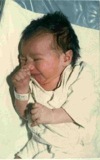
My First Photo as a Newborn Baby…
I’m writing this post before the anniversary of my birthday. I hope it will appear on the day I was actually born on that afternoon of the 8th November 1981. By the time you’re reading this, I’ll be 31 which is almost one third of a century.

I don’t know where I’ll be when this gets published on my blog. I might be eating, working or checking my messages. That’s what I expect to be doing on a Thursday afternoon at least. Indeed, as I’m involved in my work and other commitments I find that I’m always on the go. The tendency, of course, is to go through life without really engaging with the unfolding reality. Without being aware of that passing moment. Without realising that you have lost that point in life forever.

I return back to my birthday. It’s very easy to be distracted from focusing on what I should be writing about at times. Thoughts from the past, concerns about the future and my present situation appear to take over my life even now. I was born 31 years ago.

I am expected to remember this occasion.

Yet, how many of us wonder about what was there before you were born? Can we contemplate a time when we were not?

Of course, we have learned that there was a time before we were born. The time of our parents and all the generations that came before them. Each person, no matter how we might judge them today, had a role to play in our being here alive.

In my case, I must also be grateful for scientists who have permitted me to live until this age.

If these people hadn’t survived for one reason or another, I would NOT be here.

The birthday I celebrate and the celebrations of the birthday many others celebrate throughout the year is a testament to an infinite chain of events that arose out of a cycle of co-dependence.

I might dare look even further back in history and trace my origins back to the genesis of our galaxy and even to the point where the universe was created in the first place.

But, as I contemplate the mystery of my being, I am also mystified by the very creation of our universe. For, my experience of time is so short and finite and my knowledge so restricted and limited, that I can only refer to the beginning of time itself but, as I am a being in time, I cannot conceive of a timeless state.

I may be writing this for my own self, I admit. But, the point is simple. As I reflect on my 31st birthday, I am humbled by the fact that I am born of a mother, a father. I am humbled because if it hadn’t been for the many people who came and went before...

If it hadn’t been for the way history has turned out..

If it hadn’t been for the birth of the Earth, the Sun and the solar system...

If it hadn’t been for the fact there was a universe to be in...

If it hadn’t been for life itself.

I WOULD NOT be here…

There’s no more to say.

Sunday, September 2, 2012

The Ethics of No Self

Last Friday, I found myself in the front garden of our summer home waiting for a van that seemed will be delayed. I had to wait. But, as I breathed in the fresh air of the summer morning. As I felt the gentled breeze of a cool morning on my face and hands, I felt at peace. I was lost. I felt no pain. The only thing I noticed was perhaps the cool air filling my lungs. But, eventually, I wasn’t there any more.

I was still aware of my sensory perceptions. Yet, at the same time, I was there but not there. I had, at that moment, no pain, no worries and no wants or needs. In that state of awareness, it didn’t even matter who I was any more. In a way, it was like sleep. Indeed, it was like I was dead to the world. Everything was alright. It didn’t matter what happened to me. And, in truth, I had no real control over many of what happened in my life.

And, as I emerged from that state of no self, I realised that what seemed like a very long time was actually just about five minutes. Where was I during that time? Was death just the cessation of all suffering that is caused by our attachment to a self? Indeed, was the self, a delusion and had no basis in fact? I pondered my thought further. For, what I felt or did not feel, during that moment was a realisation that I shouldn’t fear death that much.

Here, I’m not saying that life is to be wasted or that life is devoid of value. What I am saying that, often, it is that we become so attached to our ‘self’, that we forget that our ‘self’ constantly depends on our minds and bodies, on our world and on the people around us. In addition, there will be a time when we are not. And that is not an unfinished sentence. For, yes, when we die, we will not be who we (think) we are today. Indeed, it wouldn’t really matter to us who we are for we would not be able to conceive a separate identity or even of a ‘self’.

Of course, there was a time when I was not. A time when none of us were. For me, it was just before the 1980s. Yes, the time before I was even conceived! In this sense, there was a time when who I was wasn’t important. A time beyond self. And, this might be the truth about who we are. Or, rather, about who we are NOT. For, whether we believe it or not, our self may not be based on reality because an ‘objective’ reality never exists for us or any living being. This is because we will always experience our world through our senses. In a way, none of us can claim to have authority over truth.

Again, I’m not saying that there is no truth. What I am saying that we don’t have the capability to know absolute truths. There will always be a piece of the puzzle missing or, indeed, we may not have the means to find that piece in the present. We live in our own realities, if you may, and our sense of self may help us to better connect the fragments together. Yet, it would be a mistake to conclude that our final picture is the truth.

Who would we be without feeling? Without thought? Without emotions? Without society? Without the world? Without language? I could go on asking and asking more questions. But, I believe, that the answer to all these questions is simply that we would be not. After last Friday’s meditation, I realised how futile it is for us to give our ‘self’, an existence and importance as if we could exist without the smallest of living beings and without our brothers and sisters who form part of our human family.

Understanding this, I believe, is understanding the ethics of no self. For, if who we are closes our hearts and minds to others, then we are living the delusion of the self.

Thursday, July 26, 2012

A Dark Night in Aurora: A Few Reflections


Photo of James Holmes
I have reflected on the events which happened recently in Aurora, Colorado, where James Holmes, a PhD student, opened fire on an unsuspecting audience at a local cinema as they prepared to watch the premier of the last series of the Batman trilogy. A total of 12 people died on that fateful   day on the spot or soon after.
I don’t intend to go into detail on what happened during that day when innocent people who were preparing to watch the premier of the  Batman movie “Dark Night Rises” became the target of a lone gunman, James Holmes. He appeared not to fit the stereotype of a terrorist or serial killer. Yet, while we may never learn what the young Holmes was thinking when he started his random killing spree, this doesn't mean that we shouldn't ask ourselves why this might have happened..
Indeed, there are a number of factors that have enabled Holmes to perform his acts of violence. Yet, before that, perhaps we need to acknowledge that our world today has become more violent and violence is often implicitly promoted through our continuous  consumption of news media reporting local crimes and wars abroad. In spite of the goodwill of many, our progress has not resulted in greater peace and stability.

Sadly, even the movie “Dark The Night Rising” appears to be full of violent action and terrorism. In spite of the idea of good fighting bad forces, the so-called “good guys” don’t hesitate to resort to brutality and violence themselves to win over their enemies. This reflects a certain inconsistency in our declared cultural values.
I cannot downplay the tragedy of the deaths following the Aurora shooting. They certainly left suffering amongst those they left behind and touched the American nation. Their lives were unique and irreplaceable . Some were children and had only started their lives. Yet, I am saddened that while this tragedy has rightly attracted the attention of the media - especially in the US - few have been so passionate the thousands being slaughtered today because of war and violence. Aren’t they valuable people like the people in Aurora who sadly were killed?
It was also surprising to me to learn that by possessing the arsenal of weapons, Holmes wasn’t breaking any laws. Indeed, as it stands, the American Constitution provides every American citizen the right to own a weapon in order to protect his person or property. Thus, this obviously permitted for Holmes to purchase many weapons from different US states and even over the internet. The debate on regulating the possession of arms is a hot topic in the US but episodes like that of Holmes aren’t isolated and other victims have surely perished because of unregulated arms market. Personally, I feel that the fact we have a culture that implicitly approves violence as a solution increases the risk of more tragedies like that of Aurora.
While I have identified some of the conditions which have helped to make possible for the young James Holmes to commit mass murder, I feel that I cannot ignore to consider James Holmes, the person. We risk of labelling Holmes as crazy or as someone to be hated. Some have written vengeful claims and even circulated inaccurate information. Even if the police report that Holmes dressed as Batman’s anti-hero, Joker, when committing his crime, it would be too simple for us to label Holmes as a deluded psychopath. Indeed, we may need to attempt, at least, to understand Holmes and his motivations.
Indeed, we need to ask ourselves whether Holmes’ actions were a product of a society that has become more desensitised to violence and war. Perhaps we should ask ourselves whether we are creating more isolation of particular groups of people. We need to ask ourselves whether we had neglected to listen to Holmes before he rebelled against society. We might also need to consider the possibility of whether physiological causes such as an undiagnosed brain tumour was partly responsible for Holmes’ actions. It has been documented that tumours can be responsible for reduction in areas of our brain controlling emotions.
Unfortunately, we often create monsters out of people like Holmes. In a way, we do this to disassociate ourselves from those who we deem are different than us. Yet, while I can never justify Holmes’ actions, I don’t know if given some extreme conditions of social isolation or deprivation, I wouldn’t act out like Holmes if I lose self-awareness and seek help if I need to. Indeed, Holmes may not have thought he had another option. Of course, Holmes’ family were also shocked and those those close to him saw another dark side to him they never thought existed. That too, should help us reflect on how much do we care enough for those around us to get to know them better.
Granted, mine are only reflections and we may know more with the passage of time about this tragic event. However, I believe that this sad event should be a wake up call to a darker reality that sometimes emerges when we least expect it. We may take this as an opportunity to empathise with people who because of war and violence wake up everyday to an uncertain future where they, or their loved ones, may not live after this day. 
Lastly, this is an opportunity to forgive and put true effort in cultivating compassion and promote peace amongst ourselves. It’s also our chance to value the life and dignity of every human being. For, In truth, we all depend on each other to make life worth it!

Tuesday, July 10, 2012

A Moment of Meditation

There it was. Then it was gone just like that! This post is about today, and about every day. This post is about me, but about everyone. This post is meant to communicate a thought and express an emotion and a state of mind. But, it will not necessarily succeed. And,to be honest, the odds are against it. So, why write it anyway?
 
The reason, I think, is that today seemed to be going to be just like any other day. I woke up with the usual pain and stiffness of an early arthritis. I struggled to get out of bed to travel to work. Nothing different. And, perhaps, this is what made it sort of special. There was no pain I couldn’t bear, even if there could have been. I was aware of an experience that happened so often in my life that I never really noticed before. I realised, no, I felt the touch of a soft wind blowing over my skin through the open window. I felt a temporary relief from the summer heat wave taking over the country. I knew that I could do little to change the weather. I could only drink some water and keep myself cool.
 
This feeling of helplessness was, in a strange way, comforting. I had meditated for some time in the morning as I have somewhat neglected the practice for these last two days or so. There, I had come to really appreciate a realisation I had before but still resisted on an unconscious level. The realisation that all my life and all I thought I am didn’t make sense on their own. Inasmuch as the words on this page don’t have a meaning outside human language, so does my life make no sense outside of the human context.
 
I am, like the rest, seeking happiness. We want to be satisfied with our lives. And, yet, we firmly believe that our satisfaction and fulfilment can be found completely in the outside world. Yes, proper food and basic needs such as shelter and clothing (to mention the most basic) remain essential for our wellbeing. But, in addition to these, we need other things that are beyond all that.

We need to know because that makes us feel safe. We need to belong because that gives us a sense of identity and community. We need to love and be loved because gives us a sense of worth and dignity.
 
I spent many years believing the myth of perfection and the myth of independence. The self-made person. Yet, if you examine this idea that we are self-made or can buy our way to happiness, we realise how flawed this vision is. Indeed, how life denying it can be. For, it is a belief that contradicts reality. The reality that we, matter and energy are intrinsically and fundamentally bound together. The reality that who we presume we are is the product of many others who came before or who are with us. The reality that even our own conception is the result of other people. 


In this sense, we are one with many in more ways than we think. And, this is the essence of the helplessness I speak of here. The helplessness that exposes us to our inevitable dependence and vulnerability. A helplessness that doesn’t weaken us through despair and self-hate. Rather, a helplessness that opens our awareness to our humanity, to our basic connection to persons in the whole universe. A helplessness beyond scientific rationality or religious dogma. But the pure helplessness of a child who knows that he or she is indebted to all those around him or her for all she or he has. And it’s not a case of creating idols or worshipping those who help or support life.
 
It’s a helplessness that gives one permission to acknowledge one’s limits. That, while one should work to better one’s life and the life of others, failure is inevitable. Indeed, not even success can be ever guaranteed. It is with this awareness that I left my meditative state. It is this realisation that I need to live in appreciation of a  life more as I faced another day. It’s a recognition that I have come to expect so much from life that I missed how unique it was. How every day, I am going against all odds to go on and, in spite of all difficulties, I am still managing to prevail. Not out of any personal act of will but because I have been thrown in this life..
Now, as I end this entry, I realise that the sense of peace I had throughout the ay following my meditation is no longer present. It seemed to have waned. Yet, this should be another lesson I guess. For, in an attempt to capture the mystery of the moment, I have lost its spirit. I did the same thing a trophy hunter does. In an attempt to capture the life and force of a gracious lion, he shoots it and stuffs the dead lion to enjoy it in his private quarters and show it off to friends. But, then, he also kills the very thing he sought to preserve.
 
I, you and everyone has been given something unique without having deserved it. It’s up to you whether you believe that God or any other entity or force gave you this life. It’s not even that important whether you believe in another life after this - although it is a worthwhile thing to hope for. The reality is that we are living today. Tomorrow is, as I said before, only a promise and an unknown space in the future.
 
Today, is what we know we have. This moment in time that is possible only because of a network of causes and conditions (mostly beyond our  control. Not only do we owe our survival to others beyond ourselves, but may also have to admit that who we are only exists in the present context.
 
We are helpless, dependent and vulnerable in the present moment.
 
We are  also human with our limitations of knowing and doing.
 
But, in spite of all this, we are not helpless, useless or worthless.
 
Not if we are prepared to see each others as ourselves and be prepared to go beyond our own self-importance.
 
For, it might be too late before we realise that, like a joyous feeling, we are faced with the end. , realise that we have gone through this experience without really being aware of what we were actually living. 
 
And, wouldn’t that be tragic to realise that we have pursued a life avoiding the present moment hoping for the future that appeared to have no end.
 
But, alas, it had an end. Like this entry. 

Sunday, July 8, 2012

What am I? The Second Question of Belonging.

Follows from Who am I?


I continue to reflect on the meaning of who I am as a human being today. In this entry, which started as a series of three questions on authentic being, I will try to put forward a few points for reflection. In particular, to answers to the question about what we are.

Even if there may be no real distinction between who we are and what we are, I feel that this question relates more to our sense of identity in the social and human context in which we live.

Today, I find that a common answer that is provided when asked about who we are is related either to our work or position within our family and other organisations. In this sense, what we are is sometimes understood by what we do. Indeed, many choose to define themselves by what they do in their daily life. Thus, many who find themselves without work for various reasons become, in a sense, ‘nothing’ or, at best, those ‘others’ in society that we talk about and not whom we talk with. They remain hidden in misconceptions and a kind of mystery. They are like ghosts who don’t belong neither the land of the living or the realm of the dead.


But, in truth, aren’t we all living ghosts? Robbed of our names, our religion, our politics, our philosophy, our social groups, and so on and so forth, what remains of us?


Assuming that we are born in society and grow among other human beings, we develop a sense of belonging. We are given a name that identifies us as an individual, we are born in a family or a community that endows us with a culture and heritage, we acquire a language or many languages which directs how we will express who we are. We may acquire religion or a philosophy about how the world works and about the meaning of life. This list goes on.


Yet, while there’s nothing wrong with the need to belong, it’s dangerous if our sense of belonging becomes more of an attachment and a vehicle to discriminate, denigrate and humiliate those outside our group. I feel that, even in my life, I felt an outsider and never really fitted in either the ‘normal’ society or the ‘special’ society of persons with impairments. Indeed, I was a disabled person who lived most of his early life with non-disabled people. Yet, I never felt I belonged anywhere in particular.


Now, I perhaps, know the reason. A reason that relates to answering the question of belonging - not just in my case but for everyone. And, the answer is really simple. We can proclaim we belong to a group and even express our pride in this. Such a thing is not wrong but it risks creating between us differences not based on facts or reality but rather on thoughts and misguided ideas. It can close our hearts to the commonality of the human experience with all its beauty and suffering. It also shuts our minds to ways to make things better for all of us and not for one particular group or not.


Then, what are we? We may rightly define ourselves in terms of our tradition, beliefs and ideas. Yet, the fact remains is that what we are cannot be bound to a set of thoughts or words. Indeed, what we are is human beings who have the potential to transcend our differences and even adapt ourselves to new situations and realities. Yet, the fact remains that we are dependent on others in this world. We cannot belong to ourselves for who we are is a product of our heritage of evolution and of human society. In this sense, we belong to humankind before anything else.


 Continues and ends with the last question Why am I?

Saturday, June 30, 2012

Who am I? - The First Question of Being

In my last entry “The Desert of Authenticity”, I promised that I would be meditating and reflecting on three questions I believe are essential in understanding our authenticity. While in these posts, I will attempt to address the the questions as they relate to being, belonging and becoming, I must say that my reflections are based on my own experiences and on the readings I’ve made throughout my 31 years of life. In this sense, these are only basic reflections that remain incomplete.


I believe that my life so far has been ordinary. As a boy, I was given a name, attended school and continued with my studies. I was raised in the Catholic faith tradition and received the sacraments. I got sick along the way and still get sick. I have been judged because I was physically different in many, often in contradictory terms, ranging from a pitiful and less fortunate boy to a holy person bearing Christ’s cross. I was seen as an ‘inspiration’ and as courageous. I was also some thought should be pitied.


I was hurt, felt angry and, I confess, was even flattered as I thought of myself as ‘special’ or, yes, even superior to others. But, in truth, all these identities were also imposed ones that were imposed on me. Even my sense of gender, culture and faith were, in a sense, imposed on me which although they have value and utility in society, they didn’t truly reflect who I was as a person but only stopped at judging who I was on the outside.


Unfortunately, we often confuse our sense of being with our sense of belonging. This exposes us to the risk of closing our sense of being to external and secondary interpretations of who we are. Even if I’m not saying that these identities are false, they often close our minds and hearts to other human beings as we are made convinced that we’re not like them. Instead of cultivating our authentic being, it obscures our sense of being and can, indeed, further distances us of acknowledging our basic common humanity.


I rote it many times before but it’s a truth that still inspires me in my practice. It’s the fact, that beyond all the world says we are or should be, we remain human beings who go through life experiencing pain and illness, we remain dependent on others to live in this world and we all must age and ultimately, die. Yet, we are constantly encouraged to escape from this reality and wasting our time and energy in vain. For if we persist in erecting further barriers between ourselves, there will never be peace. We will never be truly happy. We will never be satisfied.


As I end this entry, I feel that answering the question of being, we need to acknowledge that we are human beings- neither worse off than better than others. Only then can we start to change the world to the better.


Continues to the question What am I?

Thursday, June 21, 2012

The Desert of Authenticity

This is a period where I feel a strong need of silence. It[‘ a moment where I am completely lost. A moment in my life when the old ways seem not satisfying enough. I am still searching for an answer to the most basic questions of life. I found a lot of help as I read the writings of people who have or are wiser than me and who have gained insight from their experiences. I admit that I am particularly drawn into the contemplative traditions found both in Buddhism and Christianity. I am filled with a sense of hope and mystery on reading many works written by His Holiness the Dalai Lama and the late cistercian monk, Father Thomas Merton who was a contemplative monk.

There are many reasons why I chose these figures in particular. I can say that these two people  have reawakened   a sense of being within me that acknowledges our human condition but, at the same time, transcends it. Indeed, both figures have emphasised the importance of prayer, meditation and mindfulness that is balanced by work and action in the real world. Believe or good intention is not enough if we really want to express who we truly are. I confess that I’n not sure whether this sense of dissatisfaction  which has compelled me to start changing my life,. However, there’s always that doubt where I find myself asking whether my intention to find meaning in another way life is not simply my attempt to escape reality and whether this ‘call’ I feel is really authentic or whether it’s another way to boost my sense of self and inflate my pride.

While contemplation requires us to take action, I believe, it’s essential for us to understand who we are and cultivate our compassion to others. Yet, who is this other? Who is ‘the other? In Buddhist texts, one is encouraged to cultivate compassion to those you love and are close to your heart, then to those who you are neutral to, and finally, to those who have become your enemies. But, while we may be prepared to open our hearts to the first two groups, our hearts seem to harden in face of our enemies. But, in truth, this is inconsistent even with Jesus’ call to go beyond loving those who love us and extend our love to our enemies. I’m not saying that loving one’s enemies is easy - especially when we are harmed by them. I don’t even claim I am close to attaining that degree of compassion. However,  it’s clear that these appeals for us to be compassionate  contain a  message that bids us to recognise our common humanity.

I feel burdened by the uncertainty that seems to haunt me today. I continue with cultivating my understanding of Buddhism while searching for parallels of Buddhist teachings Found in Christianity. At first, I feared that my journey into Buddhism meant that I was becoming a kind of a Christian  heretic. Yet, what I seek to find appears to fortify my resolve and commitment to a cause, I believe, is  far greater than any limited understandings of humanity based on a closed world view that is more ready to defend the law than to live the spirit of the law. I have become aware that it may be more important to me to cultivate the seeds of love and compassion and promote dialogue and genuine cooperation rather than to engage in conflict and hate in the name of doctrine and dogma. I feel it’s important to change who you are for the better rather than expect others to change first. However, that is  why it’s essential  for us to understand who we really are before we can grow. At least, I feel that we cannot truly be authentic before we ask ourselves questions and be ready to challenge our own beliefs about who we think we are.

Over these past few weeks, I came up with three questions I feel I must answer to clarify my current sense of not knowing. I will just list them with a few reflections:

Who am I?  

This question relates to being. At the most basic, who are we? Are we not ordinary human beings who must face similar stages of life? Don’t we all get sick, get old (if we make it) and die? Don’t we all suffer in some way or another in this life? Or, do I perceive myself as separate or even superior to other human beings just because I don’t really consider them worthy of my respect or compassion? Or, on the other extreme, have I 
chosen to see myself as a victim who is less than other people to escape from taking responsibility over my life? 

Read the reflection 

What am I?

This question relates to belonging. Who are those groups I have been identified with? Ho are those groups which I have chosen to be part of? What community or identity have I adopted to define who I am as a person? Does my  choice about which groups I associate with creating barriers when relating to other human beings outside my group or community?

Read the reflection.


Why am I?

This question relates to becoming. It is a question that is intrinsically linked to the questions of being and belonging. It’s a question that seeks to understand our true purpose or commitment in life. While we are meant to reflect on our being and on where we feel we belong in the world, , this question goes further as it invites us to ask ourselves what it means to be authentic to who we truly are. Simply put, it’s a question that is asking us whether we Are living in harmony with our authentic being. In addition, it is beckoning to ask ourselves whether we have thought about the meaning of our being itself and whether we have managed to find meaning and purpose to our lives.


Conclusion

I will end this entry here. I will be reflecting and meditating on these questions as I feel a strong need to better understand the source of my sense of loss and discovery. I hope you have the time to think about them but, of course, it’s completely up to you. I confess that the more I delve deeper into my being, the more I feel there is so much to find. I don’t know if I’ll find any answer or find peace at the end. But, I feel, that I owe it to myself and to all those around me to become a better person. 

Ultimately, this life can be thought of  as a personal call to be authentic!